Pairs with the Vertical-Integration Assessment — a ready-to-use strategy tool. Included in the The Vertical Integration Casebook →
In 2020, one of the most-watched shows on Netflix simply vanished. Friends - the comfort-rewatch that millions kept playing in the background - moved to a rival service, because the company that made it built a streaming platform of its own and wanted its crown jewel back. WarnerMedia paid $425 million for the domestic rights to put it there.4 The Office left for NBCUniversal's Peacock the same way — NBCU clawed back the streaming rights in 2019 once it had its own platform to put them on.10 Netflix had spent years building habits around shows it did not own, and then watched the owners walk off with them. That is the moment the originals strategy stops looking like ambition and starts looking like self-defense.
The official story is that Netflix makes original shows because it wants to be a great studio - prestige, awards, the next House of Cards. The real story is colder. Netflix makes original shows because every great licensed show is a show somebody else can take back, and the somebodies doing the taking are now its competitors.
Every show it rented had a landlord who became a rival
Here is the structural trap. When Netflix licenses a hit, it is renting from a studio - and around 2019 those studios stopped being mere suppliers and became platform operators. Warner launched HBO Max. NBCUniversal launched Peacock. Disney launched Disney+. The instant a studio has its own service, the math on lending a beloved show to Netflix inverts: why rent your best draw to the company eating your lunch when you can use it to pull subscribers onto your own app? So the licensing fees didn't just rise - they became non-recurring by design. Friends and The Office weren't renegotiated; they were repossessed. The deals to keep them were not deals a healthy supplier offers a partner. They were exit terms.
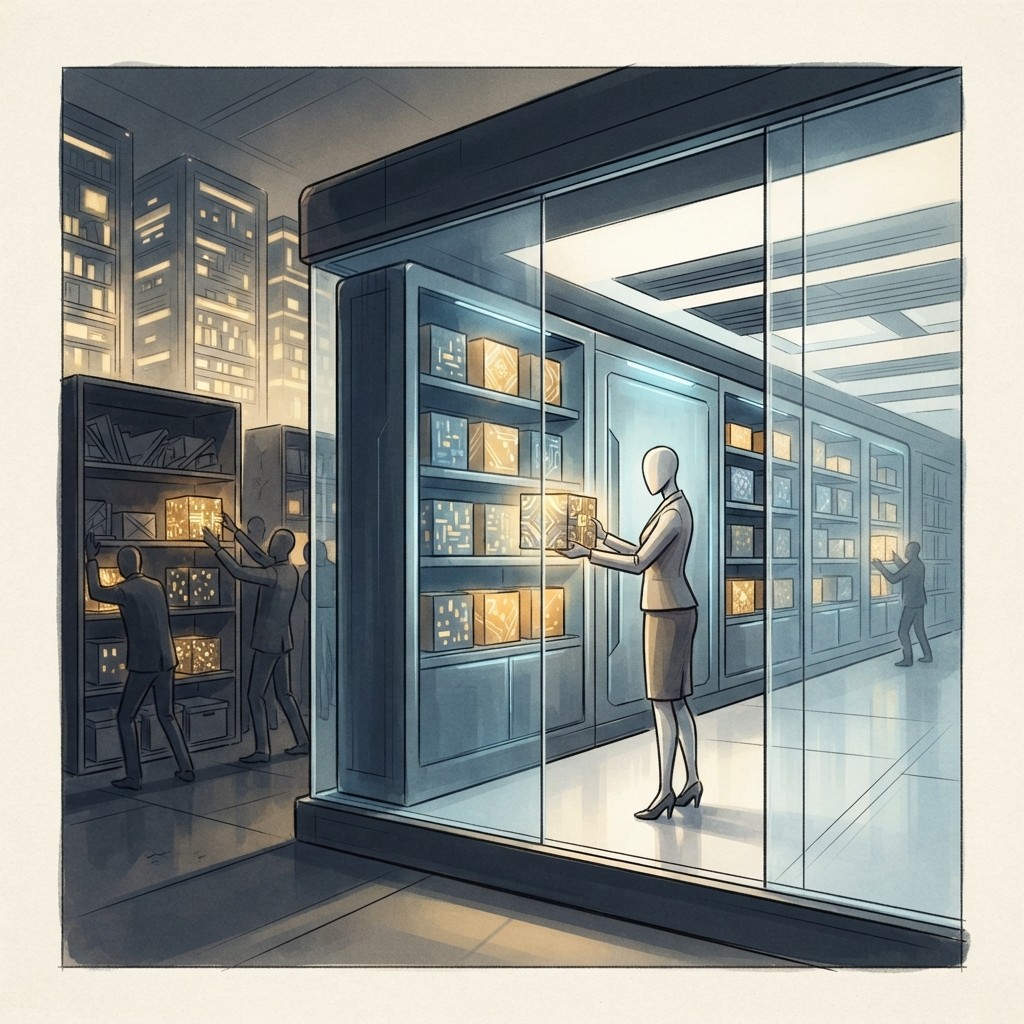
Netflix's answer was to stop renting the building and start owning it. That is the textbook shape of vertical integration: when your supplier is also your competitor, you integrate backward until the thing you depend on is a thing you control. A show Netflix commissions and owns cannot be pulled to a rival when its contract lapses, because there is no contract and there is no rival landlord. The cash cost is enormous - roughly $16 billion of content spend in 202429, with CFO Spencer Neumann stating that the "vast majority" of that budget was directed at originals3 - but the asset that buys is permanence. You cannot lose the rights to something that has no rights-holder but you.
| Licensed catalog hit | Owned original | |
|---|---|---|
| Who controls it | A studio that now runs a rival app | Netflix |
| What happens at contract end | Can be pulled (Friends, The Office) | Nothing - there is no contract |
| Cost trend | Rising, often non-recurring | High upfront, then yours forever |
| Global rights | Often domestic-only | Acquired worldwide at the source |
The global-rights point is where the strategy gets sharp. When Netflix landed Seinfeld - announced in 2019, effective October 2021 - sources told The Hollywood Reporter the deal was worth more than $500 million, and crucially it covered global streaming rights.4 Compare that with Friends and The Office, which Netflix had held only domestically before they walked.4 A company that operates in over a hundred countries cannot build a durable library out of show-by-show, country-by-country rentals from suppliers who would rather have the shows back. Owning the production solves the fragmentation at the source: commission it once, hold it everywhere, forever.
It was an acquisition strategy before it was a creative one
The myth-makers love House of Cards as the origin story - the bold first commission. But the first Netflix original to actually air was Lilyhammer, on February 6, 2012, almost a year before House of Cards.5 And Lilyhammer wasn't a commission at all. It was a finished Norwegian production Netflix acquired - it had already aired on Norway's NRK on January 25, 2012, twelve days before Netflix released it.56 That detail isn't trivia. It tells you what the originals push always was at heart: an ownership move dressed as a creative one. Netflix's earliest 'original' was a show it bought the rights to and stamped its name on, then released all at once across multiple countries - the binge model and the ownership instinct, both there from the first title.6
“Lilyhammer... a finished Norwegian production Netflix acquired, aired first - twelve days after it had already premiered on Norway's NRK.”6
If originals are the answer, why is half the watching still licensed?
The honest counter is uncomfortable, and Netflix's own numbers supply it. Nearly half of all viewing time on Netflix is still spent on licensed content, and demand for Netflix originals had slipped over four consecutive quarters as of mid-2024, as the licensing market reopened and more rented programming flowed back onto the platform.7 In 2016 the company openly aimed for a 50/50 licensed-to-original split, when originals were under 5% of the catalog.3 If owned IP is the only durable moat, why does the rented stuff still do so much of the work, and why is Netflix happily buying more of it again?
Because the two answers aren't in conflict - they operate on different clocks. Licensed content is the cheapest way to fill hours and keep people watching this quarter; owned content is the only way to guarantee there is something to watch in ten years that no competitor can confiscate. The strikes proved the point in reverse: when production froze in 2023, content spend collapsed to about $13 billion, then rebounded toward $16 billion as soon as the cameras rolled again.23 A library you rent is a library on loan; a library you own is a balance-sheet asset - over $6 billion of content liabilities already capitalized as of the end of 2024, with far more committed off the books.1 Netflix isn't choosing originals over licensing. It is renting for traffic and owning for survival.
The trigger for backward integration is rarely cost - it's control. The moment a key supplier launches a competing product, every dollar you pay them funds the company trying to replace you, and your most valuable inputs become the first things they pull. Netflix saw its biggest draws (Friends, The Office) repossessed by studios that had become platforms, and concluded the only asset worth building was one with no landlord. The discipline: don't ask 'is renting cheaper?' Ask 'who controls this if the relationship turns hostile - and what happens to me the day it does?' Rent the commodity hours; own the things a rival would most want to take away.
Netflix spends like a studio, but the logic isn't a studio's. A studio makes shows to sell them. Netflix makes shows so that no one can ever take them away. The billions aren't a bet on better taste than Warner or NBC - they're the price of never again building a hit on land you don't own and watching the owner repossess it. Friends taught the lesson at $425 million a copy. The strategy is just Netflix refusing to pay that tuition twice.
Companies that bought what they used to rent
Vertical-Integration Assessment
A make-vs-buy assessment for a single stage of the value chain: rate the forces that argue for owning it and the forces that argue for renting it, then read the verdict off the gap. Blank to run on a stage you're deciding now; filled as the worked example showing why the story's company pulled a stage in-house — or pushed it out.
Included, filled and blank, in the The Vertical Integration Casebook. See the set → · Preview the blank →
Sources
Where this comes from — the filings, records, and reporting behind it.
- 1Netflix's FY2024 10-K (filed January 27, 2025) discloses approximately $6.2 billion in total content liabilities on the consolidated balance sheet as of December 31, 2024, with significant additional off-balance-sheet streaming content obligations.
- 2Netflix spent approximately $16 billion on content in 2024 (up from ~$13 billion in 2023), generated $39 billion in revenue in 2024, and guided toward approximately $18 billion in content spending for 2025 and $20 billion for 2026.
- 3Netflix planned to spend the 'vast majority' of its $17 billion 2024 content budget on originals; content spending peaked at $17.5 billion in 2021, fell to $12.6 billion in 2023 due to the Hollywood strikes, and was targeting $17 billion for 2024. In 2016, then-CFO David Wells stated Netflix aimed for a 50/50 licensed-to-original split; at that time originals were less than 5% of the catalog per Ampere Analysis.
- 4Netflix's Seinfeld deal (announced September 2019, effective October 2021) is worth more than $500 million per anonymous sources and covers global streaming rights — unlike comparable deals for Friends ($425M, domestic only via WarnerMedia) and The Office ($500M, domestic only via NBCUniversal). Netflix and Sony declined to confirm financials.
- 5Lilyhammer (premiered February 6, 2012) was the first original series to air on Netflix. House of Cards was the first series *ordered* by Netflix, but Lilyhammer — a finished Norwegian production Netflix acquired — aired first. Lilyhammer had also already aired on Norwegian broadcaster NRK on January 25, 2012, making it technically an acquisition rather than a pure commission.
- 6Variety corroborates that Netflix acquired Lilyhammer's distribution rights and released it ahead of House of Cards, introducing the binge-release model. After first airing on NRK (Jan. 25, 2012), it debuted on Netflix Feb. 6, 2012 across multiple countries simultaneously.
- 7Nearly half of Netflix viewing time is spent on licensed content per Netflix's own engagement report, and audience demand for Netflix originals has declined over four consecutive quarters as the re-opening of the licensing market has increased supply of licensed programming on the platform.
- 8In 2024, major streaming companies including Netflix, Discovery, and Paramount collectively invested $126 billion in content, with approximately $56 billion (~45%) dedicated to original productions, per a peer-reviewed analytical model examining streaming platform content strategies.
- 9Variety/Ampere Analysis projected Netflix's full-year 2024 content spend at $16.0 billion, confirming it as the top investor in global streaming content.
- 10The Office left Netflix on December 31, 2020 and moved exclusively to NBCUniversal's Peacock starting January 1, 2021, after NBCU clawed back streaming rights from Netflix in 2019 once it formulated plans to build its own streaming service.
More like this — beyond Netflix
New Strategically analyses as they publish: the defining moves in business, checked against the record. No noise, and one click to leave.