Pairs with the Founder Doctrine Canvas — a ready-to-use strategy tool, filled for Musk-Twitter. Included in the Founder Doctrine Casebook →
“What does holding control cost you, and what must it be worth?”
On April 20, 2022 — 4/20 — Musk signed the financing commitments for the biggest purchase of his life, and named his price $54.20 a share. The '.20' was the same joke he'd told before: the cannabis-culture wink he'd already buried in Tesla's 2018 '$420 funding secured' tweet, the one that cost him and Tesla $20 million each to settle with the SEC.8 A man does not run a DCF and land, by coincidence, on a weed reference. The price was a punchline. The contract underneath it was not.
The official story is that Musk, the visionary founder, looked at Twitter and chose to free the town square. He picked his moment, named a generous price, and bent the company to his will. The record tells a colder story: he signed a seller-friendly contract with no way out, tried to escape when his own fortune cratered, lost in Delaware, and was marched to the closing table at full price — owning, on day one, an asset already worth a fraction of what he'd agreed to pay.
The contract had no exit, and he signed it anyway
Here is the part the founder-genius framing skips entirely. Musk's own April 24 letter to Twitter's chairman called $54.20 his 'best and final offer, period,' and framed the whole thing as 'binary — my offer will either be accepted or I will exit my position.'2 That ultimatum got him the deal: on April 25, Twitter agreed to be acquired for roughly $44 billion, a 38% premium to the stock's price three weeks earlier.1 But the document he signed to win that fight was the one that trapped him. Per Twitter's verified Delaware complaint, the merger agreement carried no financing contingency and no diligence condition — Musk had committed $33.5 billion of the deal personally, with nothing in the contract letting him walk if he changed his mind.3 He had skipped the careful look in order to win fast. The thing about a deal with no exit is that it works exactly as designed: there is no exit.
“$54.20 per share has been and will remain my best and final offer, period... this is binary — my offer will either be accepted or I will exit my position.”2
The bots were never the reason
By July, the market had turned. Tech stocks were in freefall, and Twitter — bought at a frothy-spring premium — was suddenly a wildly overpriced asset. Musk announced he was terminating the deal, citing Twitter's alleged misrepresentation of how many fake and bot accounts it carried. It was a tidy legal-sounding story. Twitter's complaint dismantles it in plain language: the real reason, it alleges, was that Musk's Tesla-anchored net worth had dropped more than $100 billion from its November 2021 peak, and the deal simply no longer served his financial interests.3 The bot count hadn't changed between April and July. Musk's fortune had. When a buyer who waived diligence suddenly discovers a problem the moment his own balance sheet collapses, the problem is not the company.
| Musk's public reason | Twitter's court complaint | |
|---|---|---|
| Why exit | Bot/fake-account misrepresentation | Net worth dropped >$100B; deal no longer served his interests |
| Contractual basis | Material breach by Twitter | No financing or diligence condition existed to invoke |
| Timing trigger | Discovery of bot data | Collapse of the tech market and Tesla stock |
| Outcome sought | Walk away clean | Specific performance — close at full price |
He folded the week before his own deposition
Delaware's Court of Chancery is the venue where deals go to be enforced, and it has a weapon most courts don't reach for: specific performance — the power to order a reluctant buyer to actually complete the purchase, not merely pay damages and walk. With no contractual escape hatch, Musk's legal position was thin to the point of transparency. On October 3, 2022, his lawyers sent Twitter a letter agreeing to proceed to closing at the original $54.20, conditioned on the court staying the lawsuit.4 The timing is the tell: the reversal landed just before Musk was scheduled to sit for his own deposition. He didn't change his mind about Twitter. He ran out of ways to avoid buying it. The deal became effective October 27 and was confirmed closed on October 28, with Twitter filing to de-list from the NYSE.5
The banks couldn't get rid of the debt
A forced close at a stale price is bad enough. The financing made it worse. A seven-bank syndicate led by Morgan Stanley had committed $13 billion in debt — a $6.5B term loan, $3B in secured bonds, $3B unsecured, and a $500M revolver.7 Banks normally sell this debt onward to investors within weeks, pocketing fees and clearing it off their books. They couldn't. By the close, the syndicate faced estimated losses of $500 million or more because there was no market for the paper, and as late as the following year they were still holding all of it on their balance sheets.7 That is the signature of an asset the market already considered overpriced: even the lenders couldn't find anyone willing to take it at par. Musk hadn't just overpaid. He'd structured a buyout so leveraged that the smartest money on Wall Street got stuck holding the bag with him.
Wasn't it still a founder's bet that paid off?
The honest counter is that Musk has been counted out before and proven everyone wrong, and that judging the deal by its 2022 closing math misses the long game — control of a global communications platform, free of public-market quarterly scrutiny, was arguably worth overpaying for. That's a real argument, and it deserves a real answer. But it doesn't rescue the framing, because the framing is about agency. A 'founder doctrine' move is one a founder chooses on his terms. This one he tried to abandon, in his own court filings' telling, the moment it stopped serving him — and completed only when a judge left him no other door. You can believe the asset will eventually justify the price and still see clearly what happened in 2022: a buyer who waived his protections, lost the leverage that protections exist to give, and paid full freight for the privilege. The vision, if there was one, came after the trap had already closed.
There's a final, smaller wrinkle that fits the pattern. The SEC alleged Musk crossed the 5% disclosure threshold on March 14, 2022 but didn't file until April 4 — more than ten days late — quietly accumulating shares at suppressed prices in the gap, and underpaying by at least $150 million before the market knew he was circling.6 His trust later settled the matter for a $1.5 million civil penalty.6 A late filing that saves $150 million and costs $1.5 million to clear is, in its own way, the most efficient part of the entire saga — and the only part where the math actually worked in his favor.
In a hot deal, dropping the financing contingency, the diligence period, and the material-adverse-change escape makes your offer irresistible — and that is precisely the trap. Those clauses are not bureaucratic friction; they are the doors you walk out of when the world changes between signing and closing. Musk waived them to win a bidding posture, then watched the market turn and discovered he'd kept the obligation and surrendered every off-ramp. Specific performance is not a theoretical risk in Delaware; it is the default remedy. The rule: never sign away an exit you might need to fund an entrance you're trying to rush. The fastest path to a 'yes' is often the surest path to a contract you can't escape.
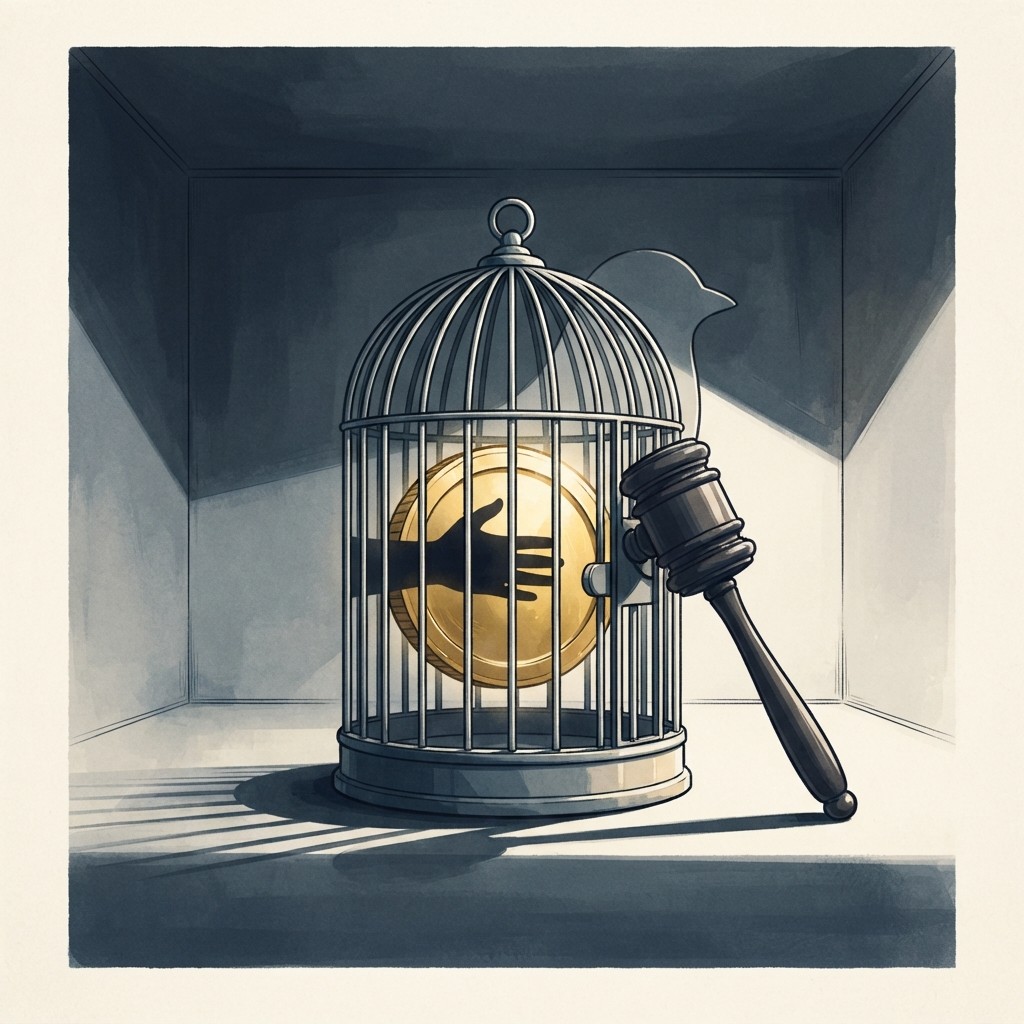
Strip the mythology away and the structure is plain. The price was a joke. The contract was a cage. The exit attempt failed in the one courtroom built to make buyers buy. And the asset was so overleveraged that the banks who lent against it couldn't give the debt away. Musk did not author the Twitter takeover the way a founder authors a company. He signed a document that authored him — and then spent the rest of 2022 discovering that the most expensive word in dealmaking is 'binary' when you're the one who said it first.
Founder Doctrine Canvas
A one-page canvas for the operating system inside a founder's head: the principles they hold, the formative experiences that forged them, and the specific strategic moves each principle produces. Blank to make your own decision rules legible to the people who execute them; filled as the worked example showing why the story's company keeps making the bets it makes — because the founder can't make any others.
Included, filled and blank, in the Founder Doctrine Casebook. See the set → · Preview the blank →
Sources
Where this comes from — the filings, records, and reporting behind it.
- 1On April 25, 2022, Twitter announced a definitive agreement to be acquired by an entity wholly owned by Elon Musk for $54.20 per share in cash, in a transaction valued at approximately $44 billion; the price represented a 38% premium to Twitter's April 1, 2022 closing price.
- 2Musk's April 24, 2022 letter to Twitter board chair Bret Taylor stated that $54.20 'has been and will remain my best and final offer, period' and that 'this is binary — my offer will either be accepted or I will exit my position'; the offer represented a 54% premium to the pre-investment share price and a 38% premium to the day before the investment was announced.
- 3Twitter's verified Delaware Court of Chancery complaint (C.A. No. 2022-0613-KSJM) states that Musk personally committed $33.5B of the ~$44B required; that the deal had no financing contingency and no diligence condition; and explicitly alleged that after markets fell and Musk's Tesla-anchored wealth dropped >$100B from its November 2021 peak, Musk sought to exit the binding agreement.
- 4On October 3, 2022, Musk's legal team notified Twitter via an SEC-filed letter that the Musk parties intended to proceed to closing at the original April 25, 2022 merger agreement price, conditioned on the Delaware Chancery Court entering an immediate stay of Twitter's lawsuit.
- 5Twitter confirmed completion of Musk's $44B acquisition on October 28, 2022, via a securities filing; the company's deal 'became effective' on October 27, 2022, and Twitter filed to de-list from the NYSE.
- 6The SEC filed a civil complaint alleging Musk crossed the 5% Schedule 13D disclosure threshold on March 14, 2022 but did not file until April 4, 2022 — making him more than 10 days late — and that this allowed him to underpay by at least $150M for shares purchased after the filing was due. Musk's revocable trust settled for a $1.5M civil penalty in May 2026.
- 7A seven-bank syndicate led by Morgan Stanley (also including Bank of America, Barclays, Mitsubishi UFJ, BNP Paribas, Mizuho, and Societe Generale) committed $13B in debt financing (comprising a $6.5B term loan, $3B secured bonds, $3B unsecured bonds, and a $500M revolver); at closing the banks faced estimated losses of $500M or more because they could not syndicate the debt to investors, and as late as late 2023 were holding all of it on their balance sheets.
- 8The '$54.20' offer price deliberately embedded the cannabis-culture reference '420'; Musk's financing commitment documents were also signed on April 20 (4/20); this follows an identical pattern to Musk's 2018 Tesla '$420 per share' funding-secured tweet, for which Musk and Tesla each paid $20M to settle SEC charges. In a subsequent Tesla investor lawsuit trial, Musk testified the Tesla price 'wasn't meant to be a marijuana reference' while acknowledging why people might think it was.
More like this — beyond Musk-Twitter
New Strategically analyses as they publish: the defining moves in business, checked against the record. No noise, and one click to leave.