Pairs with the Pricing Power Diagnostic — a ready-to-use strategy tool. Included in the The Pricing Play Casebook →
Order a 2024 Porsche 911 S/T and the sticker opens at $291,650. Then comes the menu. Paint to Sample Plus: $43,390. The Heritage Design Package: $20,360. Keep ticking boxes and a single limited-edition car climbs to $374,600 — nearly $83,000 of options bolted onto one already-expensive sports car.8 It is the most seductive line item in the auto industry, and the internet has built a whole mythology on top of it: Porsche, the story goes, barely makes money on the car at all. The car covers the factory. The options are the empire.
It is a great story. It is also wrong in the way that matters. The viral version claims Porsche earns an 80% gross margin on options while the base vehicle merely pays the labour.11 No Porsche annual report, investor deck, or press release has ever published that figure — and Porsche does not even disaggregate options revenue as a separate line in its financials. The number is unattributed and unverifiable. And the company's reported group gross margin for 2023 was 28.6%, nowhere near what a product mix dominated by 80%-margin options would produce.9
Here is the thesis, stated plainly: Porsche's options model is real, and it does real work — but as a margin stabiliser and price-positioning lever, not as the secret financial empire holding up the whole business. It cushions volume. It cannot replace it. And in 2025, with more than a thousand options still on the menu, the company found that out the hard way.
What the options actually do — and what they don't
The mechanism Porsche will confirm is subtler than the legend, and more interesting. When unit sales softened in 2024, the company's own press release said it 'almost entirely compensated for a decline in sales figures' through 'a higher proportion of customisations and improved price positioning of newly launched products.'2 Read that carefully. Customisation is described as a compensatory tool — the thing that fills the hole when volume falls, not the engine that drives profit in the first place. And the compensation was only partial: group operating profit still fell from €7.3bn in 2023 to €5.6bn in 2024, with operating return on sales sliding from 18.0% to 14.1%.12
The scale of the options machine is genuine. Porsche confirmed more than 1,000 Exclusive Manufaktur options on offer, and said that over five years the average revenue per vehicle fitted with those options had doubled — enough that the company is significantly expanding Manufaktur capacity.7 That is real pricing power, and a customer base willing to spend tens of thousands to make a car theirs. But pricing power on the cars you sell is not the same as a model that survives selling fewer cars. The options ride on the volume; they do not float independent of it.
| The viral story | What Porsche confirms | |
|---|---|---|
| Margin on options | ~80% gross, the real profit | No per-option margin ever published |
| Role of the base car | Just covers factory cost | Carries group margin of ~29% (2023) |
| Role of options | The financial empire | A stabiliser that offsets volume declines |
| Disclosure | Specific, confident numbers | Options revenue not broken out at all |
The year the configurator couldn't save
If options were the empire, 2025 should have been a fortress. The menu was still there. Manufaktur was still expanding. Instead, the model met the one thing it cannot price its way around: falling volume into a hostile macro environment. Customer deliveries dropped 10.1% to 279,449 vehicles, group revenue fell 9.5% to €36.27bn, and operating profit collapsed 92.7% to €413m after approximately €3.9bn in extraordinary expenses — comprising roughly €2.4bn in product-strategy realignment and rescaling costs, €700m in battery-related charges, and €700m from US tariffs — compounded by weakening demand in China.12 Operating return on sales went from 14.1% to 1.1% in a single year.10
Look one level down and the fragility is starker. Automotive operating profit fell from €5,286m to just €90m; automotive return on sales went from 14.5% to 0.3%; gross margin dropped from 25.8% to 13.9%; and cost of materials as a share of revenue jumped from 74.2% to 86.1%.4 When materials eat 86 cents of every sales euro, no upsell menu can rebuild the margin. The options model is a layer of icing. 2025 was the year the cake fell.
Wasn't 'Road to 20' the proof it was all about options?
The strongest version of the myth points to Porsche's own strategy. When Porsche launched 'Road to 20' in 2022 — targeting a long-term group operating return on sales above 20% — the CFO did talk about 'new sources of revenue' including 'exclusive offers and services.'5 That sounds like an options-revenue manifesto. It isn't. Porsche's own Notes to the Consolidated Financial Statements define Road to 20 as a programme 'designed to intensify existing activities with a focus on optimising the cost structure in the long term.'6 In the company's own accounting language, it is principally a cost programme. Exclusive offers are one component, not the spine. The path to a 20% margin runs through the cost line at least as much as the price line — which is exactly what you'd expect if options were a lever rather than the engine.
“designed to intensify existing activities with a focus on optimising the cost structure in the long term”6
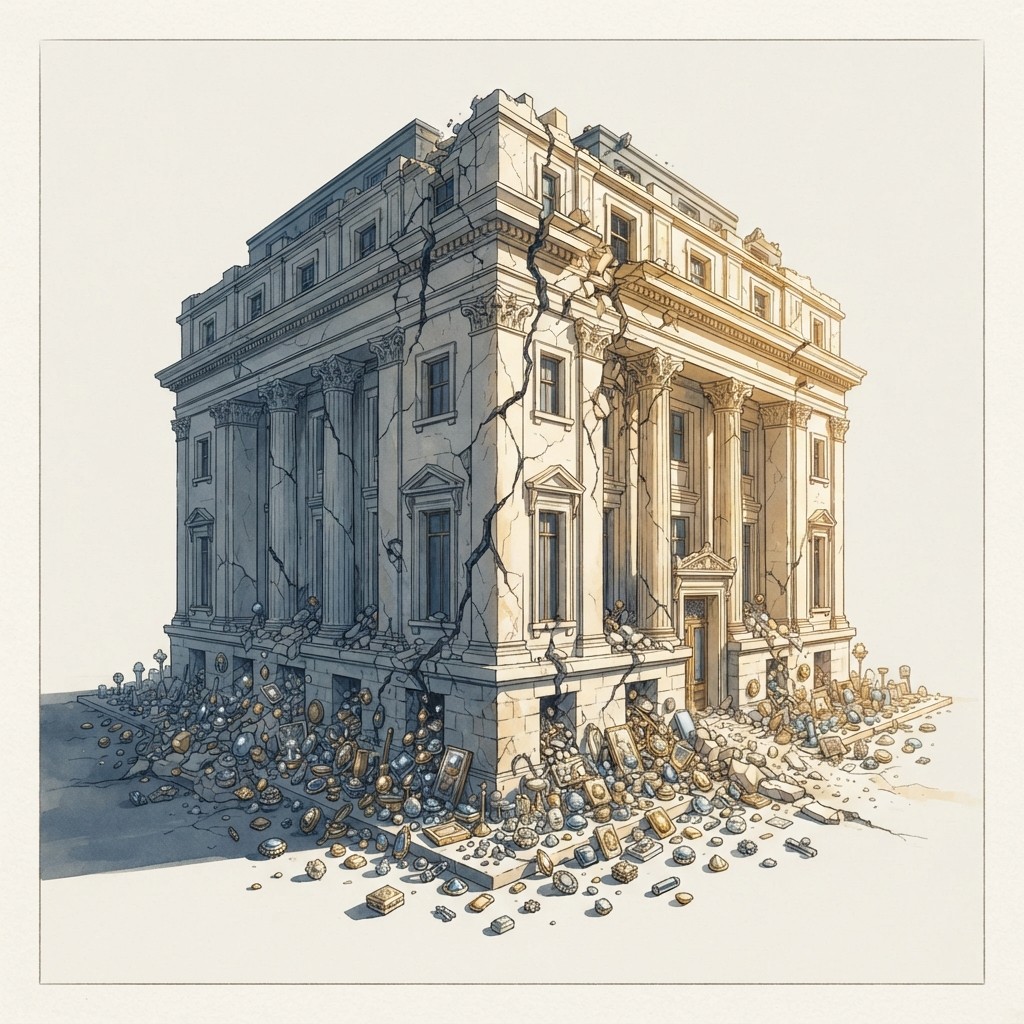
Options pricing is one of the most admired levers in business — the upsell that converts a customer's enthusiasm directly into margin. But know which job it's doing. Porsche's customisation revenue is a genuine stabiliser: it cushions a soft year by extracting more from each car sold, and the company says so plainly. What it cannot do is hold up the building when the floor — volume, materials cost, demand in your biggest markets — gives way. The test isn't whether your premium upsell looks impressive in a good year. It's whether it survives a bad one. In 2025, with the full menu still on offer, Porsche's margin fell to a tenth of what it had been. The lever was working. The thing it was meant to move had gotten too heavy.
None of this means the options model is fake. Doubling per-car Manufaktur revenue over five years, an $83,000 spread of choices on a single 911, a thousand-item menu customers eagerly pay into — that is real pricing power most carmakers would envy.78 The error is one of proportion. The internet took a clever margin stabiliser and inflated it into a self-sustaining empire, then forgot that empires built on volume can fall on volume too. Porsche's genius was never that the base car is a loss-leader for the paint. It was that an obsessive customer will pay to make the car his — right up until the year the world stops buying. The options can flatter a great business. They cannot replace one.
When the real money hides in the pricing
Pricing Power Diagnostic
A scored diagnostic of pricing power: brand pull, switching costs, substitutes, and how critical the product is to the buyer. Each dimension rated 1-5 so you can see, at a glance, whether a price rise sticks or sends customers running. Blank to grade your own offer; filled as the worked example scoring a story's business on its real ability to charge more.
Included, filled and blank, in the The Pricing Play Casebook. See the set → · Preview the blank →
Sources
Where this comes from — the filings, records, and reporting behind it.
- 1Porsche AG 2023 full-year results: Group sales revenue €40.5bn (+7.7%), Group operating profit €7.3bn (+7.6%), Group operating return on sales 18.0%.
- 2Porsche AG 2024 full-year results: Group sales revenue €40.1bn, Group operating profit €5.6bn, Group operating return on sales 14.1%; revenue decline almost entirely offset by 'a higher proportion of customisations and improved price positioning of newly launched products.'
- 3Porsche AG 2025 full-year results: Group sales revenue fell 9.5% to €36.27bn; Group operating return on sales collapsed to 1.1% from 14.1% in 2024; operating profit €413m after €3.9bn in extraordinary charges; customer deliveries down 10.1% to 279,449 vehicles.
- 4Porsche AG 2025 Annual Report (Newsroom): Automotive operating profit fell to €90m (2024: €5,286m); automotive return on sales 0.3% (2024: 14.5%); gross margin 13.9% (2024: 25.8%); cost of materials as proportion of sales revenue rose to 86.1% (2024: 74.2%).
- 5Porsche's 'Road to 20' programme was launched alongside 2022 record results (Group ROS 18.0%) and targets a long-term Group operating return on sales of more than 20%; CFO Meschke confirmed the programme focuses on 'new sources of revenue' including 'exclusive offers and services.'
- 6The 'Road to 20' strategic programme is defined in Porsche AG's own consolidated financial statement notes as 'designed to intensify existing activities with a focus on optimising the cost structure in the long term'—primarily a cost programme, not a pure revenue/options play.
- 7Porsche's 2024 annual press conference confirmed there are 'more than 1,000 Porsche Exclusive Manufaktur options available'; 'over the past five years, the average revenue per vehicle with Exclusive Manufaktur options has doubled'; and Exclusive Manufaktur capacity is to be 'significantly expanded.'
- 8The 2024 Porsche 911 S/T carries a base MSRP of $291,650; with options including Paint to Sample Plus ($43,390) and Heritage Design Package ($20,360), a fully optioned example reaches $374,600—nearly $83,000 in options on a single limited-edition car.
- 9Porsche AG Group gross margin was 28.6% in 2023 (prior-year comparator stated in the FY 2024 management report: 'gross margin standing at 25.8% (2023: 28.6%)')
- 10Porsche AG 2025 full-year results: Group sales revenue 36.27 billion euros, operating profit 413 million euros, Group operating return on sales 1.1 per cent.
- 11A widely circulated strategy-blog post asserts Porsche's customisation options 'carry an astronomical gross margin (often 80% or higher)' and that 'Porsche uses the base car just to pay for the factory and the labor' — the archetypal form of the viral claim the article rebuts.
- 12Porsche AG 2025 FY: group operating profit fell from €5.64bn to €413m; extraordinary expenses of approximately €3.9bn comprising product strategy realignment and rescaling (~€2.4bn), battery activities (~€700m), and US tariffs (~€700m); Group operating return on sales 1.1% (2024: 14.1%).
More like this — beyond Porsche
New Strategically analyses as they publish: the defining moves in business, checked against the record. No noise, and one click to leave.