Pairs with the Pricing Power Diagnostic — a ready-to-use strategy tool, filled for Netflix. Included in the The Pricing Ladder Casebook →
In September 1999, fifteen dollars and ninety-five cents bought you a Netflix subscription: four DVDs out at a time, no late fees, no due dates.2 Twenty-seven years later, the cheapest plan with the full picture costs $19.99, and the top of the menu runs $26.99.8 In between sit a half-dozen reinventions — streaming, the plan split, Qwikster, the three-tier menu, the ad tier — each one announced as a new way to give customers what they want. Line them up and a quieter pattern shows through. The price only ever moves in one direction.
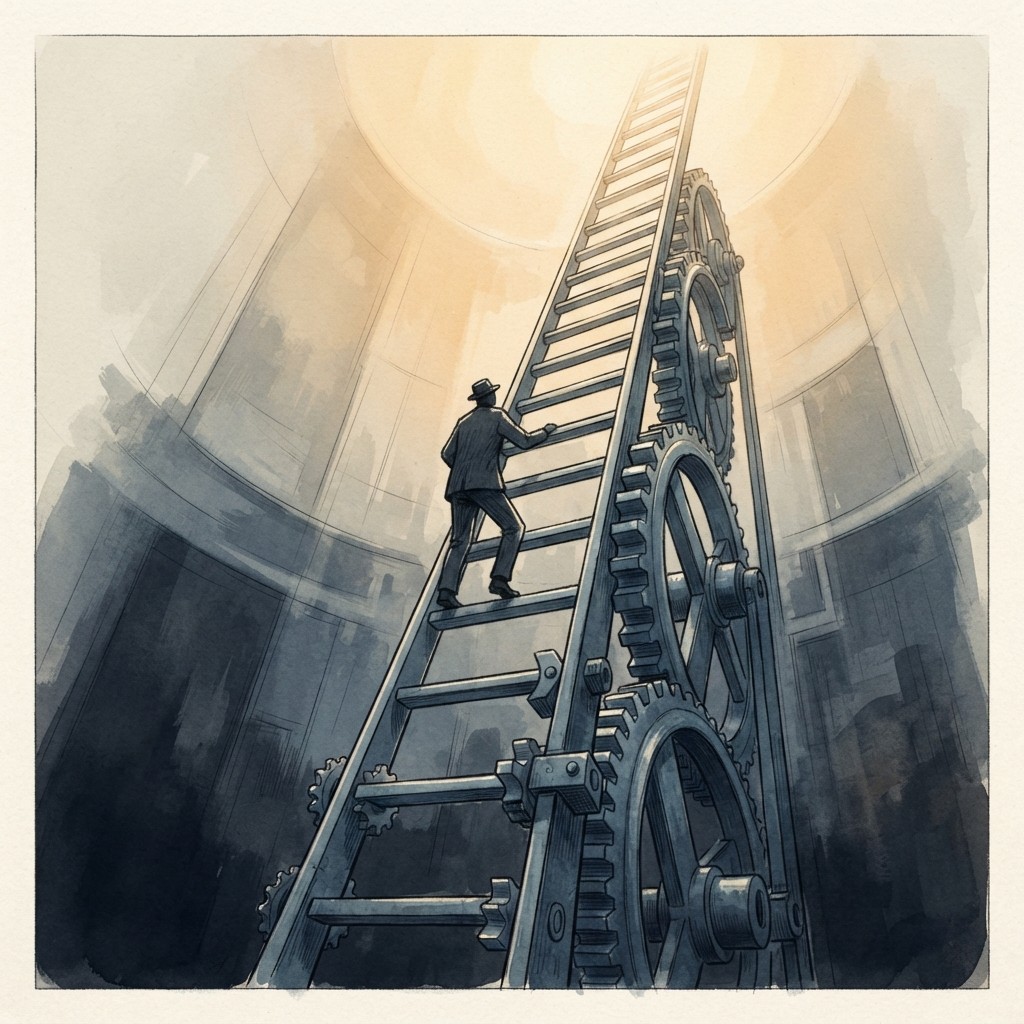
The official story is that Netflix's pricing evolved alongside the technology, gently, in step with what viewers asked for. The truer story is that the menu kept getting longer for a single structural reason: more tiers mean more lines to draw between customers, and every line Netflix drew let it charge more to the people willing to pay it. This isn't an evolution. It's a ratchet — a mechanism that only turns one way.
The thing it stopped charging was the thing it started with
Start with the founding myth, because it explains why the price discipline gets misread. Everyone repeats that Reed Hastings dreamed up Netflix to escape a $40 Blockbuster late fee. Co-founder Marc Randolph has called that a convenient fiction; in his memoir he writes flatly that the idea 'had nothing to do with late fees — in fact, at the beginning, we even charged them.'5 That detail matters here because the late-fee origin story paints Netflix as a company built to be kinder to your wallet. It wasn't. It was a company that experimented relentlessly with what it could charge — per rental at launch in April 1998, then a $15.95 capped subscription in 1999, then, once the unlimited no-fee model proved stickier, dropping the per-rental option by early 2000.1 The 'no late fees' promise was never generosity. It was the version of the pricing model that retained the most customers. Netflix found the lever early, and it has been pulling it ever since.
How splitting a plan in two became a price increase
The mechanism is clearest at the 2011 split, because Netflix wrote down what it was doing. For years, streaming had ridden free atop the DVD plan — a feature, not a product. Then in July 2011 the company cleaved the hybrid plan into two standalone $7.99 subscriptions, one for discs, one for streaming. If you wanted both, as millions did, your bill went from one charge to two. Netflix's own SEC filing says the quiet part out loud: the separation 'resulted in a price increase for our members who were taking a hybrid plan.'3 This is the ratchet in its purest form. Nothing about the underlying service got worse. The company simply re-drew the line — turned one product into two — and the people who valued both ended up paying for both. Unbundling, sold as choice, is just a price hike with better manners.
“...resulted in a price increase for our members who were taking a hybrid plan.”3
The split came with a now-infamous overreach. Inside the same third quarter of 2011, Netflix rebranded the DVD business as 'Qwikster' — and reversed itself before the quarter was out, after a consumer revolt drove higher-than-expected cancellations.4 It is tempting to file Qwikster as the moment the ratchet broke. It didn't. The branding got retracted; the price increase did not. The two $7.99 plans stayed. What Qwikster actually taught Netflix was where the line between tolerable and intolerable sits — how hard you can turn the ratchet before customers walk. That lesson, not the apology, is what shows up in every pricing move since.
Why a worse, cheaper plan is the most expansionary move of all
By 2022, the ladder had a ceiling problem: Netflix had pushed the premium tier about as high as the willing-to-pay crowd would tolerate, and growth was slowing. The answer wasn't to cut prices. It was to add a rung below the floor. 'Basic with Ads' launched on November 3, 2022 at $6.99 a month — 720p video, no downloads, and four to five minutes of advertising stuffed into every hour.6 Notice the design: it is deliberately, visibly worse. The degradation is the point. A cheaper plan that wasn't meaningfully worse would just cannibalize the people already paying more. By making the entry tier annoying — lower resolution, ads, missing features — Netflix captures the price-sensitive viewer it never had while gently nudging everyone else to stay up the ladder. Economists call this versioning. Netflix calls it a tier. Same penguin, opposite math.
| 1999 | 2022 launch | 2026 | |
|---|---|---|---|
| Entry plan | $15.95 (4 DVDs out) | $6.99 (ads, 720p, no downloads) | $8.99 (Standard with Ads) |
| Mid plan | — | — | $19.99 (Standard) |
| Top plan | — | — | $26.99 (Premium) |
| What's being sold | One product | A deliberately degraded floor | A full ladder of willingness-to-pay |
But didn't the ad tier flop?
The honest objection is that the ad tier looked like a stumble, not a master stroke. Shortly after launch, Variety reported the tier was off to a tepid start: Netflix fell short of the viewership guarantees it had promised ad buyers, and the company itself told investors the new plan would not be a 'material' contributor to its Q4 2022 earnings.7 If the ratchet were so well-engineered, why did its newest rung wobble? Because a ratchet is judged over years, not quarters. The 2011 split triggered a cancellation panic and survived; the ad tier underdelivered at launch and stayed. The structural logic doesn't depend on any single tier being an instant hit — it depends on the menu, over time, sorting customers into the price each is willing to pay and keeping the premium revenue intact while doing it. A slow start for the cheap plan is not evidence against the strategy. It's the cost of opening a new rung. The proof is the June 2026 menu: $8.99, $19.99, $26.99, every line higher than before.8
When a company that already has your money announces a new plan — a cheaper one, a split one, a 'with ads' one — read it as a re-drawing of lines, not a discount. The strategic move in tiered pricing is almost never to lower what you pay; it's to widen the spread between what different customers pay, capturing people below the old floor without losing the margin above it. A deliberately worse cheap tier protects the premium tier by giving the budget-conscious somewhere to go that isn't down. So when the menu gets longer, ask the one question the marketing won't answer: which line did they just move, and which way does the ratchet turn? It only turns one way.
Netflix did not raise its price twenty-seven times in a row. It did something more durable: it built a machine that raises the price for you, by turning one product into many and letting each customer self-select the rung that hurts least. The DVD subscriber who paid $15.95 for four discs and the 2026 viewer paying $26.99 for Premium are not on the same journey at different stops. They're on a ladder that only ever added rungs, never sawed one off. The genius was never a clever plan. It was discovering, at Qwikster, exactly how hard you can turn a ratchet — and then never stopping.
More on how companies set the price you pay
Pricing Power Diagnostic
A scored diagnostic of pricing power: brand pull, switching costs, substitutes, and how critical the product is to the buyer. Each dimension rated 1-5 so you can see, at a glance, whether a price rise sticks or sends customers running. Blank to grade your own offer; filled as the worked example scoring a story's business on its real ability to charge more.
Included, filled and blank, in the The Pricing Ladder Casebook. See the set → · Preview the blank →
Sources
Where this comes from — the filings, records, and reporting behind it.
- 1Netflix launched on April 14, 1998 as a per-rental DVD service; introduced its monthly subscription model in September 1999; and dropped the per-rental model by early 2000.Wikipedia, Netflix, Inc. ↗ · 2024
- 2In September 1999, Netflix's subscription plan cost $15.95/month and allowed members to pre-select four DVDs with no late fees or due dates.
- 3In July 2011, Netflix separated its combined DVD-by-mail and streaming plans into two separate subscription plans, each at $7.99/month, which resulted in a price increase for hybrid-plan members.
- 4In Q3 2011, Netflix announced the separation of DVD and streaming plans, rebranded the DVD service as Qwikster, then retracted the Qwikster rebrand — all within the same quarter — with consumers reacting negatively and causing higher-than-expected cancellations.
- 5Marc Randolph, Netflix co-founder, explicitly states in his 2019 memoir that the Apollo 13/$40 late fee story is not true and that 'the idea for Netflix had nothing to do with late fees — in fact, at the beginning, we even charged them.'
- 6Netflix launched its 'Basic with Ads' tier on November 3, 2022 at $6.99/month in the US, with 720p resolution, an average of 4-5 minutes of ads per hour, and no download capability; it launched simultaneously in 12 countries.
- 7Netflix's ad-supported tier had a tepid initial launch: it fell short of viewership guarantees to ad buyers and the company told investors it would not be a 'material' contributor to Q4 2022 earnings.
- 8As of June 2026, Netflix raised US prices for the second time in under two years: Standard with Ads to $8.99/month, Standard to $19.99/month, and Premium to $26.99/month — an 11% average increase across the product suite.
More like this — beyond Netflix
New Strategically analyses as they publish: the defining moves in business, checked against the record. No noise, and one click to leave.