Pairs with the Market-Entry Gambit Canvas — a ready-to-use strategy tool. Included in the The Market-Entry Gambit Casebook →
On the morning of August 27, 2019, Costco opened its first store on the Chinese mainland, in Shanghai's Minhang district, and had to shut it again before lunch. The crowds were so dense the surrounding neighborhood seized into gridlock; signs warned shoppers of three-hour waits just to park. The next day, Costco rationed entry to 2,000 people at a time.5 The footage looked like proof that Costco had cracked China on day one. It was actually the harvest of a quieter, slower thing — a decade and a half of practice that had happened 500 miles to the east, in Korea.
The official story is that Costco runs one warehouse model and exports it intact, bending only the sushi counter and the parking lot for local taste. That's the brochure. The real story is that Costco runs two completely different bets in Asia, and only one of them is the destination.
Here is the thesis a smart friend can repeat at dinner: Costco's Korean business is a thirty-year training ground that taught it how to run a warehouse club in Asia — and now Costco is taking the graduates of that school and pointing them at China, the market it actually intends to win.
Korea was rented before it was owned
Almost everyone gets the Korea origin story wrong, and the error matters. The popular version says Costco "entered Korea in 1994" and built from there. It didn't own anything in 1994. Since 1993, the Korean operation was run by Shinsegae under a license agreement: Shinsegae covered the start-up costs, staffed the warehouses, and kept a significant share of the profit, while Costco supplied the training, the technical know-how, and the products.4 That is not an expansion — it is an apprenticeship, with the partner paying the tuition. Only in May 1998, after the model had been proven on someone else's balance sheet, did Costco form a joint venture to acquire the operation, taking 93.75% to Shinsegae's 6.25%.3
Read that structure as a strategy and the genius shows. Costco entered an unfamiliar market with almost no capital at risk, let a local heavyweight absorb the cost of learning what Korean shoppers would tolerate, and bought the whole thing outright only once the answer was clear. The license was the option; the 1998 JV was Costco exercising it. The slow path wasn't timidity. It was a company refusing to pay for certainty until it had certainty.
“Since 1993, Shinsegae operated the operation under a license agreement; in May 1998 Costco announced a joint venture to acquire it, owning 93.75% to Shinsegae's 6.25%.”3
The school that became the best store in the country
The apprenticeship paid off spectacularly. By fiscal 2024, Costco Korea was doing 6.53 trillion won — roughly $4.7 billion — in sales, up 7.6% on the year, with operating profit climbing 15.8%.7 The efficiency number is the one that stops you: average sales per store hit 343.6 billion won, four to five times that of Korean big-box rivals, and Costco's 19 Korean warehouses out-sold Lotte Mart's 111 stores.7 Nineteen beating one hundred and eleven is not a retailer competing. It is a retailer playing a different game on the same field.
And yet — this is the turn — the same trade reporting that documents the dominance also warns that Korea is brushing up against a low-growth trap. Costco built roughly 19 Korean locations over thirty years;1 the market is, by the numbers, close to saturated. There is only so much shelf to win in a country where 19 stores already beat 111.8 A school can produce a valedictorian and still be a school. Korea is the valedictorian.
Why China is the opposite bet, deliberately
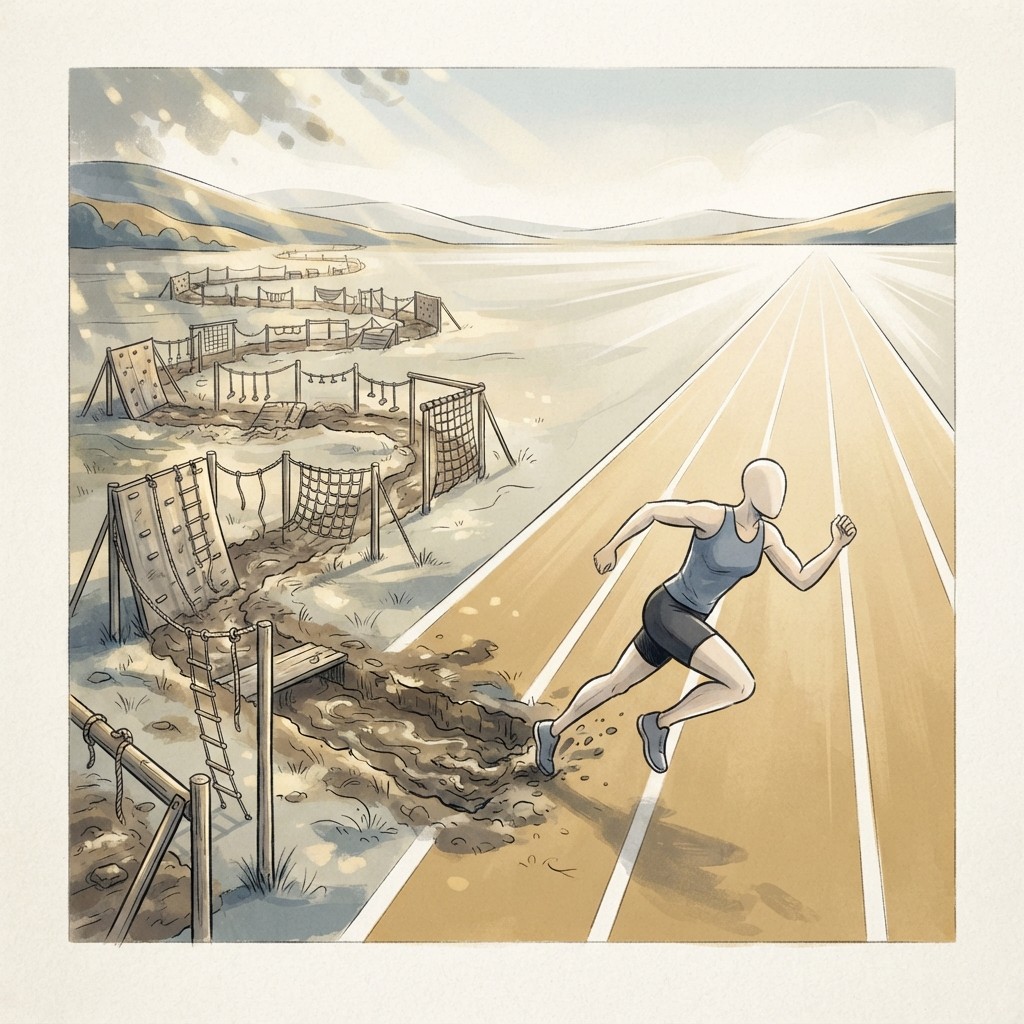
China inverts every move Costco made in Korea. There was no slow license this time on the ground — Costco first tested the water digitally, opening a Tmall store on Alibaba's marketplace in 2014, five years before laying a single brick.6 When it finally opened in Shanghai in 2019, it did so wholly-owned and at a pace that makes the Korean timeline look geological: where Korea took thirty years to reach roughly 19 stores,1 China reached 7 wholly-owned warehouses in under six years — a pace that makes the Korean timeline look geological.18 Costco didn't repeat the apprenticeship in China because it had already served the apprenticeship in Korea. The tuition was paid once.
The clearest tell is the people. Costco relocated core Korean staff to China to open the new stores.8 You don't move your most experienced operators toward the market you consider mature; you move them toward the one you're betting the future on. The talent transfer is the strategy made physical — Seoul exports operators the way it once imported a model. And the scoreboard followed the staff: by 2023, trade reporting indicated the Shanghai store had overtaken Seoul's long-reigning Yangjae warehouse — which had held the global #1 sales rank for roughly two decades — at least over peak trading periods.11 The student had not just caught the teacher; it was competing for the top of the class.
| Korea | China | |
|---|---|---|
| Entry structure | License via Shinsegae (1993), JV acquisition 1998 | Tmall online 2014, wholly-owned stores from 2019 |
| Capital at risk early | Almost none — partner paid start-up costs | Costco's own, from the start |
| Expansion pace | ~18 stores over 25 years | Accelerated, compressed rollout |
| Role today | Mature, near-saturated training ground | The market Costco is staffing up for |
| Talent flow | Source of experienced operators | Destination for relocated Korean staff |
The one thing that never bends
What does Costco actually localize? The building, not the business model. In Asia, where urban land is scarce and brutally expensive, Costco abandoned the flat American box and builds upward — multilevel warehouses with moving ramps to carry carts between floors, extra parking, and engineered crowd-capacity controls, all executed with the architecture firm MG2. Departments flex for taste: robust sushi sections in Japan, K-beauty aisles in Korea.9 But notice what stays frozen across every market and every floor plan: the membership fee, the treasure-hunt assortment, the deliberately thin product range, the near-break-even markup. The building adapts so the model doesn't have to. Localization is what Costco does to the wrapper precisely so it never has to touch the engine.
Isn't this just hindsight dressed as design?
The fair objection is that this is too tidy. Costco didn't necessarily sit in 1993 and plan a thirty-year curriculum culminating in China; companies stumble into sequences that only look intentional once they work, and it's easy to narrate luck as foresight. That's true, and it's the honest limit of the read. But intent isn't required for the pattern to be load-bearing — what matters is that Costco is behaving as if Korea is the training ground now, whatever it believed in 1993. The capital-light license, the wait-for-proof JV, the digital toe-dip in China, and above all the physical relocation of experienced Korean operators eastward are not the moves of a company that thinks its two Asian markets are equals. You don't ship your best teachers to the campus you consider finished. The sequence may have been discovered rather than designed — but Costco is now running it on purpose.
The instinct in cross-border expansion is to attack the biggest prize first, with your own capital, while you're still ignorant. Costco did the reverse: it learned an entire region on a partner's balance sheet, in a manageable market, with almost nothing at risk — a license is an option you only convert once the uncertainty is gone. Then it took the operators that market produced and aimed them at the prize. Two cautions. First, a training ground can outgrow its purpose: Korea is now bumping the ceiling of its own success, and a school you can't expand becomes a cost, not an asset. Second, the talent transfer is the real moat — anyone can copy a multilevel warehouse, but experienced operators who already know how an American membership club behaves in Asia are slow to build and easy to redeploy. Localize the building. Standardize the model. Move the people toward the future.
The Shanghai gridlock of 2019 wasn't the birth of Costco's China strategy. It was a graduation ceremony — the moment the lessons learned slowly in Seoul arrived all at once somewhere far larger. Costco spent twenty-five careful years in Korea building the most efficient warehouse club in the country, and the payoff wasn't Korea. The payoff was knowing exactly what to do the day the doors opened in Shanghai. The genius was never one model exported intact. It was the discipline to treat the first market as tuition — and the nerve to send the graduates somewhere bigger.
Market-Entry Gambit Canvas
A one-page canvas for staging an entry into a market you don't own yet: the beachhead you take first, the wedge that gets you in cheaply, the sequence that turns a foothold into a position, and the incumbent's likely counter-move. Blank to plan your own entry; filled as the worked example showing how the story's challenger picked its landing spot and walked the rest in.
Included, filled and blank, in the The Market-Entry Gambit Casebook. See the set → · Preview the blank →
Sources
Where this comes from — the filings, records, and reporting behind it.
- 1Costco FY2024 (52 weeks ended September 1, 2024): net sales $249.6 billion (+5%), net income $7.4 billion, membership fees $4.8 billion, ~137 million cardholders, 90% renewal rate; 890 warehouses worldwide including 7 in China and 19 in Korea as of that date.
- 2Costco's FY2024 expansion included 29 net new locations: 23 in the U.S., two each in China and Japan, and one each in Canada and Korea.
- 3Since 1993, Shinsegae operated the Price Club Korea operation under a license agreement with Costco. On May 4, 1998, Costco announced a joint venture with Shinsegae to acquire the operation, with Costco owning 93.75% and Shinsegae 6.25%.
- 4Price/Costco entered Korea via a licensing agreement with Shinsegae, under which Shinsegae covered all start-up costs, provided warehouse personnel, and received a significant percentage of profits; Price/Costco furnished training, technical knowledge, and products.
- 5Costco's first mainland China store opened August 27, 2019 in Shanghai's Minhang district; it was forced to close early that day due to massive crowds causing neighborhood traffic jams, with signs warning of three-hour parking waits; the next day Costco limited entry to 2,000 shoppers at a time.
- 6Costco first entered China in 2014 through an online store on Alibaba's Tmall marketplace, five years before its first physical mainland store.
- 7Costco Korea FY2024 (ended Aug. 31, 2024) sales were 6.53 trillion won (~$4.7B USD, +7.6% YoY) and operating profit 218.5 billion won (+15.8%); average sales per store hit 343.6 billion won, four to five times that of Korean big-box rivals; 19 stores generated more sales than Lotte Mart's 111 stores.
- 8Costco's China expansion pace far outstrips Korea: it opened 18 Korean locations over 25 years but is targeting 7 China outlets within a much shorter window; Costco relocated core Korean staff to China for new store openings, suggesting a strategic pivot of its Asian center of gravity toward China.
- 9Asian Costco warehouses are multilevel structures (a rarity in U.S. formats) due to urban land constraints; store departments flex for regional tastes (e.g., robust sushi sections in Japan, K-beauty in Korea); moving ramps, additional parking, and capacity controls were all localized design adaptations executed with architecture firm MG2.
- 10Costco FY2025 (ended August 31, 2025): 914 warehouses worldwide; opened 27 new warehouses (24 net new); plans up to 35 new warehouses including 5 relocations in FY2026; total revenue $275.2 billion (+8%).
- 11The Costco Yangjae branch in Seoul held the #1 global sales rank for approximately 20 years; the Shanghai branch ranked first in sales among Costco stores worldwide during the two-week Chinese New Year holiday in 2023, displacing Yangjae.
More like this — beyond Costco
New Strategically analyses as they publish: the defining moves in business, checked against the record. No noise, and one click to leave.