Pairs with the Culture Doctrine Canvas — a ready-to-use strategy tool, filled for Abercrombie & Fitch. Included in the The Reinvention Casebook →
In 2006, the man running Abercrombie & Fitch said the quiet part into a recorder: 'Candidly, we go after the cool kids… A lot of people don't belong [in our clothes], and they can't belong. Are we exclusionary? Absolutely.'2 It was a brand strategy stated as a sneer. And for a while, it worked - the company that started with 36 stores and roughly $50 million in sales had become more than 1,000 stores and over $4.5 billion under that doctrine.8 Then it almost died. Then, in 2023, the same brand became the single best-performing stock in the S&P 1500 - up about 285%, beating Nvidia.6 The temptation is to call this redemption. It is something colder and more useful than that.
The official story is that Abercrombie said a cruel thing, the internet punished it, and the company apologized its way back into America's good graces. Almost none of that is the real mechanism. The cruel thing was said years before anyone cared, the decline started for reasons that had nothing to do with it, and the comeback was not an apology at all. It was a rebuild of the product, the sizing rack, and the hiring desk - and the numbers came after.
The quote everyone blames arrived seven years too late to be the cause
Here is the part the morality tale gets backwards. The 'cool kids' interview ran in 2006 and barely registered; it only detonated as a viral scandal in 2013.2 But the brand's financial trouble had already arrived years earlier, with the 2008 recession and the rise of fast-fashion rivals selling the same teen look at a fraction of the price. Same-store sales fell for 17 consecutive months before Jeffries finally relented on his premium pricing in September 2009 - four years before the quote went viral.8 So the popular causation is reversed. The viral outrage didn't break the business; it found a business that was already breaking, and gave a wounded brand a villain to be hated for. The exclusionary posture was a strategy problem long before it became a reputation problem.
And the exclusion wasn't only marketing copy. It was operational policy with legal teeth. In 2004 the EEOC sued, alleging Abercrombie discriminated in hiring and promotion on the basis of race, color, national origin, and sex; the consent decree required the company to pay $50 million and stand up an Office of Diversity.3 A decade later, the Supreme Court ruled against the company 8-1 in a religious-accommodation case, holding that an employer can't refuse to hire someone to avoid accommodating their faith - though the actual damages were tiny: $25,670 plus $18,983 in costs.4 The lesson isn't the dollar figure. It's that 'the look' wasn't a vibe. It was a hiring filter, and a brand whose product is who it lets stand at the door has wired its discrimination straight into operations.
| The Jeffries doctrine | The reinvention | |
|---|---|---|
| Stated stance | 'Are we exclusionary? Absolutely.' | 'Being here for you on the journey to being and becoming who you are' |
| The product | One narrow look, premium price | Rebuilt assortment, expanded sizing |
| Who works the floor | A hiring filter that drew an EEOC suit | Talent as part of an inclusive rebuild |
| The proof | Growth, then 17 months of decline | Record $4.95B sales, top stock in the S&P 1500 |
Why this was a rebuild, not a rebrand
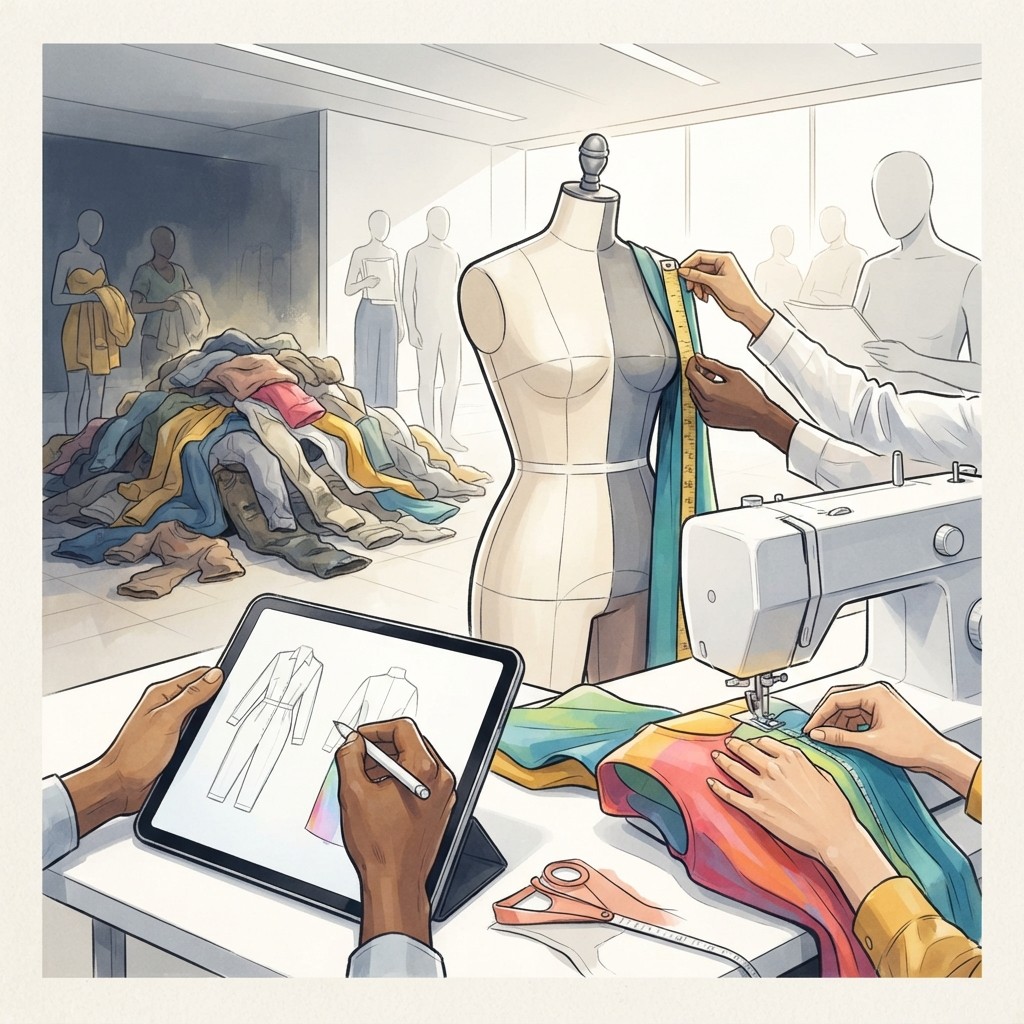
A rebrand changes what you say. A reinvention changes what you sell and to whom. Abercrombie did the second. Under Fran Horowitz, the company rewrote the product itself, opened up the sizing it had once famously capped, and changed who it put on the floor - and only then did the financial vindication arrive. The corporate purpose now filed in its own SEC documents reads 'Being here for you on the journey to being and becoming who you are,' and the telling detail is that it was built after listening sessions with associates and customers, not handed down from a creative director.7 That ordering matters. The slogan didn't drive the turnaround; it described a brand that had already changed its inputs.
“Candidly, we go after the cool kids… A lot of people don't belong [in our clothes], and they can't belong. Are we exclusionary? Absolutely.”2
The financial evidence is the part that separates this story from the usual corporate penance. In FY2024 the company posted $4.95 billion in net sales, up 16% year over year, at a 15% operating margin, with earnings per share growing 72%.5 And the market noticed first: in calendar 2023, ANF rose roughly 285%, the best performer in the entire S&P 1500 Composite Index, edging out even Nvidia's 239% - its strongest year since the 1996 IPO.6 Note the index. It was the S&P 1500, not the S&P 500; Abercrombie isn't a member of the latter. The precision matters because the whole point is that this is verifiable, not vibes. A reputational laundering doesn't show up as the top return in a 1,500-stock universe. A real operating turnaround does.
Isn't 'inclusion' just the new marketing skin on the same machine?
The fair objection is cynicism: every brand discovers inclusion the moment exclusion stops paying, so why credit Abercrombie for converting at the altar of its own balance sheet? It's a strong objection, and it's partly right - the company did not have a change of heart in a vacuum; fast fashion and a recession made the old model unworkable. But the cynical read still gets the causation wrong, the same way the redemption story does. If 'inclusion' here were only a marketing skin, it would be cheap to apply and easy to fake - and it would not have produced the best stock return in a 1,500-company index. You cannot focus-group your way to a 285% year. What's actually defensible is narrower and more interesting: the inclusion was a consequence of fixing the product economics, not the cause - and the marketing language came last, describing a rebuild that the sizing rack and the hiring desk had already done. Skin doesn't move EPS 72 points. Inventory and assortment do.
When a brand's reputation cracks, the reflex is to fix the message - new tagline, new manifesto, new apology. It almost never works, because the public can smell a slogan stapled to an unchanged machine. Abercrombie's reinvention held because it ran the other way: rebuild the product, open the sizing, change who you hire - and let the purpose statement describe the result instead of promising it. The order is the strategy. A new identity is credible only as the caption on real operational change; deployed as a substitute for it, it just gives your critics a fresh thing to disbelieve. If the slogan would survive the numbers being checked, you've earned it. If it depends on no one checking, you've only delayed the next scandal.
Abercrombie spent the better part of two decades proving an expensive idea: that you can build enormous sales on a doctrine of who doesn't belong, right up until the day the math turns and that doctrine is the only asset left. The comeback wasn't an apology that worked. It was the discovery that the most exclusionary thing about the old brand - the narrow look, the narrow sizes, the narrow door - was also the cheapest thing for a competitor to undercut. Inclusion, it turned out, wasn't the moral lesson. It was the larger market. The company that once said a lot of people can't belong found out, in record sales and the year's best stock, exactly how much money those people were carrying.
Culture Doctrine Canvas
A one-page canvas for the unwritten rules that actually run a company: the core beliefs, the behaviors they reward and punish, the lines it won't cross, and the moments that prove the doctrine is real. Blank to articulate your own operating culture before it drifts; filled as the worked example that decodes why the story's company behaves the way it does — even when it costs them.
Included, filled and blank, in the The Reinvention Casebook. See the set → · Preview the blank →
Sources
Where this comes from — the filings, records, and reporting behind it.
- 1Mike Jeffries served as CEO and Chairman of Abercrombie & Fitch from February 1992 — not 1993 — until his resignation in December 2014.
- 2In a 2006 interview with Salon, Jeffries stated: 'Candidly, we go after the cool kids… A lot of people don't belong [in our clothes], and they can't belong. Are we exclusionary? Absolutely.' The interview was resurfaced and went viral only in 2013, not 2006.
- 3In November 2004, the EEOC filed suit alleging A&F violated Title VII by discriminating in hiring and promotion based on race, color, national origin, and sex. The Consent Decree (given final court approval April 2005) required Abercrombie to pay $50 million and establish an Office of Diversity.
- 4The Supreme Court ruled 8-1 in EEOC v. Abercrombie & Fitch Stores, Inc. (575 U.S. 768, 2015) that an employer may not refuse to hire an applicant to avoid accommodating a religious practice, even without explicit notice from the applicant. Abercrombie ultimately paid $25,670 in damages and $18,983 in court costs to resolve the case.
- 5Abercrombie & Fitch's FY2024 (year ended February 1, 2025) full-year net sales were $4.95 billion, up 16% versus FY2023, with operating margin of 15% and EPS growth of 72%.
- 6ANF stock rose approximately 285% in calendar year 2023, making it the best-performing stock in the S&P 1500 Composite Index (not the S&P 500), surpassing Nvidia's 239% gain. This was ANF's best annual performance since its IPO in 1996.
- 7Abercrombie & Fitch's corporate purpose — 'Being here for you on the journey to being and becoming who you are' — was developed after listening sessions with associates and customers and is embedded in the company's SEC-filed annual report as of FY2022.
- 8Under Jeffries, Abercrombie grew from 36 stores and roughly $50M in annual sales in 1992 to over 1,000 stores and more than $4.5B in sales; the brand's financial decline began with the 2008 recession — not the 2013 quote controversy — and same-store sales fell for 17 consecutive months before Jeffries relented on pricing in September 2009.
More like this — beyond Abercrombie & Fitch
New Strategically analyses as they publish: the defining moves in business, checked against the record. No noise, and one click to leave.