Pairs with the Crisis Response Playbook — a ready-to-use strategy tool, filled for Coca-Cola. Included in the The Crisis Response Casebook →
Put a tax on sugary drinks and something predictable happens to the price tag. Raise it by about a third and shoppers buy about a third less — that is exactly what a 2024 study of five taxed U.S. cities found, and the drop held in the months that followed.6 For a company whose flagship product is sugar dissolved in water, a finding like that is not an inconvenience. It is an existential price elasticity, written into law. So when the world started reaching for that lever, Coca-Cola did not write a single play. It wrote two — and ran them at the same time.
The story you usually hear is the clean one: faced with a health backlash, Coca-Cola bravely pivoted to zero-sugar and reinvented itself. That half is true. The other half — the one that doesn't make the sustainability report — is that the company spent years and tens of millions of dollars to make sure the taxes never arrived in the first place.
“Coca-Cola and PepsiCo funded 95 national medical organizations from 2011 to 2015 while lobbying against 29 public health bills targeting soda consumption.”5
The pivot everyone cites — and the one they get wrong
Strategy decks love to reach for New Coke here: see, Coca-Cola can boldly reformulate under pressure. It's the wrong precedent. New Coke, launched in April 1985 and pulled roughly eleven weeks later, had nothing to do with sugar or health. It was a panic response to the Pepsi Challenge after fifteen straight years of share slippage — a taste fight, not a health fight.9 Reaching for it as a sugar-tax precedent is a category error. The real reformulation pivot is quieter, more recent, and far more disciplined: a portfolio steadily tilted toward zero-calorie versions, with Coca-Cola Zero Sugar carrying the weight.
And that hedge is working on the numbers. Coca-Cola Zero Sugar grew 14% across the full year 2025, with gains in every geographic operating segment.1 In 2024, the company's net revenues rose 3% to $47.1 billion and it gained value share across non-alcoholic ready-to-drink beverages.2 This is not a company being slowly killed by the health turn. It is a company that built a no-sugar product line big enough to absorb the blow before the blow fully landed — which is precisely what makes the reformulation story so flattering, and so incomplete.
The thesis: a hedge on one hand, a delay on the other
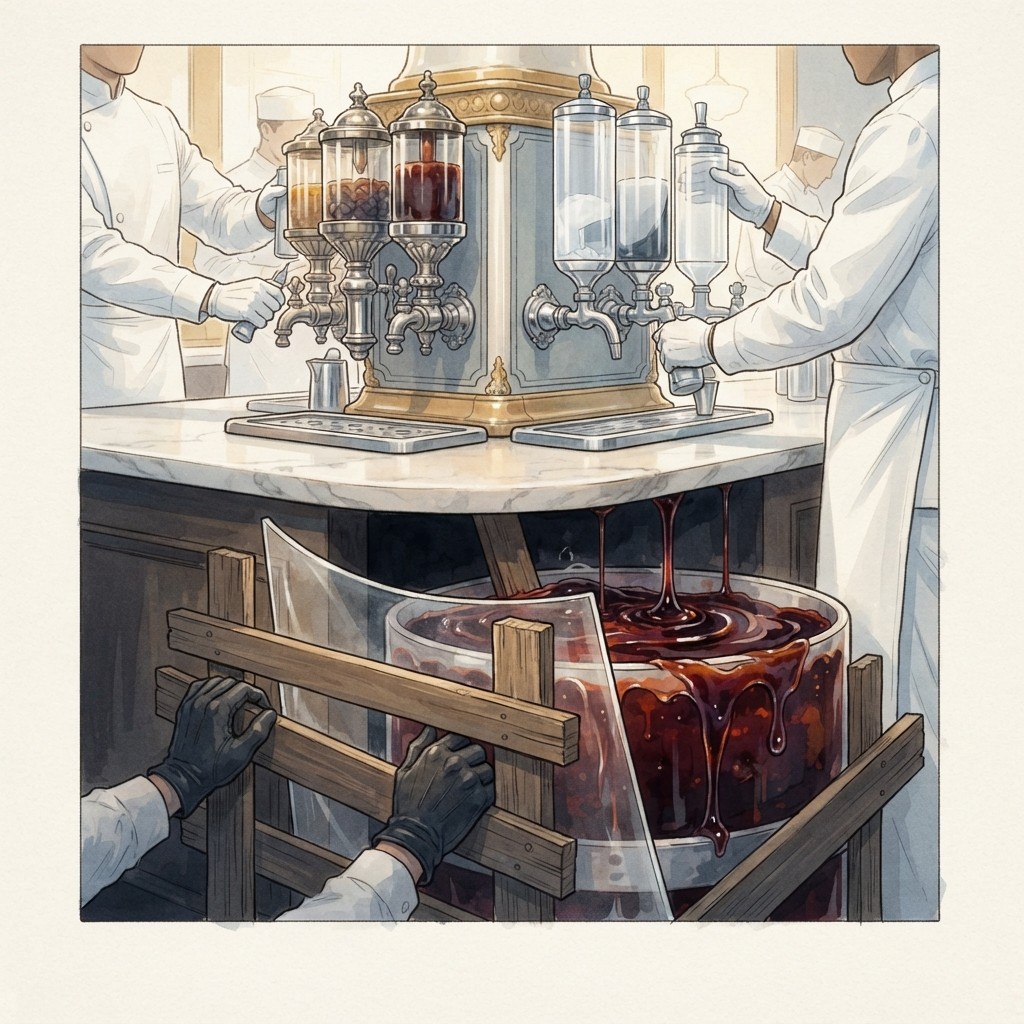
Here is the read worth arguing for. Coca-Cola's sugar-tax response was never a single heroic pivot. It was a dual-track delay operation. Track one was the genuine structural hedge — zero-sugar product that could keep earning even if sweetened cola got taxed into a corner. Track two was suppression: spend to defeat the taxes at the ballot box, in legislatures, and in the scientific literature, buying the years the hedge needed to mature. The reformulation gets the press release. The suppression bought the time.
The spending tells that story plainly. The soda industry's federal lobbying ran about $1.29 million in 2005. By 2009, when a federal soda tax was on the table, it had exploded thirty-fold to $40.28 million.3 That is not the pattern of an industry adapting. That is the pattern of an industry buying a wall. Coca-Cola alone averaged around $6 million a year in lobbying from 2011 to 20153 — and in 2018 spent $5.4 million on federal lobbying, part of a food-and-beverage industry outlay that quietly exceeded what the tobacco industry spent that same year.4
| The hedge (reformulation) | The delay (suppression) | |
|---|---|---|
| What it does | Builds revenue that survives a tax | Stops or weakens the tax |
| Visible in | The annual results and ESG report | Lobbying disclosures and ballot filings |
| Proof point | Coke Zero Sugar +14% in 2025 | $40.28M industry lobbying in 2009 |
| Time horizon | Years to scale a portfolio | Buys the years the hedge needs |
How you defeat a tax before it's written
The cleverest move in the suppression playbook isn't fighting individual taxes one city at a time — it's removing the power to tax at all. In 2018, Coca-Cola contributed nearly half of the roughly $20 million raised behind a Washington State ballot measure that would strip cities of the authority to levy soda taxes in the first place.4 Not 'vote down this tax' — 'make this kind of tax impossible to write.' Pre-empt the rule and you never have to win the argument again.
The third front is the most subtle: the science. Coca-Cola acknowledged spending $146 million from 2010 through 2017 on what it called well-being-related scientific research, partnerships, and health-professional activities.5 On its own, that reads like corporate philanthropy. Set against the finding that the company and PepsiCo funded 95 national medical organizations from 2011 to 2015 while simultaneously lobbying against 29 public health bills,5 it reads like something else: funding the referees while contesting the call. The point of funded science isn't to lie. It's to crowd the evidence base with friendly studies, muddy the consensus, and slow the regulatory clock — the same clock the zero-sugar portfolio was racing to beat.
Where the delay strategy meets a tax it can't lobby away
The dual track works beautifully against ballot measures and city councils. It works far worse against a national tax built to reward exactly the behavior Coca-Cola was hedging into. The UK's Soft Drinks Industry Levy — announced in 2016, in force from April 2018 — did something a flat ban never could: it taxed sugar content on a sliding scale, which meant a manufacturer could simply reformulate below the threshold and escape the levy entirely. They did. A 2025 study credited the levy with cutting roughly 6,600 calories per UK resident per year, and found 80% of that reduction came from manufacturers reformulating rather than from people drinking less.7 The tax didn't fight the industry's product. It bent the industry's incentives — and the suppression playbook has no good move against an incentive.
Isn't the reformulation enough to call this a real transformation?
The fair objection is that the zero-sugar success is genuine and the rest is just normal corporate self-interest — every regulated company lobbies, so why single Coke out? Two answers. First, the scale and pattern aren't ordinary: a thirtyfold lobbying surge timed precisely to a tax proposal, a campaign to abolish the taxing power itself, and a research spend that funds the very medical bodies whose endorsement shapes public health policy. That is not background lobbying; it is a strategy with a budget line. Second, and more telling, the suppression hasn't stopped — it's escalating. The American Beverage Association spent $1.7 million in just the first half of 2025, more than double the prior year and higher than its full annual total in all but one year since 2010, fighting SNAP soda-purchase restrictions.8 A company that had truly transformed past sugar wouldn't need to keep fighting this hard to defend it. The hedge is real. So is the thing the hedge is hedging against — and Coke is still defending both ends at once.
When a company under regulatory pressure tells a clean transformation story, look for the second ledger — the one in the lobbying disclosures, the ballot-committee filings, the funded-research footnotes. The visible pivot (a new product line, a sustainability pledge) buys credibility; the invisible track (lobbying, pre-emption, funded science) buys time, and time is what lets the visible pivot mature before the rule bites. Neither half is the whole truth. The genuine product hedge is real precisely because the suppression spending kept the threat at bay long enough for it to scale. Judge the strategy by what it spends on, not only by what it announces — and notice that the most durable defense is usually the one that bends the incentive rather than blocking it, which is exactly why a sliding-scale tax beat a flat ban.
Coca-Cola navigated the sugar tax the way a good chess player navigates a losing position: not with one brilliant move, but by trading time for safety. It poured money into keeping the taxes off the board, and used the years it bought to build a product that could survive them anyway. Both moves were rational. Both were expensive. And the cleanest proof that the threat was never imagined is the simplest one: a company that had truly drunk its own zero-sugar story would have stopped paying, years ago, to make sure no one taxed the sugar.
When a company manages a threat instead of meeting it head-on
Crisis Response Playbook
A playbook for a crisis already in motion: who decides, which plays fire on which trigger, and what gets said to whom. It replaces panic and the all-hands meeting with a pre-agreed sequence each person can run alone. Blank to pre-load before a crisis hits; filled as the worked example reconstructing the plays the story's team ran — and the ones they should have.
Included, filled and blank, in the The Crisis Response Casebook. See the set → · Preview the blank →
Sources
Where this comes from — the filings, records, and reporting behind it.
- 1Coca-Cola Zero Sugar grew 14% for the full year 2025, driven by growth across all geographic operating segments.
- 2For full year 2024, Coca-Cola's net revenues grew 3% to $47.1 billion and organic revenues grew 12%; the company gained value share in total non-alcoholic ready-to-drink beverages.
- 3The Coca-Cola Company, PepsiCo, and the American Beverage Association spent $1.29 million on federal lobbying in 2005, rising to $40.28 million by 2009—a 30x increase—following federal soda-tax proposals. Between 2011–2015 Coca-Cola alone averaged $6 million/year in lobbying.
- 4In 2018, the food and beverage industry spent $22.3 million on lobbying including $5.4 million by Coca-Cola—more than the tobacco industry's $16.7 million that year. Coca-Cola contributed nearly half of the $20 million raised to support Washington State's ballot measure stripping cities of soda-tax authority.
- 5Coca-Cola acknowledged spending $146 million on 'well-being-related scientific research, partnership and health professional activities' from 2010 through 2017. A peer-reviewed 2016 study found Coca-Cola and PepsiCo funded 95 national medical organizations from 2011–2015 while lobbying against 29 public health bills targeting soda consumption.
- 6A peer-reviewed study in JAMA Health Forum (2024) found a ~33% price increase in sugar-sweetened beverages in five taxed US cities led to a ~33% drop in consumer purchase volumes, sustained in months following implementation.
- 7The UK's Soft Drinks Industry Levy (SDIL), introduced in 2018, accelerated reformulation; a 2025 study found it reduced approximately 6,600 calories per year per UK resident, with 80% attributable to manufacturer reformulation. In November 2025, the UK Labour Government announced widening the SDIL to milkshakes, coffees, and protein drinks.
- 8The American Beverage Association (which lobbies for Coca-Cola and PepsiCo) spent $1.7 million on lobbying in the first half of 2025—more than double its outlay during the same period in 2024—a figure surpassing its full annual lobbying total in all but one year since 2010, driven by SNAP soda-purchase restriction battles.
- 9New Coke was launched April 23, 1985, and withdrawn after approximately 79 days. It was not a health or sugar-tax response: Coca-Cola introduced it to counter the Pepsi Challenge taste campaign after 15 consecutive years of market share slippage. Company officials consistently denied it was a deliberate marketing stunt.
More like this — beyond Coca-Cola
New Strategically analyses as they publish: the defining moves in business, checked against the record. No noise, and one click to leave.