Pairs with the Crisis Response Playbook — a ready-to-use strategy tool. Included in the The Crisis Response Casebook →
Three regulators looked at the same company, in the same years, over the same complaints, and each came away describing a different crime. California called it a 'frat boy' culture of harassment and discrimination.1 The federal EEOC called it Title VII violations - harassment, pregnancy discrimination, retaliation.2 The SEC, when its turn came, charged none of that. It charged a paperwork failure: a company that could not properly collect and assess its own employees' complaints, and that wrote separation agreements telling departing workers to phone home before they phoned the government.4 Same company, same period, three different theories of what broke.
The official story is that Activision Blizzard had a harassment scandal and paid to make it go away. That is the tidy version, and it misses the thing that should actually unsettle a board. The scandal was the symptom. The disease was a governance system in which complaints went in and information never came out - not to the board, not to investors, not to regulators - until the company's own settlements admitted, line by line, that the problems were never isolated.
The thesis: this was a disclosure failure wearing a harassment costume
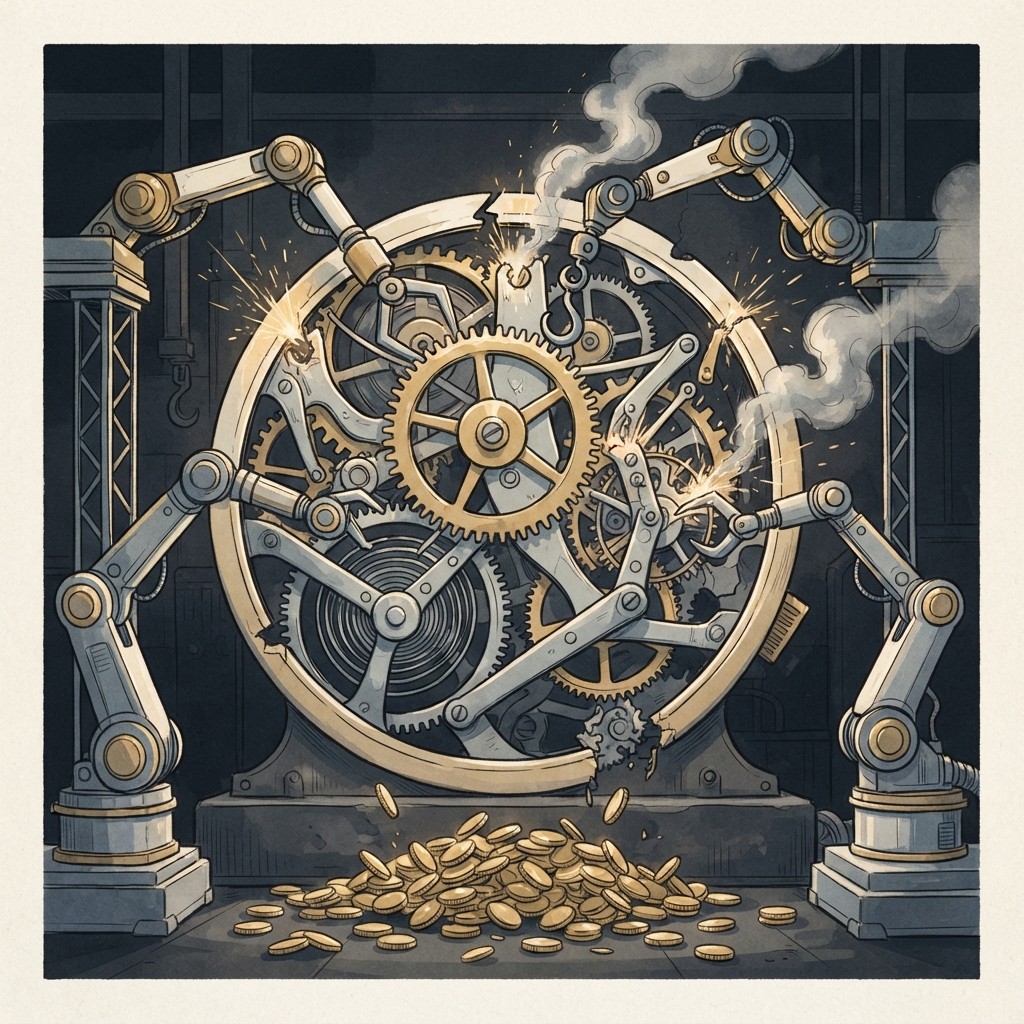
Here is the read that holds the whole mess together. Activision Blizzard did not face one crisis; it faced a cascading institutional failure that surfaced on three separate fronts because the underlying machine was the same on all three. The machine took in misconduct complaints and failed to route them anywhere they could trigger accountability. The state and federal agencies saw the human consequence - the harassment itself. The SEC saw the plumbing. And the plumbing is the part that explains why a company could repeatedly insist its problems were isolated or overstated while its own files said otherwise.
Read the SEC charge slowly, because it is the most revealing of the three. The agency did not say Activision harassed anyone. It said Activision lacked the controls to collect and assess employee misconduct complaints from 2018 through 2021, and so could not have known the scale of what it had.4 That is a confession of structural blindness. If the company genuinely could not aggregate its own complaints, then every reassuring statement to investors - that the issues were contained, that leadership had it handled - was made by people who, by the regulator's own finding, did not have the data to make it.
Then there is the second SEC charge, the one that exposes intent in a way a culture allegation never can. Activision's separation agreements required 'a significant number' of departing employees to notify the company if regulators contacted them, or if they themselves wanted to file a complaint.5 Think about what that clause is engineered to do. It does not stop misconduct. It stops misconduct from reaching the people who could act on it. The SEC noted it found no specific case where an employee was actually blocked from reaching regulators5 - but the contract was built to chill them anyway. A company that writes that clause is not managing a culture problem. It is managing the flow of information about a culture problem.
Three settlements, three different stories the company told
| California (DFEH/CRD) | Federal EEOC | SEC | |
|---|---|---|---|
| What it charged | 'Frat boy' harassment, discrimination, retaliation | Title VII: harassment, pregnancy bias, retaliation | Failed disclosure controls; whistleblower suppression |
| Resolution | $54M settlement, Dec 2023 | $18M consent decree, Mar 2022 | $35M, Feb 2023 |
| Admission of wrongdoing | Settlement, pending court approval | No admission of liability | Neither admission nor denial |
| What it really measured | The harm to workers | The harm to workers | The machine that hid the harm |
Notice what the resolutions have in common: in none of them did Activision admit it did the underlying wrong. The EEOC consent decree carried no admission of liability.2 The SEC settlement was explicitly 'not an admission or denial of wrongdoing.'4 California's state deal set aside $54 million - approximately $45.75 million of it earmarked specifically for a fund compensating female employees11 - which is a remarkably concrete number to attach to a problem the company had spent two years calling overstated. You do not earmark $45 million for systematic pay inequality you believe is a few bad actors.
The regulators themselves couldn't agree on what to do
If you want the clearest evidence that this crisis was bigger than any single story, look at how the agencies treated each other. California did not quietly defer to the federal settlement. It denounced the EEOC's $18 million deal as insufficient and objected to it in federal court - an objection the judge called untimely9 - then was denied formal intervention and allowed only to file an amicus brief.10 The state agency argued the federal settlement was undermining its own, larger state case.9 The federal consent decree, meanwhile, came loaded with structural remedies: unannounced audits, mandatory training, an EEO component baked into manager performance reviews, an outside consultant, and an internal coordinator.3 Those are the fixes you impose when you believe the problem is systemic and the company cannot be trusted to police itself.
Two regulators, fighting over which one got to hold Activision accountable, is not a sign the misconduct was minor. It is a sign there was enough of it to start a turf war over. And it left the company in the strange position of arguing, in three venues at once, three subtly different versions of 'this is being handled' - while the venues openly contradicted each other about whether it was.
The honest counter: didn't the system actually work?
The fair objection is that this is too damning. Activision got investigated, sued, and required to pay more than $100 million across three regulatory actions - the bulk of the California amount earmarked directly for harmed workers, not the state - and forced into binding oversight regimes. Isn't that accountability functioning exactly as designed? A bad actor was caught and made to pay. Where, the skeptic asks, is the governance scandal in a company that got caught?
Two things blunt that defense. First, none of the resolutions required the company to admit it did the underlying wrong24 - a $107 million tab with the liability blanks left empty is not the same as a verdict, and it lets the next executive tell the next board a clean version of events. Second, and more telling, the man at the top never faced a personal finding at all. After the report alleging the CEO knew about misconduct, the board did not investigate him in public; it endorsed him, stating it remained confident he had 'appropriately addressed workplace issues brought to his attention.'7 No court has held him personally liable.7 A system that fines the corporation $107 million while the leadership that ran it through the crisis exits intact has not really pierced the thing the SEC actually charged: the gap between what the people in charge knew and what everyone else was allowed to find out.
When a culture crisis breaks, the cameras chase the worst anecdote. The board's real exposure is one layer down, in the machinery: can the company actually aggregate its own complaints, and does anything in its contracts discourage people from escalating? Activision's most expensive lesson wasn't that bad behavior happened - it's that the SEC could charge it $35 million for not being able to see its own behavior, and for writing exit clauses that kept the seeing optional. If your complaint data can't reach your board cleanly, every reassurance your board gives is a guess. Fix the routing before you draft the apology - because regulators eventually subpoena the routing, and the routing doesn't know how to spin.
The Microsoft acquisition closed and folded the whole saga into a larger company, but the loose thread is still pulling: a Delaware shareholder suit alleged the CEO rushed the sale to escape the scandal's consequences, he denied it, and Microsoft ultimately agreed to a $250 million settlement to make it go away.812 That last number is the tell. Long after the harassment headlines faded, the most expensive open question wasn't about anyone's behavior. It was about timing, information, and who knew what when - the same question the SEC asked, scaled up to the deal itself.
Activision Blizzard kept insisting its problem was a few bad rooms in a big company. The settlements told a different story, and they told it in triplicate. The harm reached enough people to draw two civil-rights agencies into a fight over jurisdiction; the concealment reached far enough that the securities regulator - the one body whose only client is the truthfulness of what a company tells its owners - decided the real offense wasn't what happened, but that the company built a system in which the people responsible for knowing could plausibly say they didn't. That is the crisis underneath the crisis. It is also the one most likely to repeat, because it never shows up in a headline. It shows up in a clause.
When the cover-up outlives the crime
Crisis Response Playbook
A playbook for a crisis already in motion: who decides, which plays fire on which trigger, and what gets said to whom. It replaces panic and the all-hands meeting with a pre-agreed sequence each person can run alone. Blank to pre-load before a crisis hits; filled as the worked example reconstructing the plays the story's team ran — and the ones they should have.
Included, filled and blank, in the The Crisis Response Casebook. See the set → · Preview the blank →
Sources
Where this comes from — the filings, records, and reporting behind it.
- 1On July 20, 2021, the California DFEH filed suit in Los Angeles Superior Court following a two-year investigation, alleging Activision Blizzard fostered a 'frat boy' culture of sexual harassment, gender discrimination, and retaliation against female employees.
- 2On September 27, 2021, the EEOC filed a federal lawsuit alleging Activision Blizzard violated Title VII via sexual harassment, pregnancy discrimination, and retaliation; that lawsuit was resolved by an $18 million consent decree approved by the U.S. District Court for the Central District of California on March 30, 2022.
- 3Activision Blizzard's $18 million EEOC consent decree required, among other things, unannounced audits of harassment practices, mandatory HR training, an EEO component to manager performance reviews, a third-party EEO consultant, and an internal EEO coordinator.
- 4On February 3, 2023, the SEC announced that Activision Blizzard agreed to pay $35 million to settle charges that it (1) failed to maintain adequate disclosure controls to collect and assess employee workplace misconduct complaints between 2018 and 2021, and (2) violated SEC whistleblower Rule 21F-17(a) via separation agreements requiring departing employees to notify the company before contacting regulators. The settlement was not an admission or denial of wrongdoing, and the SEC order did not explicitly mention Kotick or sexual harassment.
- 5Activision Blizzard's separation agreements required 'a significant number' of departing employees to tell the company if regulators contacted them or if they wished to file their own complaint, which the SEC found violated federal whistleblower protections; the SEC noted it was not aware of any specific instances where an employee was actually prevented from contacting regulators.
- 6On December 15, 2023, the California Civil Rights Department (successor to DFEH) and Activision Blizzard announced a settlement of the state civil rights lawsuit, with Activision setting aside $54 million—$47 million earmarked for pay and promotion inequalities against female employees—and committing to outside consultants to review pay and promotion processes.
- 7In November 2021, the Wall Street Journal reported that CEO Bobby Kotick had known about significant harassment issues at Activision Blizzard, including alleged sexual misconduct; Activision's board publicly responded that it remained 'confident that Bobby Kotick appropriately addressed workplace issues brought to his attention.' Kotick denied the claims. No court has found him personally liable.
- 8A 2022 lawsuit filed in Delaware's Court of Chancery by Swedish pension fund Sjunde AP-Fonden (AP7) alleged that Kotick rushed the sale of Activision Blizzard to Microsoft in late 2021 to avoid consequences of the sexual misconduct scandals. As of January 2026, Kotick denied the allegations and his legal team filed a formal Answer contesting them. Microsoft subsequently agreed to a $250 million settlement to resolve the shareholder suit.
- 9At the March 29, 2022 hearing on the EEOC consent decree, California's DFEH urged the court to delay approval; the judge told DFEH its filing was 'untimely,' approved the decree, and denied DFEH formal intervention while allowing it to participate as amicus curiae.
- 10The district court denied CRD's two motions to intervene in the EEOC's federal action, recognizing that CRD's criticisms of the consent decree were based on inaccuracies and speculation; although denied intervention, the court granted CRD amicus curiae status, allowing it to participate in hearings and file a detailed brief with exhibits.
- 11On December 15, 2023, the California Civil Rights Department announced an approximately $54.875 million settlement with Activision Blizzard; of the total, approximately $45.75 million was designated for a settlement fund to compensate female employees and contract workers who worked at the company between October 12, 2015 and December 31, 2020.
- 12Microsoft agreed to pay $250 million to settle the AP7 shareholder lawsuit over the Activision Blizzard acquisition, according to court filings obtained by Game Developer; a settlement notice stated 'Microsoft is entering into this Stipulation solely to avoid the burden, expense, and distraction of continued litigation,' with no admission of wrongdoing.
More like this — beyond Activision Blizzard
New Strategically analyses as they publish: the defining moves in business, checked against the record. No noise, and one click to leave.