Pairs with the Adjacency / Synergy Map — a ready-to-use strategy tool. Included in the Adjacency Expansion Casebook →
“When does the business next door belong to you?”
In July 2008, the company everyone calls Activision Blizzard was born, and the very first thing it did was obscure its own paternity — not in the press release, but in the accounting. On paper, Activision did not acquire Blizzard. Vivendi Games, the holding company that owned Blizzard, was deemed the legal acquirer, and Activision, Inc. was simply renamed.1 The franchise everyone remembers as the buyer was, for the auditors, the thing being bought. That inversion is the whole story in miniature. The popular history of Activision Blizzard is a tale of one studio leveraging Call of Duty into an empire. The filings tell a colder story: a company that reached every new market the same way — by writing a check.
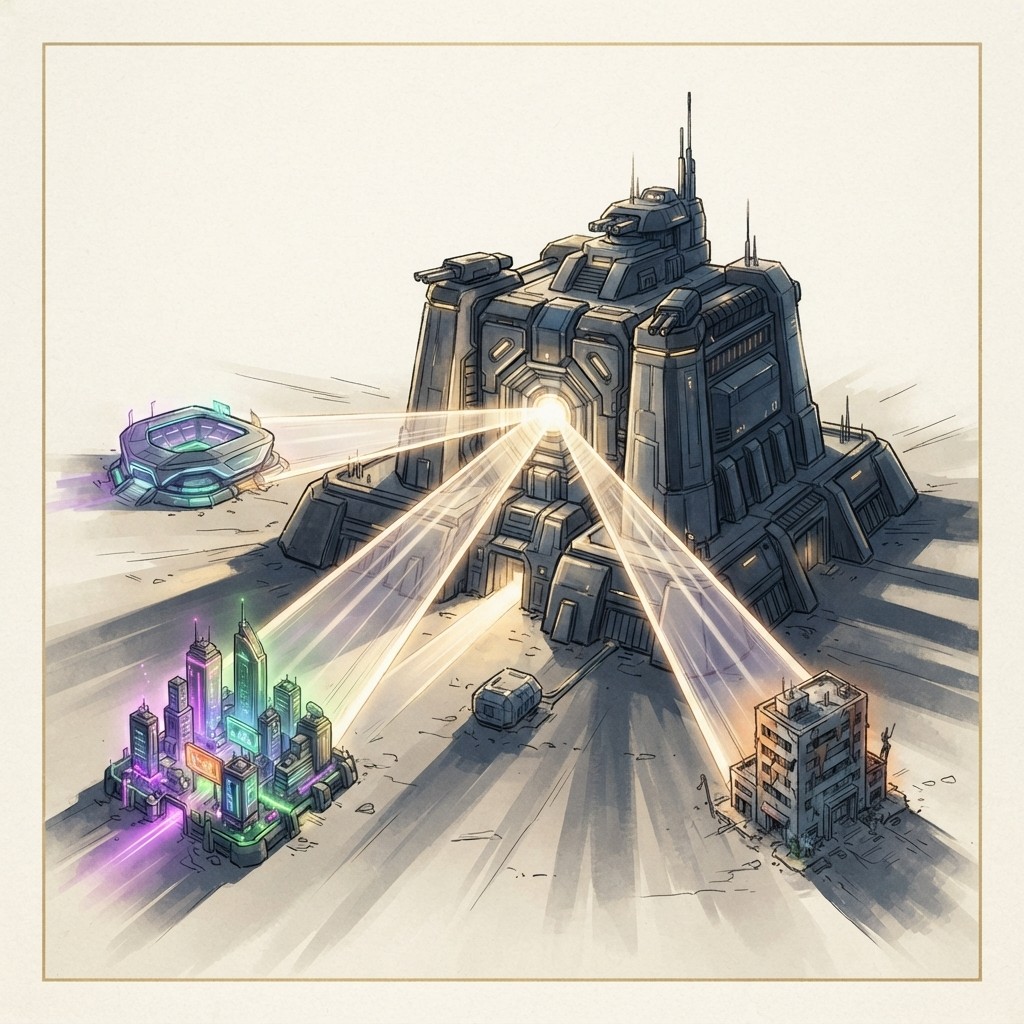
The official narrative is organic-franchise leverage: a beloved shooter spawns a beloved empire. The real one is inorganic-platform building: console scale, mobile audiences, and an esports league, each acquired rather than grown, in two distinct waves and across fifteen years. The genius wasn't the games. It was the deals.
Wave one: a merger that pretended to be an acquisition
Activision stockholders approved the Vivendi transaction on July 8, 2008, and it closed the next day. Concurrently, Vivendi bought roughly 62.9 million newly issued shares at $27.50 apiece — about $1.7 billion — to take control of the combined entity.2 Strip away the brand romance and what happened is plain: Vivendi folded Blizzard into Activision's listing and bought a controlling stake in the result. The reverse-acquisition structure means the historical financials before July 2008 belong to Vivendi Games, not Activision.1 This matters because it sets the template. Activision Blizzard's reach into the PC and World of Warcraft audience didn't come from internal R&D. It came pre-built, inside a company that legally swallowed Activision from the inside out and let it keep the name on the door.
| The popular version | What the SEC documents say | |
|---|---|---|
| The 2008 deal | Activision acquires Blizzard | Reverse acquisition; Vivendi Games is the accounting acquirer |
| Who controlled the result | Activision management | Vivendi, via a ~$1.7B share purchase |
| Pre-2008 financial history | Activision's | Vivendi Games' |
| The expansion engine | Franchise leverage | Acquired IP and acquired audiences |
Wave two: buying a mobile audience at a discount, and an esports league at a fire sale
By the mid-2010s the growth was no longer on consoles. It was in pockets. Activision Blizzard didn't build a mobile business — it bought the company that already owned one. King, the maker of Candy Crush, was acquired for $18.00 per share in cash, a total equity value of $5.9 billion, funded by roughly $3.6 billion of offshore cash and a $2.3 billion term loan.3 The deal closed on February 23, 2016, not 2015 as it's often dated — that earlier date is the announcement, not the close.4 And here is the detail favorable retellings skip: $18.00 was a discount to King's 2014 IPO price of $22.50 per share.9 Activision didn't pay a premium for a hot mobile property. It bought a cooling one for less than the public market had once paid.
The esports leg was cheaper still, and far less triumphant than the framing suggests. Days before the King close, Activision Blizzard acquired the business of Major League Gaming — MLG.tv, GameBattles, live-event capability — folding it into its Media Networks arm.5 The reported price was about $46 million. For context, MLG had raised at least $69 million in venture funding10 and was reportedly running low on cash.11 The 'ESPN of esports' ambition that became the public banner over the deal was aspirational positioning draped on a distressed asset, not a coup. Activision didn't outbid the world for a prize. It stepped in when a company was nearly out of runway and bought the wreckage at a fraction of what investors had put in.
Why three checks were smarter than three product launches
The causal logic underneath all of this is the same in every wave, and it explains why a games company kept reaching for acquisitions instead of for its own studios. Audiences are slow to build and impossible to fake. A PC raid guild, a mobile puzzle habit, a competitive-gaming tournament circuit — each is a network of attention assembled over years, and none of them transfer just because you make great shooters. Call of Duty fans do not automatically become Candy Crush whales or World of Warcraft subscribers. So when the goal is to widen the addressable revenue pool quickly, you don't grow into the adjacency — you buy the company that already owns the audience there. The IP and the installed base arrive on day one, fully formed, instead of three uncertain years later. The discipline wasn't in restraint; it was in target selection — Blizzard's subscribers, King's mobile reach, MLG's tournament rails. Each filled a pool Activision's own franchises couldn't reach on their own.
“ABS Partners C.V., a wholly owned subsidiary of Activision Blizzard, agreed to acquire all outstanding shares of King Digital Entertainment plc for $18.00 per share in cash, a total equity value of $5.9 billion.”3
Wasn't this just brilliant compounding growth?
The fair objection is that this reads as cynical — that a strategy of buying audiences worked, full stop, because the whole structure sold for $68.7 billion in 2022, a price announced at $95.00 per share, with Microsoft poised to become the world's third-largest gaming company by revenue.6 That is a real result and it deserves the credit. But two facts complicate the clean compounding story. First, the deal didn't even close on its own terms: the UK regulator initially blocked it in April 2023, Microsoft restructured it to hand cloud-gaming rights to Ubisoft, and the thing finally closed in October 2023 at a total cost of $75.4 billion — nearly $7 billion above the announced figure.7 Second, the underlying business was not on an uninterrupted climb into the sale. GAAP net revenues fell from $8.80 billion in 2021 to $7.53 billion in 2022, a 14% decline, with EPS dropping from $3.44 to $1.92.8 The exit was historic. The trajectory beneath it was not a straight line up.
The thing that's slow and expensive to build in a new market is rarely the product — it's the assembled attention: the subscribers, the habit, the tournament circuit. Great IP in your core does not transfer that attention for free. So the real question before any adjacency move isn't 'can we build something good here?' but 'who already owns the audience, and what would it cost to own them instead of compete with them?' Activision answered that question three times with a checkbook. Just don't let the brand romance hide the receipts: the prices, the structures, and the distressed sellers tell you whether you bought a prize or a wreck — and a discount to someone's IPO price is a tell, not a triumph.
Activision Blizzard expanded beyond its core the way a holding company does, not the way a studio does. It reached the PC raiders through a reverse merger that quietly demoted Activision to the acquired party. It reached the mobile billions by buying a cooling Candy Crush for less than its IPO price. It reached competitive gaming by catching a venture-funded league as it ran out of cash. Each move filled a pool the franchises couldn't reach alone — and the final irony is structural. The empire built entirely by absorbing other companies' audiences ended its independent life by being absorbed itself, name and all, into a bigger machine. It had always grown by buying. In the end, the buyer became the bought.
Adjacency / Synergy Map
A one-page canvas for an adjacency play: the new business next door, the shared assets that justify entering it, the synergies that actually transfer versus the ones that evaporate on contact, and the dis-synergies nobody put on the deck. Blank to test your own expansion; filled as the worked example showing where the story's 'natural adjacency' was real and where it was wishful.
Included, filled and blank, in the Adjacency Expansion Casebook. See the set → · Preview the blank →
Sources
Where this comes from — the filings, records, and reporting behind it.
- 1On July 9, 2008, a business combination among Activision, Inc., Vivendi S.A., and Vivendi Games, Inc. was consummated; Activision, Inc. was renamed Activision Blizzard, Inc. For accounting purposes the transaction is treated as a reverse acquisition with Vivendi Games deemed the acquirer.
- 2The Activision–Vivendi transaction was approved by Activision stockholders on July 8, 2008 and closed July 9, 2008. Vivendi purchased approximately 62.9 million newly issued shares at $27.50 per share for approximately $1.7 billion concurrently with the merger.
- 3ABS Partners C.V., a wholly owned subsidiary of Activision Blizzard, agreed to acquire all outstanding shares of King Digital Entertainment plc for $18.00 per share in cash, a total equity value of $5.9 billion; funded by approximately $3.6 billion of offshore cash and a $2.3 billion incremental term loan.
- 4Activision Blizzard completed the King acquisition on February 23, 2016, at $18.00 per share in cash; King became a wholly owned subsidiary of Activision Blizzard.
- 5Activision Blizzard acquired the business of Major League Gaming for a reported $46 million (per eSports Observer; Activision did not disclose price in its official release); the deal added MLG.tv, GameBattles, and live-event capabilities to Activision Blizzard Media Networks.
- 6Microsoft announced on January 18, 2022 its intent to acquire Activision Blizzard for $95.00 per share in an all-cash transaction valued at $68.7 billion inclusive of Activision Blizzard's net cash; at close Microsoft would become the world's third-largest gaming company by revenue behind Tencent and Sony.
- 7The Microsoft–Activision Blizzard acquisition closed on October 13, 2023 with a total cost of $75.4 billion, after the UK CMA initially blocked the deal in April 2023 and Microsoft restructured the transaction to transfer cloud-gaming rights for Activision titles to Ubisoft in perpetuity.
- 8For the year ended December 31, 2022, Activision Blizzard's GAAP net revenues were $7.53 billion, down from $8.80 billion in 2021 (a 14% decline); GAAP operating margin was 22% and GAAP EPS was $1.92 vs. $3.44 in 2021.
- 9King Digital Entertainment priced its IPO at $22.50 per share on March 25, 2014, offering 22,200,000 ordinary shares on the New York Stock Exchange.
- 10MLG had raised at least $69 million in venture funding from backers that included Oak Investment Partners and Treehouse Capital at the time of the Activision Blizzard acquisition.
- 11Despite raising an additional $6 million in 2014, MLG was rumored to be running out of money, and the company was unable to find a suitor before Activision stepped in.
Weighing outside help with a decision like this? Hiring a commercial due diligence provider
More like this — beyond Activision Blizzard
New Strategically analyses as they publish: the defining moves in business, checked against the record. No noise, and one click to leave.