Pairs with the Pricing Power Diagnostic — a ready-to-use strategy tool. Included in the The Pricing Play Casebook →
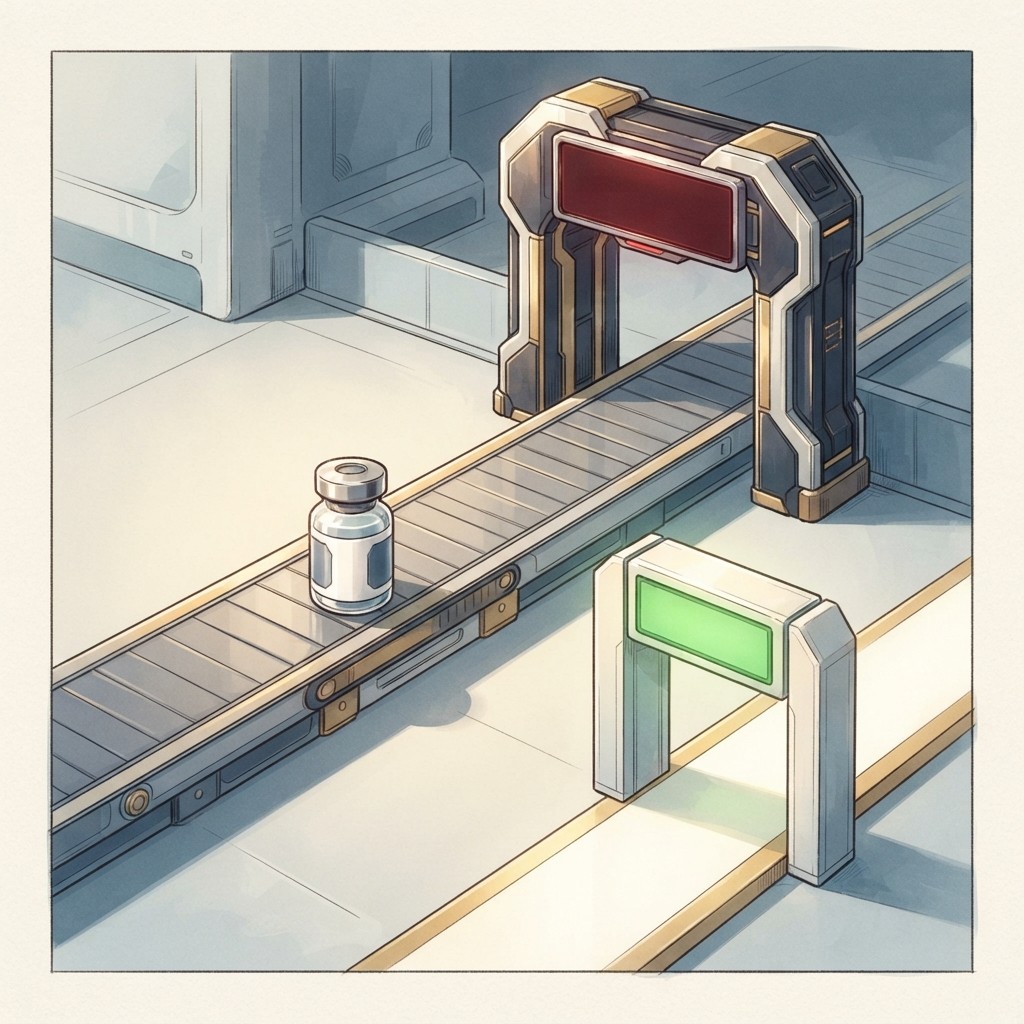
There is a single molecule called tirzepatide. Eli Lilly will sell you a 28-day supply of it for $1,086.37 if you go through your insurance.2 It will also sell you the same active drug, in a single-dose vial, for as little as $299 a month if you pay cash through its own website.4 Same compound, same company, same factory - and a price gap of nearly four to one. That gap is not an accident, a glitch, or a charity. It is the strategy, drawn in dollars.
The official story is that the high price is greed and the low price is a concession Lilly was pressured into making for access. The real story runs the other way. The $1,086 list price is the lever Lilly pulls inside the insurance system, and the $299 cash price is a weapon it built to win a market - by starving out competitors and getting in front of the government before the government gets to it.
The list price was never the price anyone pays
When Zepbound was approved in November 2023, Lilly set the list price at $1,059.87 and said it was about 20% below the leading semaglutide injection.1 Both of those numbers are marketing artifacts. The list price - what the industry calls wholesale acquisition cost - is the figure Lilly charges wholesalers before any rebate or discount, and Lilly says so plainly.2 In the insurance channel, pharmacy benefit managers negotiate large rebates off that headline number. A high sticker price isn't a bug in that system; it's the raw material. The bigger the list price, the bigger the rebate a PBM can extract and show its clients - which is exactly why the list price is set high and held there even as the drug gets cheaper to everyone in practice.
You can see the gap between sticker and reality in Lilly's own filings. In 2025, Mounjaro and Zepbound together made up 56% of the company's total revenue, with Zepbound alone up about 175% year over year to $13.5 billion.3 And yet the same 10-K states that U.S. volume growth was partially offset by lower realized prices in both products across every quarter of the year.3 The list price barely moved. The price Lilly actually banks per patient was falling. The company is selling far more boxes for less money each - which is the signature of a business chasing share, not margin.
The $299 channel is a moat, not a mercy
On December 1, 2025, Lilly cut the cash price of Zepbound single-dose vials sold through LillyDirect to $299-$449 a month, down from $349-$499, and explicitly described the move as bypassing third-party supply-chain entities.4 Read that as a charity and you miss what it does. Look at the timing instead. By the time Lilly cut the cash price, the cheap alternative had been removed. After the FDA declared the tirzepatide shortage resolved in December 2024, and a federal court in Texas denied the compounders' bid to keep going in early 2025, the enforcement discretion that let pharmacies sell compounded copies ended - first for retail-style 503A pharmacies, then for the larger 503B outsourcing facilities on March 19, 2025.7 The grey market that had been undercutting Zepbound on price was shut by law.
Compounders had been the real competition for the cash-paying, uninsured patient - the one who couldn't get a PBM rebate. The moment that channel was legally closed, Lilly's own direct-to-consumer vials moved into the vacuum, and at a price the compounders used to occupy. It worked: direct-to-consumer sales then accounted for more than a third of new Zepbound prescriptions.4 Lilly didn't just lower a price. It rebuilt the bottom of the market in its own image and collected the patients who used to buy from somebody else.
| The insurance channel | The LillyDirect cash channel | |
|---|---|---|
| Headline price / month | $1,086.37 list (WAC) | $299–$449 |
| Who it's aimed at | Insurers and PBMs | Uninsured / self-pay patients |
| What the price feeds | Rebate negotiation off the top | Direct revenue, no middlemen |
| What it crowds out | Rival injectables on formulary | Compounded copies, now banned |
Getting in front of the government before it arrives
The third front is the one that matters most over a decade. Medicare's Part D program has long excluded drugs prescribed primarily for weight loss, and at the state level the picture is just as thin - only 13 state Medicaid programs covered GLP-1s for obesity under fee-for-service as of early 2026, and even then usually behind prior authorization.6 That left a vast, government-paid population that Lilly's drug could not legally reach. Rather than wait to be compelled, Lilly negotiated. It reached preliminary pricing agreements with the U.S. government in 2025, and from July 1, 2026, eligible Medicare Part D patients can get the Zepbound KwikPen for weight loss at $50 a month through what Lilly calls its Medicare GLP-1 Bridge program.5
“Eligible Medicare Part D beneficiaries who meet clinical criteria can access Zepbound KwikPen for weight loss for $50 per month.”5
A $50 Medicare price looks like surrender. It is closer to a down payment. By walking into the government channel on its own terms - a defined program, a defined price, a defined eligible population - Lilly sets the reference point before a future round of mandatory price negotiation can set one for it. The same logic shows up in its next product: when the FDA approved Lilly's oral GLP-1 pill in April 2026, it arrived at $149 a month for self-pay and $25 for the commercially insured with a savings card.8 The pattern is consistent. Establish the volume, establish the price points, and own the field before the rules change underneath you.
A four-to-one gap between a list price and a cash price almost never means one number is fair and the other is greedy. It usually means the two prices are pointed at two different battles. The high number is a lever inside a rebate system that rewards high numbers; the low number is a blade aimed at whoever was undercutting you. Before you read a price cut as a concession, check what got removed from the market right before it - and who walked into the empty space. The discount that lands the moment your cheapest competitor is outlawed isn't generosity. It's a land grab with a friendly face.
The honest counter: maybe access just won
The fair objection is that this reads too cynically. Lilly's own numbers say realized prices fell while volume soared, which is exactly what you'd expect if competition and public pressure were genuinely forcing prices down toward patients' reach.3 A $50 Medicare price and a $299 cash vial are real money in real pockets, whatever the boardroom motive. And the compounding shutdown was a court and an agency acting on a resolved shortage, not a favor Lilly engineered.7 All true. But intent and outcome aren't in tension here - they're aligned, which is the point. The most durable strategies are the ones where doing the self-interested thing and the popular thing are the same move. Lilly lowered prices because lower prices, run through the right channels at the right moment, win more than they cost. Access advocates and Lilly's strategists ended up wanting the same thing for very different reasons, and only one of them is keeping the patients.
So the real product was never the molecule, which anyone can now copy once the patent clock runs out. The product is the architecture: a high list price that feeds the rebate machine, a cash channel priced to inherit the grey market the day it was outlawed, and a government deal struck early enough to set the reference point rather than receive it. Lilly didn't lower the price of tirzepatide. It built three doors into one drug and made sure it owned all three. The genius isn't the $299. It's that the $299 arrived exactly when there was nowhere cheaper left to go.
Pricing Power Diagnostic
A scored diagnostic of pricing power: brand pull, switching costs, substitutes, and how critical the product is to the buyer. Each dimension rated 1-5 so you can see, at a glance, whether a price rise sticks or sends customers running. Blank to grade your own offer; filled as the worked example scoring a story's business on its real ability to charge more.
Included, filled and blank, in the The Pricing Play Casebook. See the set → · Preview the blank →
Sources
Where this comes from — the filings, records, and reporting behind it.
- 1FDA approved Zepbound (tirzepatide) on November 8, 2023, as the first dual GIP/GLP-1 receptor agonist for chronic weight management; initial list price announced as $1,059.87, described by Lilly as approximately 20% below semaglutide 2.4 mg injection.
- 2Zepbound's WAC (wholesale acquisition cost, i.e. list price) is $1,086.37 per 28-day supply of pens; the prices patients actually pay depend on insurance, PBM terms, and savings programs. Lilly defines WAC as the price at which it sells to wholesalers, explicitly excluding rebates and discounts.
- 3Mounjaro and Zepbound together accounted for 56% of Lilly's total revenues in 2025; Mounjaro generated $22.965 billion (up ~99% YoY) and Zepbound generated $13.542 billion (up ~175% YoY); U.S. volume grew sharply but realized prices declined in both products across all 2025 quarters.
- 4Lilly lowered LillyDirect cash prices for Zepbound single-dose vials on December 1, 2025 to $299–$449/month (down from $349–$499), bypassing third-party supply chain entities; direct-to-consumer sales then accounted for more than a third of new Zepbound prescriptions.
- 5Lilly reached preliminary drug pricing agreements with the U.S. government in 2025; as of July 1, 2026, Medicare Part D beneficiaries meeting clinical criteria can access Zepbound KwikPen for weight loss for $50/month through the Medicare GLP-1 Bridge program.
- 6Only 13 state Medicaid programs covered GLP-1s for obesity under fee-for-service as of January 2026; Medicaid coverage of GLP-1s for obesity remains optional for states, and when covered, drugs are typically subject to prior authorization.
- 7The FDA declared the tirzepatide shortage resolved in December 2024; a federal district court (Northern District of Texas, Outsourcing Facilities Association v. FDA, 4:24-cv-00953) denied plaintiffs' preliminary injunction on March 5, 2025; enforcement discretion for 503A compounding pharmacies ended immediately thereafter and for 503B outsourcing facilities on March 19, 2025, ending the legal basis for compounding tirzepatide copies.
- 8The FDA approved Eli Lilly's oral GLP-1 pill Foundayo (orforglipron) on April 1, 2026, priced at $149/month for self-pay patients at the lowest dose and $25/month for commercially insured patients with a savings card; Lilly licensed the orforglipron molecule from Chugai in 2018 for $50 million upfront.
More like this — beyond Eli Lilly
New Strategically analyses as they publish: the defining moves in business, checked against the record. No noise, and one click to leave.