Pairs with the Cross-Subsidy Map — a ready-to-use strategy tool. Included in the The Cross-Subsidy Casebook →
In the first quarter of 2026, Samsung reported the best numbers in its history: KRW 133.87 trillion in revenue, up 69% in a year, and operating profit of KRW 57.23 trillion - a 756% jump.3 The headlines wrote themselves: the AI memory boom had turned Samsung into a money cannon. But buried in the same release was a quieter line. The division that makes Galaxy phones, TVs, and refrigerators - the part of Samsung most people actually touch - saw its operating profit fall 38%.3 In Samsung's best quarter ever, its consumer business had its worst in years. The two facts are not a coincidence. They are the same fact, told from two ends of an internal invoice.
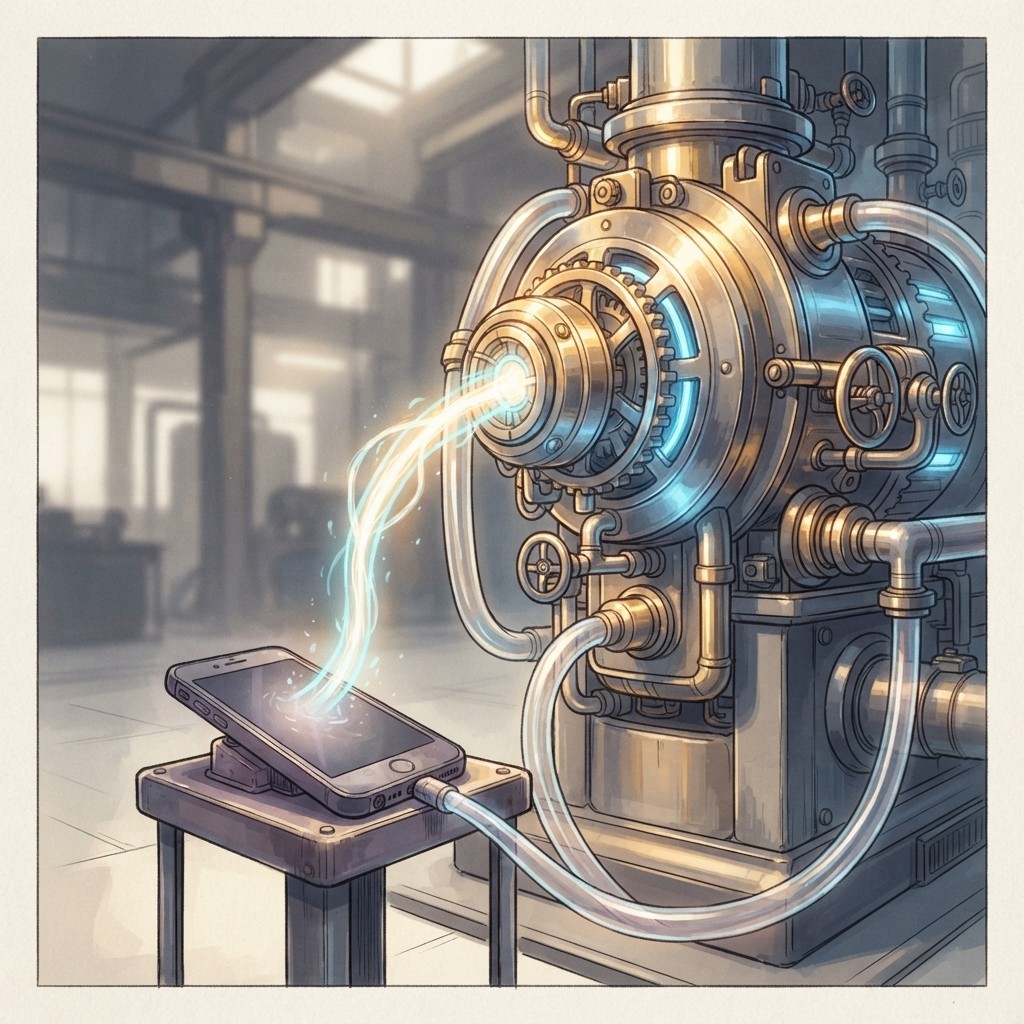
The story everyone repeats is that Samsung's chip profits subsidize everything else - that DRAM bankrolls the Galaxy. It's a comforting picture of an empire with a money pump in the basement. It's also wrong in the way that matters most: the pump runs in both directions, and when it runs hottest, it doesn't fund the rest of the house. It floods it.
The price one Samsung division charges another
Samsung Electronics is, in effect, two companies wearing one logo. The DS division makes memory chips. The DX division uses them - in phones, in TVs, in appliances. When DX needs DRAM, it doesn't shop the open market; it buys from DS at an internal transfer price. In ordinary times this is plumbing nobody notices. In a memory upcycle, it becomes the whole story. In Q1 2026, with DRAM and NAND prices up roughly 90% in a single quarter, mobile DRAM prices nearly doubled - to about $70 for a 12GB module - and core component costs blew past 40% of a finished device's total cost.45 DS booked that as record revenue. DX booked it as a gutted margin. The empire's left hand was billing its right hand into the ground.
Here is the thesis a smart friend can repeat at dinner: Samsung's memory division is not a steady subsidy engine for the rest of the company. It is a profit tornado that alternately rescues and cannibalizes its own siblings - and in a boom, it does the cannibalizing. The 'chips fund the Galaxy' narrative quietly assumes the chip division's prices are someone else's problem. They aren't. They're Samsung's, on both sides of the trade.
Run the tape backward and the subsidy reverses
If the chip division always funded everyone, 2023 should have been impossible. Instead, the memory cycle turned and the DS division posted an annual operating loss of KRW 14.87 trillion, driving Samsung's total operating profit to its lowest level in more than 15 years.29 That one division's loss nearly erased the entire group: Samsung's total operating profit for 2023 was just KRW 6.57 trillion, with DX and Display the only reason the company stayed in the black at all.1 DRAM didn't crawl back to profitability until the very last quarter of the year.1 In other words, in 2023 the phones subsidized the chips. The famous money pump had reversed without telling anyone, because nobody was watching the right gauge.
| Memory downturn (2023) | Memory upcycle (Q1 2026) | |
|---|---|---|
| DS chip division | KRW 14.87T operating loss | KRW 53.7T operating profit (~48x YoY) |
| DX phone/appliance division | Kept the group profitable | Operating profit −38% YoY |
| Group operating profit | KRW 6.57T (−~84.9%) | KRW 57.23T (record) |
| Who subsidized whom | DX rescued DS | DS squeezed DX |
Notice what that table kills. The popular health check on Samsung is revenue - the giant top line that makes it look unsinkable. But in 2023 revenue fell only 14.3% while operating profit fell about 85%.29 Top-line scale is a structurally misleading indicator of this company, because one division's swing through the memory cycle drowns out everything else. Samsung doesn't have a revenue problem or a revenue strength. It has a single commodity price that decides whether the year was triumphant or nearly catastrophic.
The squeeze is bending one whole division toward a loss
The cannibalization isn't a one-quarter blip; it's a trend with a slope. The DX division's operating margin peaked in 2023 and has fallen every year since - rising from roughly 7% (2022) to 8.46% (2023), then declining to 7.11% (2024), 6.84% (2025), and a projected ~6% in 2026, the year industry sources expect DX to post its first-ever annual operating loss.5 The early signs are already in the books: in FY2025, even as memory sales climbed to KRW 104.1 trillion, Samsung's Visual Display and Digital Appliances businesses slipped into a small annual operating loss.6 A company that makes the world's memory chips is watching its own appliance line drown in the cost of memory. Same logo. Opposite math.
“Samsung's union demanded that 70% of the semiconductor bonus pool be shared across the company. Samsung refused, saying it would reward loss-making divisions.”8
That dispute is the cross-subsidy made visible. Workers across Samsung wanted the chip division's record bonus pool spread to everyone - including, pointedly, the divisions the chip boom was hurting. Management said no: don't reward the divisions losing money.8 But the reason some of those divisions are losing money is precisely that the chip division is charging them more. The company is refusing to share the spoils of a boom that it is itself imposing on the people it won't share with. The internal politics can't be tidy, because the internal economics aren't.
Isn't the countercyclical genius the whole point?
The honest objection runs like this: this volatility is a feature, not a bug. Samsung's real edge is its nerve - spending through downturns while rivals cut, then owning the recovery. That story is true and documented. In the 2008-2009 crisis, and again in the 2012 and 2019 downturns, Samsung raised semiconductor capex while competitors retrenched and emerged dominant in DRAM and NAND.7 By that logic, the cannibalization is just the cost of running a great chip business, and the chip business is worth it.
But look at when the money is going out the door this time. Samsung's 2026 plan is roughly $73 billion in capex - a 109% jump over 2025 - and it is being deployed in the middle of an upcycle, not a downturn.7 That inverts the entire playbook. Spending big when prices are low and rivals are scared is contrarian discipline. Spending big when prices are at record highs and everyone is racing is not contrarianism - it's defense against a real threat. SK Hynix out-earned Samsung's chip division on margin in Q1 2026, posting 72% operating margin against Samsung's 65.7% - a figure TrendForce noted was slightly above Nvidia's reported 65% operating margin for its comparable period.4 And inside Samsung's own DS division, the foundry and System LSI units stayed loss-making even at the peak.4 The countercyclical legend is being invoked to justify a procyclical bet made under competitive pressure. The genius is real history; it is not what's happening now.
The seductive idea of a 'profit engine that funds everything' breaks the moment the engine sells its output to the businesses it's supposedly funding. Internal transfer pricing is not an accounting detail - it's a steering wheel. When Samsung's memory arm nearly doubled the DRAM price to its own phone arm, it transferred margin from a low-multiple consumer business to a high-multiple commodity one, optimizing the part of itself the market rewards most and starving the part customers actually meet. The lesson for any vertically integrated company: a 'cross-subsidy' that only flows one way in the good times isn't a subsidy at all. It's a tax with better PR - and the safe-looking diversification can be one volatile input price away from cannibalizing itself.
The broader Samsung chaebol accounts for roughly a quarter of an entire national economy,8 balanced on a chip price that no executive controls. When that price soars, the world calls it Samsung's best year, and the part of Samsung that builds the products bleeds. When it crashes, the chip division nearly takes the whole company down and the appliances quietly hold the line. The empire was never funded by a steady subsidy from below. It was funded by a cycle - and the danger was never that the cycle would stop. It's that, at its most generous, the cycle eats the hand it's supposed to feed.
When the money flows from somewhere unexpected
Cross-Subsidy Map
A map of the hidden plumbing inside a multi-line business: the cash-cow donor, the loss-making recipient it props up, and the strategic reason the subsidy exists. Use it to see who is really paying for what, and how exposed the whole structure is if the donor weakens. Blank to map your own portfolio's internal transfers; filled as the worked example of a business where one line secretly carries another.
Included, filled and blank, in the The Cross-Subsidy Casebook. See the set → · Preview the blank →
Sources
Where this comes from — the filings, records, and reporting behind it.
- 1Samsung Electronics FY2023: KRW 258.94 trillion revenue, KRW 6.57 trillion operating profit; DS Division Q4 2023 operating loss of KRW 2.18 trillion; DRAM returned to profit only in Q4 2023.
- 2Samsung's semiconductor business posted annual operating losses of KRW 14.87 trillion (~$11.17 billion) in 2023; company capex for 2023 was KRW 53.1 trillion, of which KRW 48.4 trillion was in the DS division; net profit fell 72.2% YoY to KRW 15.49 trillion.
- 3Samsung Q1 2026: consolidated revenue KRW 133.87 trillion (+69% YoY, record); operating profit KRW 57.23 trillion (+756%); DS division revenue KRW 81.7 trillion, operating profit KRW 53.7 trillion (~48x YoY); DS accounted for 93.8% of total operating profit; memory alone was KRW 74.8 trillion of DS revenue (91.6% of DS); DX division operating profit fell 38% YoY to ~KRW 3 trillion.
- 4Samsung DS division Q1 2026 operating margin was 65.7%, slightly above Nvidia's 65%; SK Hynix reported an even higher 72% operating margin in Q1 2026; DRAM and NAND flash prices jumped ~90% QoQ in Q1 2026; foundry and LSI sub-units within DS remained loss-making.
- 5DX division operating margin dropped from 7% (2022) to 8.46% (2023), 7.11% (2024), 6.84% (2025), with 2026 projected at 6%; DX division projected to post its first annual operating loss in 2026; memory division nearly doubled mobile DRAM prices to ~$70/12GB, with core component costs exceeding 40% of total device cost.
- 6Samsung FY2025: KRW 333.6 trillion revenue, KRW 43.6 trillion operating profit; DS division revenue KRW 130.1 trillion (+17% YoY), DS operating profit KRW 24.9 trillion; memory sales KRW 104.1 trillion (+23% YoY); DX revenue KRW 188.0 trillion but operating profit only KRW 12.9 trillion; Visual Display and Digital Appliances moved into a small annual operating loss.
- 7Samsung's countercyclical investment strategy: during 2008-2009 financial crisis Samsung increased semiconductor capex while rivals cut, emerging with dominant DRAM and NAND share; a similar pattern occurred in the 2012 and 2019 memory downturns. The 2026 investment of ~$73 billion (109% above 2025 capex) differs because it is deployed during an upcycle, eliminating the traditional countercyclical advantage.
- 8The broader Samsung chaebol accounts for approximately 23% of the entire South Korean economy and a similar proportion of its exports. Samsung Electronics is the world's largest memory chip maker. Samsung's union demanded 70% of the semiconductor-business bonus pool be shared across the company — Samsung rejected this, saying it would reward loss-making divisions.
- 9Samsung FY2023 full-year operating profit fell to KRW 6.57 trillion, down 85% from KRW 43.38 trillion in 2022 — the lowest annual profit in more than 15 years; revenue fell 14% YoY.
More like this — beyond Samsung
New Strategically analyses as they publish: the defining moves in business, checked against the record. No noise, and one click to leave.