Pairs with the Disruption Vulnerability Assessment — a ready-to-use strategy tool, filled for NIO. Included in the Fall Casebook →
“How much of your decline can the agreed explanation actually account for?”
In March 2020, NIO did something most companies would rather die than do: it told a regulator, in writing, that it had substantial doubt about its own ability to keep operating.3 The cash was nearly gone. A Chinese electric-car startup that had promised to out-Tesla Tesla was, by its own admission, weeks from the edge. The stock had cratered. The obituaries were half-written. And then a city government wired the money. NIO is the company that has been 'about to die' for six straight years - and keeps, inconveniently for the doomsayers, not dying.
The story everyone tells is that NIO is a cash furnace headed for bankruptcy, kept alive on borrowed time. Almost every word of that is half-true and pointed the wrong way. NIO does burn cash - but it has never been allowed to burn out, because something keeps catching it before it hits the ground. The interesting question was never will NIO survive. It was who keeps deciding it must.
The rescue that wasn't a billion dollars
Start with the moment NIO confessed its own mortality. Weeks after that going-concern filing, in April 2020, a consortium led by Hefei City Construction and Investment Holding - alongside a central-government investment corporation and an Anhui provincial fund - signed agreements to put RMB 7 billion (about US$990 million) into a newly created entity called 'NIO China,' taking a collective 24.1% stake.3 The press shorthand became '$1 billion government bailout,' and that shorthand quietly buries the most important detail: this was not a charity check. The Hefei municipal government alone supplied RMB 5 billion of it - for a 17% slice of NIO China - with provincial and central entities covering the rest.4 A city bought into a carmaker the public markets had given up on.
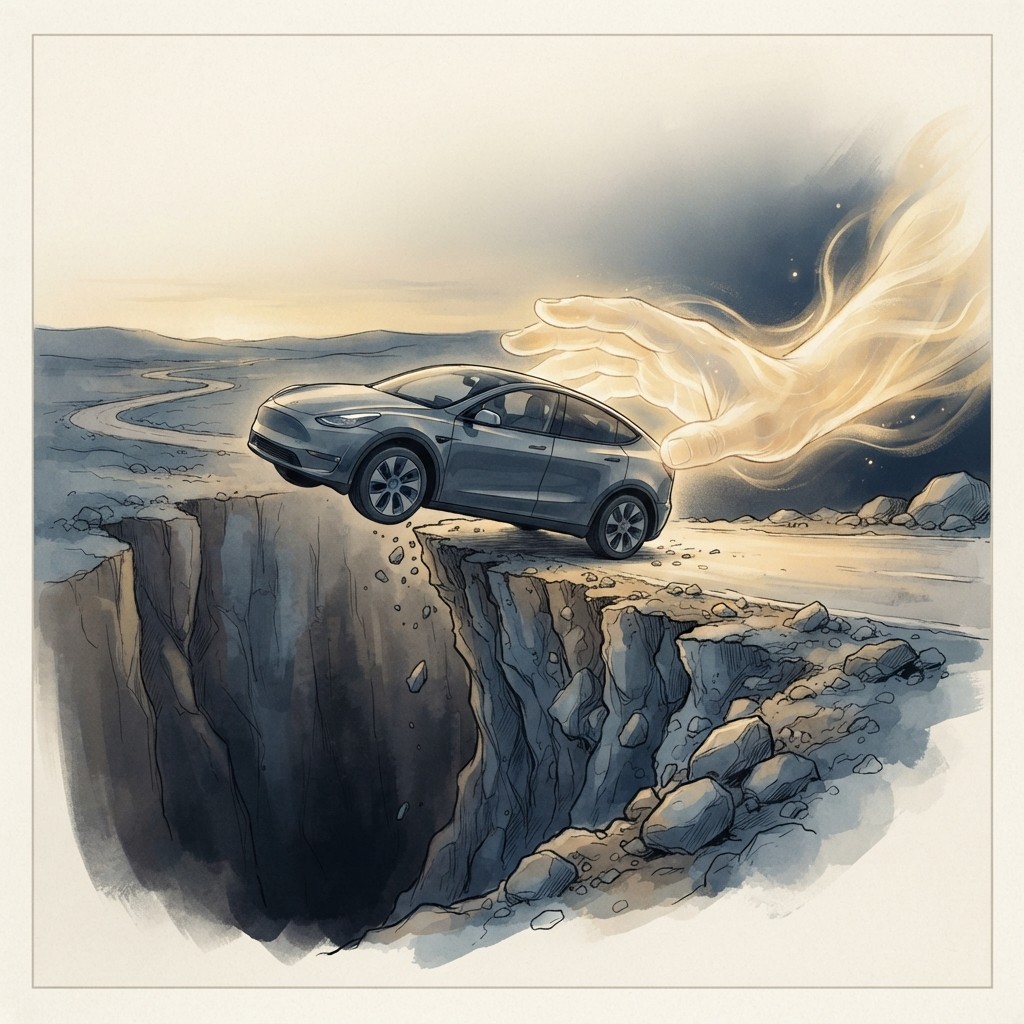
That is the mechanism the bankruptcy narrative misses entirely. NIO is not a normal company waiting to run out of road. It is an industrial-policy asset. Hefei did not invest to flip the stock; it invested to anchor an EV-and-battery cluster in its city, the way it had earlier bet on a display-panel maker. Once a local government stakes its credibility - and its tax base, and its jobs program - on a company surviving, that company's downside is no longer governed by its cash flow alone. The bailout was a signal as much as a deposit: a statement that this firm sits inside something larger than itself, and the something larger will not let it fall over.
“There is no such thing as a failed gambling in the future.”7
Even the part of the Hefei deal most often dressed up as a hidden time-bomb - the 'gambling agreement' (对赌协议), a share-repurchase trigger that would supposedly come due if NIO underperformed - turns out to be defused. CEO William Li confirmed publicly in July 2022 that NIO had already bought back the Anhui investors' shares across 2020 and 2021, paying RMB 7.5 billion for stakes with an original value of RMB 1.5 billion.7 NIO paid five times in to extinguish the trigger. Expensive, yes - but the open liability everyone kept pointing to had quietly been closed two years before the doom commentary peaked.
Then a Gulf state showed up with the next save
If Hefei were a one-off, you could call it luck. It wasn't. In 2023, a second sovereign rescuer arrived from a very different direction. CYVN Holdings, an Abu Dhabi state-linked vehicle, came in two tranches: a July deal pairing US$738.5 million of new equity with a separate US$350 million purchase of a Tencent affiliate's existing shares, and then, in December, a US$2.2 billion strategic equity investment - 294 million newly issued shares at US$7.50 each, lifting CYVN to roughly 20.1% of NIO.5 Net it out and Abu Dhabi directed around US$3.3 billion at the company, of which roughly US$2.94 billion landed on NIO's balance sheet as primary capital. By early 2026 that stake had been folded into a new Abu Dhabi state fund whose board chairman is the emirate's crown prince.6 NIO's largest backers are now, in effect, a Chinese city and a Gulf royal family.
| Hefei consortium (2020) | CYVN / Abu Dhabi (2023) | |
|---|---|---|
| Trigger | NIO's own going-concern doubt | Chinese EV price war squeezing cash |
| Headline capital | RMB 7 billion (~$990M) | ~$3.3 billion directed; ~$2.94B primary |
| Who | City + provincial + central state funds | Abu Dhabi state-linked holding |
| What they bought | 24.1% of 'NIO China' | ~20.1% of NIO Inc. |
| Real motive | Anchor a local EV cluster | A sovereign EV / tech bet |
Here is the thesis, plainly. NIO's survival question is structurally real - the company has genuinely burned cash for years - but it is perennially overstated, because NIO has never come close to a disorderly failure. Each time the runway shortened, a sovereign or quasi-sovereign rescuer stepped in before it ran dry. That makes the true risk not sudden death but something quieter and more corrosive: slow capital dilution and competitive irrelevance in an accelerating Chinese EV price war. You don't go bankrupt. You just keep selling pieces of yourself to stay in the game - and the game gets harder.
The losses everyone says are exploding - aren't
The bankruptcy case leans hard on one image: losses widening sharply, year after year, a company accelerating toward a wall. Look at the actual numbers and the acceleration disappears. Net loss did jump 43.5% in 2023, to RMB 20.7 billion.1 But in 2024 it grew only 8.1%, to RMB 22.4 billion - and the operating loss actually shrank 3.4%, even as deliveries hit a record 221,970 vehicles, up 38.7%, on RMB 65.7 billion of revenue.2 A company genuinely spiraling does not post a record-delivery year with a falling operating loss. The narrative of runaway burn does not survive contact with the 2024 filing.
And the 2025 annual report closes the case on the backward-looking version of the question entirely. Net loss fell to RMB 14.9 billion, NIO generated positive operating cash flow for the year, and recorded its first net-profitable quarter in Q4 2025.8 A company that was 'weeks from death' in 2020 was, five years later, cash-generative. The survival frame had quietly expired. The honest forward question is no longer solvency - it is margin trajectory and whether NIO can hold a defensible position in a market where every rival is cutting price.
But isn't a company that survives only on rescues already dead?
The fair objection is brutal: a firm that needs a sovereign every few years to avoid insolvency hasn't proven viability - it has proven only that it can find patrons. There's truth in it. A company kept alive by capital injections is, by definition, not yet standing on its own commercial legs, and each rescue dilutes the holders who came before. The cautionary version of NIO is not a bankruptcy - it's a permanent ward of the state, raising and burning in cycles, its equity sliced thinner with every save while nimbler, profitable rivals eat the market.
But notice what that objection concedes. It abandons the dramatic claim - imminent death - for the duller, truer one: slow erosion. That's the right argument, and it's exactly the thesis. The widely-cited distress signals deserve the same skepticism: when a model built for mature firms flashes 'distress' on a pre-profit growth company sitting on a sovereign-backed cash cushion, the model is mismeasuring, not prophesying. The reason NIO's rescuers keep showing up is that they are not betting on a quarter - they are betting on a decade-long industrial position, and they have already shown they will pay to defend it. That doesn't make NIO safe. It makes it the wrong company to short on a death thesis.
A company's survival isn't always a function of its own cash flow - sometimes it's a function of who else is standing behind it and why. When a city has staked its industrial strategy on you, or a sovereign fund has bought a fifth of you for reasons larger than this year's margin, your downside is no longer governed by the runway alone. The lesson cuts both ways: it is a genuine moat against disorderly collapse, and a genuine trap, because the same patrons who save you from bankruptcy dilute you toward irrelevance. Read the cap table, not just the cash burn - the most important number may be who owns the next rescue, and what they actually want from it.
NIO has spent six years being declared dead by people reading the cash-burn line and ignoring the ownership line. The cash burn was real; the death was always theoretical, because the company sits inside something that won't let it fall over - a city's industrial bet, then a Gulf state's. The genius, if there is one, was never financial discipline. It was being worth saving to people with the power to save you. The right question was never whether NIO would run out of money. It was how many times its rescuers would refill the tank - and what they'd own by the time it finally ran on its own.
When the cash-flow story misses the real one
Disruption Vulnerability Assessment
An assessment that rates a company across the dimensions that predict disruption: how cheaply a challenger can serve the unsexy bottom of the market, how trapped you are by margins and a satisfied core. Blank to score your own position before the cliff; filled as the worked example showing where the story's incumbent was already exposed while the numbers still looked great.
Included, filled and blank, in the Fall Casebook. See the set → · Preview the blank →
Sources
Where this comes from — the filings, records, and reporting behind it.
- 1NIO full-year 2023 net loss was RMB 20,719.8 million (US$2,918.3 million), up 43.5% year-over-year; full-year 2023 vehicle deliveries were 160,038 units; cash and equivalents (incl. restricted cash, short-term investments and long-term time deposits) were RMB 57.3 billion (US$8.1 billion) as of December 31, 2023.
- 2NIO full-year 2024 net loss was RMB 22,401.7 million (US$3,069.0 million), up 8.1% year-over-year; full-year 2024 vehicle deliveries were a record 221,970 units (up 38.7%); full-year 2024 revenues were RMB 65,731.6 million (US$9,005.2 million); operating loss for 2024 decreased 3.4% from the prior year.
- 3In April 2020, NIO signed definitive agreements for a RMB 7 billion (US$990 million) strategic investment led by Hefei City Construction and Investment Holding, State Development & Investment Corp., and Anhui Provincial Emerging Industry Investment Co. in exchange for a collective 24.1% stake in newly created NIO China; NIO's own management had raised going-concern doubts in a March 2020 regulatory filing.
- 4The Hefei municipal government component of the 2020 rescue was RMB 5 billion for a 17% stake in NIO China; provincial and central government entities provided the balance of the RMB 7 billion total.
- 5In December 2023, NIO announced a US$2.2 billion strategic equity investment from CYVN Holdings (Abu Dhabi), subscribing for 294,000,000 newly issued Class A ordinary shares at US$7.50 per share; following completion, CYVN would beneficially own approximately 20.1% of NIO's total shares. A prior July 2023 tranche comprised US$738.5 million of new equity and a concurrent US$350 million secondary purchase from a Tencent affiliate.
- 6CYVN's Nio stake (originally ~20.1%, diluted to 17.9% by early 2026 due to subsequent share issuances) has been folded into Abu Dhabi state-owned L'imad Holding Company, whose board chairman is Crown Prince Sheikh Khaled bin Mohamed bin Zayed Al Nahyan; a January 2026 SEC Schedule 13D amendment confirmed this ownership chain.
- 7NIO CEO William Li stated publicly in a July 2022 CCTV interview that NIO had already completed two share buybacks from Anhui/Hefei investors in 2020 and 2021 — paying RMB 7.5 billion for shares with original value of RMB 1.5 billion — thereby settling the repurchase-trigger 'gambling agreement'. Li described the arrangement as not a failed 'gamble' and said there is 'no such thing as a failed gambling in the future.'
- 8NIO's 2025 20-F (period ending December 31, 2025, filed April 10, 2026) reports net losses of RMB 20,719.8 million in 2023, RMB 22,401.7 million in 2024, and RMB 14,942.6 million in 2025; the company generated positive operating cash flow in 2025 and recorded its first quarterly net profit in Q4 2025.
Weighing outside help with a decision like this? Hiring a turnaround or restructuring advisor
More like this — beyond NIO
New Strategically analyses as they publish: the defining moves in business, checked against the record. No noise, and one click to leave.