Pairs with the Pricing Power Diagnostic — a ready-to-use strategy tool, filled for BMW. Included in the The Premium Position Casebook →
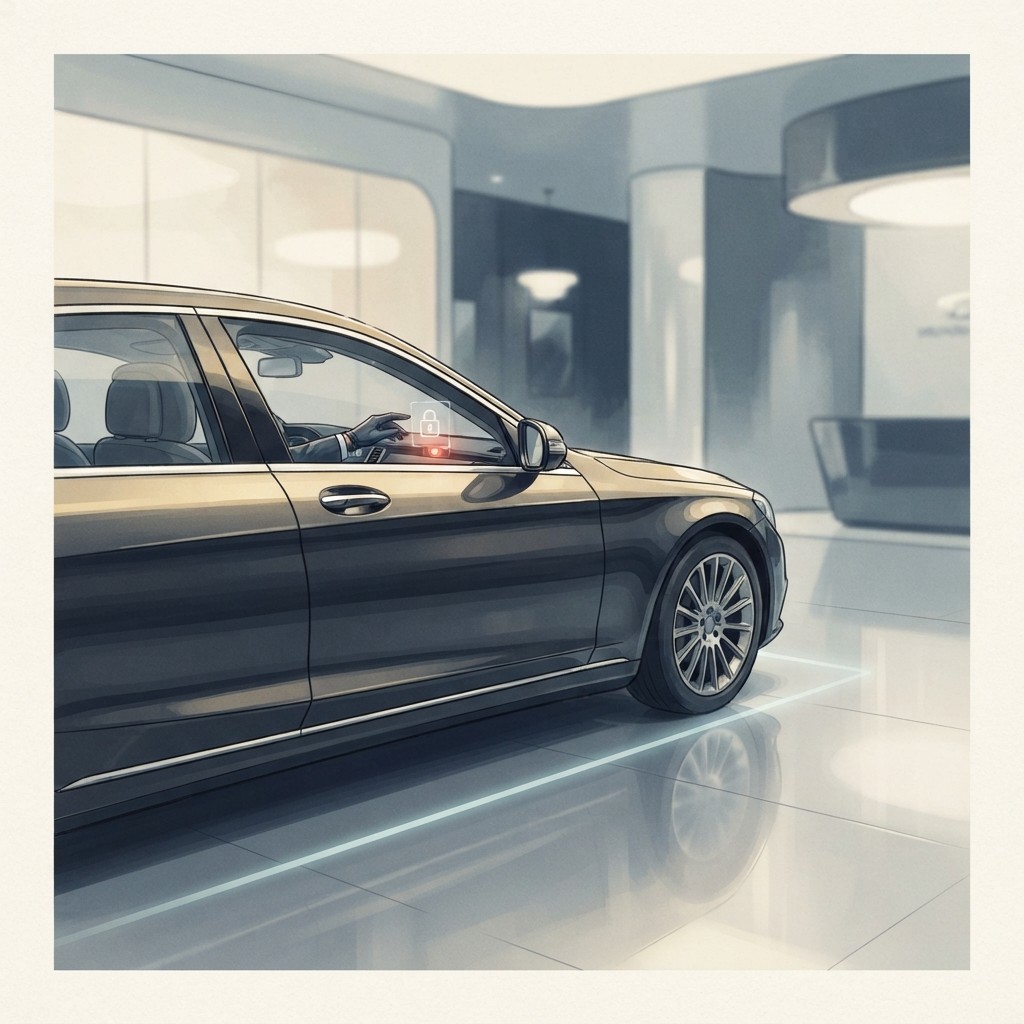
Picture a brand-new BMW in a driveway in Munich on a cold morning. The seats can warm. The wires are run, the heating elements are sewn into the leather, the hardware sits there fully installed — and they stay cold, because the owner hasn't paid the monthly fee to switch them on. The seat was built, shipped, and bolted in. It just won't work until the rent is paid. That image — heat you own but cannot use — is the whole story, and in July 2022 it set the internet on fire.
The headline everyone repeated was that BMW now charges you for heated seats. Almost every part of that is loose. It wasn't a US thing, it wasn't new, and it wasn't even particularly expensive. What it was, was a clean experiment that found the exact line a premium brand cannot cross — and the price of finding it was paid in trust, not euros.
The price was never the problem
Read the documented pricing and the outrage starts to look strange. The heated-seat unlock ran roughly $18 a month, or $180 a year, or $300 for three years, or $415 to own it outright, forever — deployed in markets including the UK, Germany, South Africa, New Zealand, and South Korea, not the US.4 On a car that costs tens of thousands, $415 once is a rounding error. People who paid four-figure sums for the right wheels lost their minds over a sub-$500 lifetime option. The number wasn't the injury. The principle was.
And the most-cited version of the story — the universal '$18/month for heated seats' — was wrong on its own terms. BMW of North America said flatly it never offered heated seats as a subscription in the US, and noted that heated seats are already ordered on over 90% of the BMWs it sells there.1 Nine in ten American buyers already had warm seats baked into the sticker price. The scandal everyone shared was, for most of the people sharing it, not even happening.
Why the smartphone playbook breaks at the metal
Here is the mechanism BMW misread. Customers have learned an entire grammar of digital pricing from their phones: you buy the device, and then you pay over time for software, data, and services that genuinely arrive over the air. That logic is portable to a car. A remote engine start, a parking assist, a driver-assistance package, a dash-cam feature — these feel like apps you switch on, services the company keeps delivering. BMW's board confirms exactly this: it remains fully committed to the ConnectedDrive environment as an essential part of its global aftersales strategy, and keeps selling those software add-ons.3 A board member has described them as well accepted.
Heated seats are different in kind, not degree. The element is physical, it shipped inside the car, and it was paid for once — in the purchase. There is no ongoing delivery, no fresh value arriving each month; the company is simply withholding a thing the buyer already owns and charging to stop withholding it. That is where the premium promise — 'you paid for the whole car' — snaps. BMW's own sales chief named the wound precisely: the reversal came because customers felt they were 'paying double.'2 Software you rent. Hardware you bought. The buyer can feel that boundary in their hands, and BMW's pricing department couldn't.
| Software / data features | Welded-in hardware | |
|---|---|---|
| Examples | Remote start, parking assist, driver-assistance | Heated seats, heated steering wheel |
| Mental model | An app you subscribe to | A thing you already own |
| Ongoing value delivered? | Yes — service keeps arriving | No — it shipped in the car |
| BMW's verdict (2023) | Doubling down | Dropped, back to factory option |
| Customer feeling | Accepted | 'Paying double' |
“What we don't do anymore … is offer seat heating by this way.”2
Wasn't this just a bold new idea ahead of its time?
The flattering read is that BMW was a pioneer punished for being early — that paywalled hardware is inevitable and BMW simply took the arrows first. It doesn't hold. BMW wasn't first at any of it: the ConnectedDrive Store for post-purchase unlocks had been live since 2020 in markets like Germany, the UK, and New Zealand, fully two years before the 2022 firestorm.6 The model wasn't new and the prices weren't new. What changed was that social media finally noticed and amplified pricing that had been sitting quietly in the menu. This wasn't a brave bet on the future that arrived too soon. It was an existing practice that crossed a category line, and the line held.
And notice what BMW actually surrendered. It did not retreat from subscriptions — it kept every one that customers accepted and killed only the one they rejected. Heated seats and heated wheels went back to being factory optional equipment, ordered and paid for once; the remote start and driver-assistance unlocks stayed.5 That's not capitulation. That's a company that ran a live experiment, read the result, and kept the part that worked. The reversal was the data point, not the defeat.
The durable line for any premium product isn't price — it's ownership. Customers will pay over time for things that keep arriving: software updates, data, a service that does genuine ongoing work. They will revolt against paying twice for a thing that already shipped inside the product they bought, because that reads not as a fee but as a hostage. BMW's heated seat was the perfect tripwire: physical, pre-installed, paid for once, and then held behind a paywall. Before you meter a feature, ask one question — is the customer renting a service you keep delivering, or paying again for substance they already own? Get that wrong and no pricing-elasticity model will save you; the backlash isn't about the dollars, it's about the broken promise that a premium price buys the whole product.
It's worth remembering the scale of what was nearly risked. This is a company that turned over €155.5 billion and sold more than 2.55 million cars in 2023, on an automotive margin near 10%.7 The recurring-revenue logic behind ConnectedDrive isn't trivial — on most newer cars an active contract is now required to activate most features, by design.8 BMW has every reason to want a subscription layer, and it built a real one. The heated seat simply taught it where that layer must stop: at the edge of the metal.
BMW didn't fail at subscriptions. It ran the most expensive boundary test in modern pricing and got a clean answer. A premium customer will rent the future from you all day long — the assist, the start, the service that keeps showing up. What they will not do is pay rent on a seat they already bought, sitting cold in their own car. The genius of the climbdown was admitting the line existed. The lesson is that it always did, and that the buyer could feel it long before the spreadsheet could.
When pricing meets the limits of what customers will tolerate
Pricing Power Diagnostic
A scored diagnostic of pricing power: brand pull, switching costs, substitutes, and how critical the product is to the buyer. Each dimension rated 1-5 so you can see, at a glance, whether a price rise sticks or sends customers running. Blank to grade your own offer; filled as the worked example scoring a story's business on its real ability to charge more.
Included, filled and blank, in the The Premium Position Casebook. See the set → · Preview the blank →
Sources
Where this comes from — the filings, records, and reporting behind it.
- 1BMW of North America stated heated seats are ordered on over 90% of US-sold BMWs and confirmed it would not offer heated seats as a subscription in the US market.
- 2BMW board member Pieter Nota confirmed in September 2023 that BMW is stopping heated-seat subscriptions, stating 'What we don't do anymore … is offer seat heating by this way,' and that customer perception of 'paying double' drove the reversal.
- 3BMW confirmed to The Drive it 'remains fully committed to the ConnectedDrive environment as an essential part of the global BMW Aftersales strategy,' and will continue offering post-purchase add-ons including remote engine start and driver-assistance features.
- 4The heated-seat subscription pricing structure was approximately $18/month, $180/year, $300 for three years, or $415 for unlimited access, deployed in markets including the UK, Germany, South Africa, New Zealand, and South Korea—not the US.
- 5Bloomberg confirmed Pieter Nota, BMW's head of sales and marketing, told Autocar the company would revert to offering heated seats and wheels as factory optional equipment rather than post-purchase software unlocks, while confirming remote engine start and driver-assistance features on demand will continue.
- 6BMW's ConnectedDrive Store for post-purchase feature unlocks (Functions on Demand) was available since 2020 in markets including Germany, UK, and New Zealand—two years before the July 2022 media controversy.
- 7BMW Group 2023 full-year revenues were €155.5 billion with profit before tax of €17.1 billion and an Automotive EBIT margin of 9.8%, meeting targets raised in August 2023; the Group sold over 2.55 million passenger vehicles.
- 8BMW's official ConnectedDrive terms and conditions confirm that on most MY2023 and newer vehicles an active ConnectedDrive contract is required to activate most features, establishing the ongoing subscription dependency as a structural product design choice.
More like this — beyond BMW
New Strategically analyses as they publish: the defining moves in business, checked against the record. No noise, and one click to leave.