Pairs with the Market-Entry Gambit Canvas — a ready-to-use strategy tool, filled for Nestle. Included in the The Market-Entry Gambit Casebook →
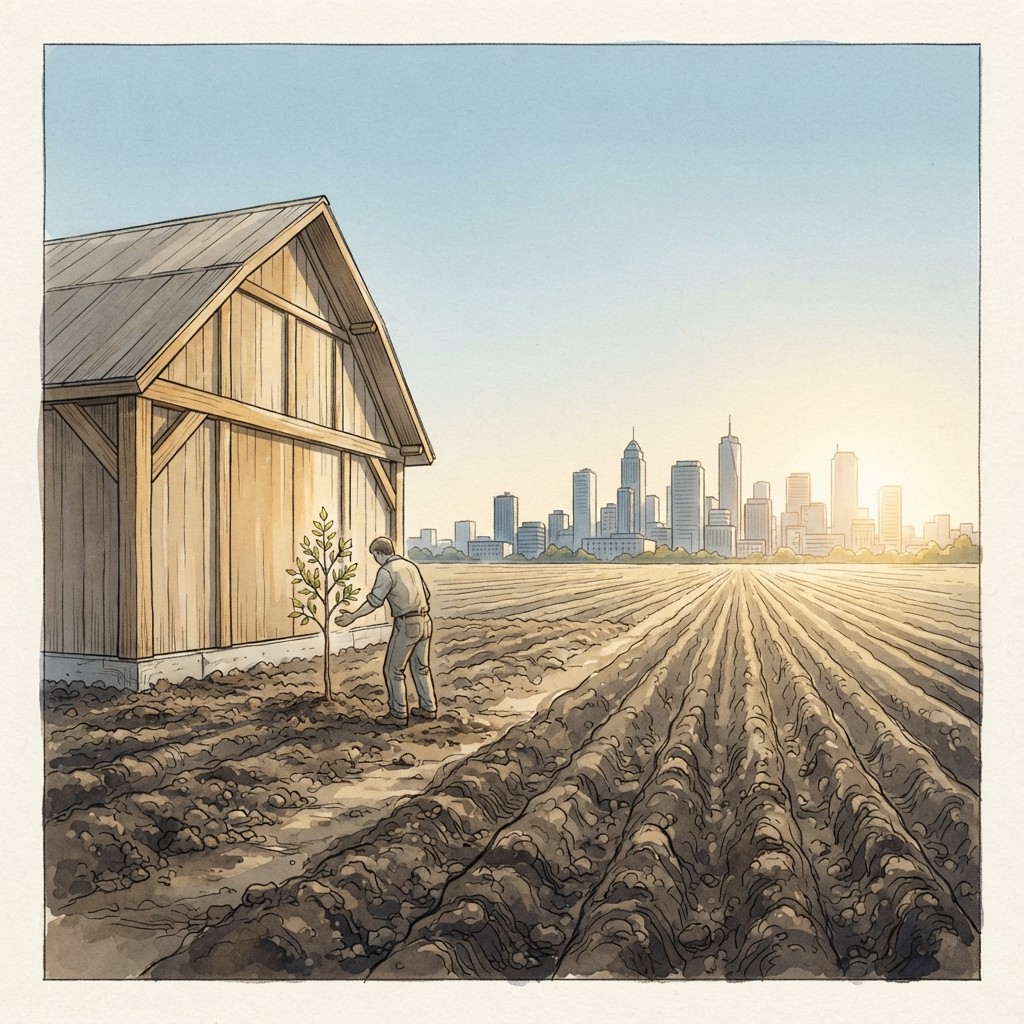
In 1987, in Shuangcheng, a county in the far north of China's Heilongjiang province, Nestlé did something that looks like the opposite of a market launch. It didn't ship pallets of product. It didn't buy billboards. It signed a deal with the local government to build a milk-production zone - a supply base of dairy farms - and then it waited, training farmers and laying the rails of a cold chain that didn't exist. The first dairy factory opened three years later, in 1990.3 By the time most Western consumer companies were still drawing up China feasibility decks, Nestlé already owned the cows.
The official story is that Nestlé cracked impossible markets with clever, culturally sensitive marketing. That is the part everyone wants to copy, and it is mostly wrong. The supply chain came first. The marketing came after - sometimes years after - because in markets where the roads, the refrigeration, and the retail simply don't exist yet, the thing that breaks new entrants isn't a failure to understand the customer. It's a failure to be able to physically deliver to one.
The thesis: build the road before you drive on it
Here is the playbook in one sentence: Nestlé enters emerging markets early, co-invests in the supply chain everyone else assumes will already be there, wins a single staple category outright, and only then climbs up to premium products.8 Every piece of that sequence is load-bearing. Enter early, and you set the terms before competitors arrive. Build the supply chain yourself, and you turn a market's underdevelopment - the thing that scares everyone away - into your moat, because now the dairy farms, the agronomists, the small-format distribution into neighborhood shops are your assets, not a public utility a rival can also use. Dominate a niche, and you fund the climb. The strategy treats the broken infrastructure of a poor market not as a cost of doing business but as the business.
The India record makes the point sharper than any case study. The legend is that Nestlé arrived in India during the 1990s liberalization wave. The peer-reviewed history says otherwise: the first Indian factory opened in Moga, Punjab, in 1961, with Nescafé manufacturing running there by 1965, facilitated explicitly by Swiss diplomatic backing.4 Nestlé wasn't riding the emerging-market trend. It was in the country a full generation before the trend had a name, building manufacturing on the ground while political risk was at its early-Cold-War peak. Being Swiss - neutral, non-colonial, diplomatically nimble - was itself a market-entry asset.4
| China (1987–1992) | India (1961–1965) | |
|---|---|---|
| First move | Milk-production zone in Heilongjiang | Factory in Moga, Punjab |
| Built before scaling sales | Dairy supply base, then cold chain | Local manufacturing |
| Government's role | Local-government partnership | Swiss diplomatic support |
| Product came | Dairy factory opened 1990; Yunnan coffee 1992 | Nescafé manufacturing by 1965 |
Why owning the supply chain is the whole moat
The reason this is hard to copy isn't the idea - the idea is obvious. It's the time and the patience capital. To build a dairy zone in rural Heilongjiang, you spend years and a great deal of money on farmers, breeding, and logistics before a meaningful sale clears, and you do it in a market where you cannot be sure the rules will hold. Most companies can't stomach that horizon, so they wait for the infrastructure to mature - by which point Nestlé has already locked up the farms, the distribution, and the shelf. The small-format pack sizes that move through corner shops in markets with no modern retail aren't a marketing flourish; they're the last mile of a system Nestlé spent decades laying down.8 The marketing is downstream of the plumbing. Competitors copy the marketing and wonder why it doesn't work.
And the playbook still pays. In 2023, emerging markets grew 8.4% organically against 6.4% in developed ones.1 In the much weaker 2024, when North America declined, emerging markets at 3.7% organic growth led the entire group of roughly CHF 91 billion in sales.2 The patient localizer is not a museum piece. It is the engine.
When you enter a market that breaks others, the instinct is to wait for the roads, the cold chain, and the retail to mature, then sell into them. Nestlé's move is the reverse: build the missing layer yourself, early, and convert a market's underdevelopment into a moat no late entrant can rent. The farms, the distribution into neighborhood shops, the small pack sizes - they belong to you, not to the market. But heed the price of admission: this is a multi-year, patient-capital bet that only works if you can survive the wait politically and financially. Copy the marketing and you'll fail. Copy the plumbing and the timeline, and you might own the country.
The honest objection: the trust the playbook needs, the company keeps breaking
The fair counter is that this whole story is too clean - that selling it as a repeatable model ignores how often the model has nearly burned the trust it depends on. It's a strong objection, and it's correct. The playbook runs on goodwill: governments granting partnerships, parents handing a food company their infants. Nestlé has twice put that goodwill on the line in ways that don't resolve.
Take the infant-formula boycott, routinely described in strategy pieces as a crisis Nestlé dealt with and moved past. The record is messier. The boycott began on July 4, 1977, launched by INFACT in Minneapolis over aggressive formula marketing in developing countries; the US version was suspended in 1984 after Nestlé created an independent commission and pledged to follow the WHO marketing code.5 But a UK boycott relaunched in 1988 is still active.5 And in April 2024, an NGO investigation found Nestlé adding higher levels of sugar to infant cereals sold in lower- and middle-income markets than in Europe.6 The controversy is not a chapter that closed. It is structural - the same fault line, reopening every few years in the exact markets the playbook is built to win.
Then there is Maggi, the noodle that is itself a textbook entry product - a cheap, locally adapted staple sold in small packs. In June 2015, India's food regulator ordered a recall of all nine variants over alleged lead levels and a misleading 'No Added MSG' label.7 It read like a clean safety failure, and the cost was real. But the legal record complicates the morality tale: the Bombay High Court overturned the ban in August 2015, ruling the orders had been issued without a proper hearing and relied on results from non-accredited labs - and three accredited labs subsequently cleared the noodles, which returned to shelves by November.7 It was a regulatory-process failure as much as a product one. The deeper point is that the entry playbook puts Nestlé everywhere, in everything, for everyone - which means it is permanently exposed to every regulator, every NGO, and every recall. In January 2026, a contamination alert triggered the largest recall in the company's history, more than 800 products across 60-plus countries.6 Ubiquity is the moat and the liability in the same breath.
“Nestlé is adding higher levels of sugar to infant cereals and formulas sold in lower- and middle-income countries than in Europe.”6
So what is the playbook, really? Not a clean model you can lift off the shelf. It is a high-variance bet on institutional resilience. The supply-chain-first, niche-then-premium sequence genuinely works - the numbers say so, year after year. But it works because Nestlé got into hard markets early, built what others wouldn't, and then spent decades repairing trust roughly as fast as its own governance burned it. The thing Nestlé built before the cows, before the cold chain, before the corner-shop sachets, was permission. The playbook everyone wants to copy is the easy half. The hard half is being trusted enough to be let in - and disciplined enough not to keep proving why you shouldn't be.
When the way in is the whole strategy
Market-Entry Gambit Canvas
A one-page canvas for staging an entry into a market you don't own yet: the beachhead you take first, the wedge that gets you in cheaply, the sequence that turns a foothold into a position, and the incumbent's likely counter-move. Blank to plan your own entry; filled as the worked example showing how the story's challenger picked its landing spot and walked the rest in.
Included, filled and blank, in the The Market-Entry Gambit Casebook. See the set → · Preview the blank →
Sources
Where this comes from — the filings, records, and reporting behind it.
- 1Nestlé's 2023 full-year total reported sales were CHF 93.0 billion; emerging-market organic growth was 8.4% versus 6.4% in developed markets, both driven primarily by pricing.
- 2Nestlé's 2024 full-year organic growth was 2.2%; emerging markets at 3.7% organic growth led the group, partially offsetting a decline in North America; 2024 reported sales were CHF 91.4 billion.
- 3Nestlé formally entered China in 1987 by establishing a milk production zone in Shuangcheng, Heilongjiang, in partnership with local government; its first dairy factory there opened in 1990. In 1992 it launched a coffee-planting project in Yunnan.
- 4Nestlé's first Indian factory opened in Moga, Punjab, in 1961; Nescafé manufacturing began there by 1965. Swiss government diplomatic support explicitly facilitated the entry. The entry predates by decades the 'emerging-markets push' usually dated to the 1990s.
- 5A boycott of Nestlé products was launched on July 4, 1977 by INFACT in Minneapolis over aggressive infant-formula marketing in developing countries; the US boycott was suspended in 1984 after Nestlé created the independent Muskie Commission and pledged WHO Code compliance; a UK boycott relaunched in 1988 remains active.
- 6In April 2024, Public Eye (Swiss NGO) and IBFAN found Nestlé adding higher levels of sugar to infant cereals and formulas sold in lower- and middle-income countries than in Europe. In January 2026, a product safety alert over possible cereulide contamination led to the largest recall in Nestlé's history, covering 800+ products across 60+ countries.
- 7On June 5–6, 2015, the FSSAI ordered the recall and production halt of all nine variants of Maggi noodles, citing lead above 2.5 ppm and misleading 'No Added MSG' labelling. Nestlé India challenged the order in the Bombay High Court. The Court overturned the ban, ruling the FSSAI orders violated natural justice (no proper hearing) and relied on non-accredited laboratory results; three NABL-accredited labs subsequently cleared Maggi. Products returned to shelves November 2015.
- 8Nestlé's strategy has been to enter emerging markets early, build customer base with locally adapted staples (infant formula, milk, noodles), dominate niche categories before premiumizing, and use small-format pack sizes and neighborhood retail in markets with underdeveloped modern trade infrastructure.
More like this — beyond Nestle
New Strategically analyses as they publish: the defining moves in business, checked against the record. No noise, and one click to leave.