Pairs with the Market-Entry Gambit Canvas — a ready-to-use strategy tool. Included in the The Market-Entry Gambit Casebook →
On 2 August 2018, tens of millions of American teenagers woke up, opened a lip-sync app called Musical.ly, and found it had quietly become something else overnight. Same friends, same videos, same followers — new name, new logo, new feed. They had not downloaded TikTok. They had been moved into it.1 Within ten weeks, TikTok was the most-downloaded app on the US App Store.2 The fastest social-media land-grab of the decade was not a viral accident. It was a transfer of ownership.
The official story is that TikTok cracked the West with a magic algorithm and a generation's attention span. It is mostly wrong. TikTok had almost no Western presence before late 2017. ByteDance did not grow a user base in America — it bought one, then poured its own engine into it. The genius was never the content. It was the door.
The market every Chinese app fails to enter — bought, not built
Western consumer social is a graveyard for foreign apps. Distribution is the wall: a new platform needs users to attract users, and breaking a cold start in a market already owned by Instagram and Snapchat is the thing money usually cannot buy. ByteDance's move was to refuse to play that game at all. In November 2017 it acquired Musical.ly, the teen lip-sync app that had already done the impossible part — assembling a claimed 60 million users, the majority of them in the United States.3 The price was never publicly disclosed; contemporaneous reporting put it in the range of $800 million to $1 billion, and Musical.ly's own legal counsel described a figure 'close to US$1 billion.'34 Then, on 2 August 2018, ByteDance folded those accounts directly into TikTok.1 It did not earn the cold start. It wrote a check for it.
| Build organically | ByteDance's gambit | |
|---|---|---|
| The hard part | Cold start: users to get users | Already solved — by Musical.ly |
| What it cost | Years and most challengers fail | A reported up to $1 billion |
| What was imported | Nothing — built from zero | ~60M Western accounts, day one |
| The differentiator | The product | The recommendation engine, retrofitted |
The real moat was already eight years old
Here is the part the viral-growth story misses entirely. Musical.ly gave ByteDance the audience; ByteDance gave it the engine. The recommendation system that made TikTok feel uncannily addictive was not invented for TikTok. It was the same machinery ByteDance had been refining since it launched the news-feed app Toutiao in August 2012 — years of training a model to predict what a person would watch next, then feeding them exactly that.1 By the time TikTok existed, that engine had already proved itself at home: Douyin, the China-only version launched in September 2016, surpassed 100 million users within a single year.8 So the sequence matters. The algorithm was battle-tested first, the Western audience was acquired second, and the merger simply pointed a mature engine at a ready-made crowd. Most entrants arrive with a product and pray for distribution. ByteDance arrived with distribution and bolted on a weapon it had spent years sharpening somewhere else.
And it is worth being precise about what ByteDance actually runs, because the 'one global app' framing hides the real structure. TikTok and Douyin look alike, but they are separate products on separate servers carrying entirely different content, shaped by different languages and different regulators.8 One company, two apps, two regulatory regimes — a design that lets ByteDance present a Western face to the West while the engine underneath traces back to a Chinese parent. That split is not cosmetic. It is the seam along which the entire entry strategy would later be challenged.
“Musical.ly to Be Acquired by Bytedance... at a price close to US$1 billion.”4
The bill came due in Washington
Buying your way into a market leaves a paper trail, and a paper trail is exactly what a foreign acquisition of an American user base produces. In August 2020, the US government found credible evidence that ByteDance's acquisition of Musical.ly might threaten national security and ordered ByteDance to divest all of its US TikTok assets and user data — an action the interagency CFIUS panel unanimously recommended after what the Treasury Secretary called an exhaustive review.56 Notice what the order targeted: not 'TikTok the app,' but specifically the acquisition of Musical.ly. The very transaction that built the position became the legal handle for unwinding it. The gambit that opened the market is the same gambit that put it in jeopardy.
Isn't this just a smart acquisition that worked?
The fair objection is that acquiring your way into a market is ordinary corporate strategy, not a singular feat — companies buy distribution all the time, and most of those deals quietly fail. True. But that is exactly what makes this one instructive: ByteDance did not buy a company and let it drift. It bought the one asset it could not manufacture — a Western cold start already solved — and married it to the one asset no acquisition could give it: an engine seasoned on years of Chinese data. Distribution plus a mature algorithm, each useless without the other, fused in a single overnight migration. The honest counter, though, runs the other way: the same structure that made the entry brilliant also made it fragile. In 2021 the state-owned China Internet Investment Fund bought a 1% 'golden share' in ByteDance's primary Chinese subsidiary and seated a government official with a propaganda background on its board.7 A foreign-owned engine sitting on tens of millions of American users, with the parent's domestic arm now partly steered by the state — that is precisely the configuration regulators are built to attack. The gambit worked. It also wired in the very entanglement that keeps it under threat.
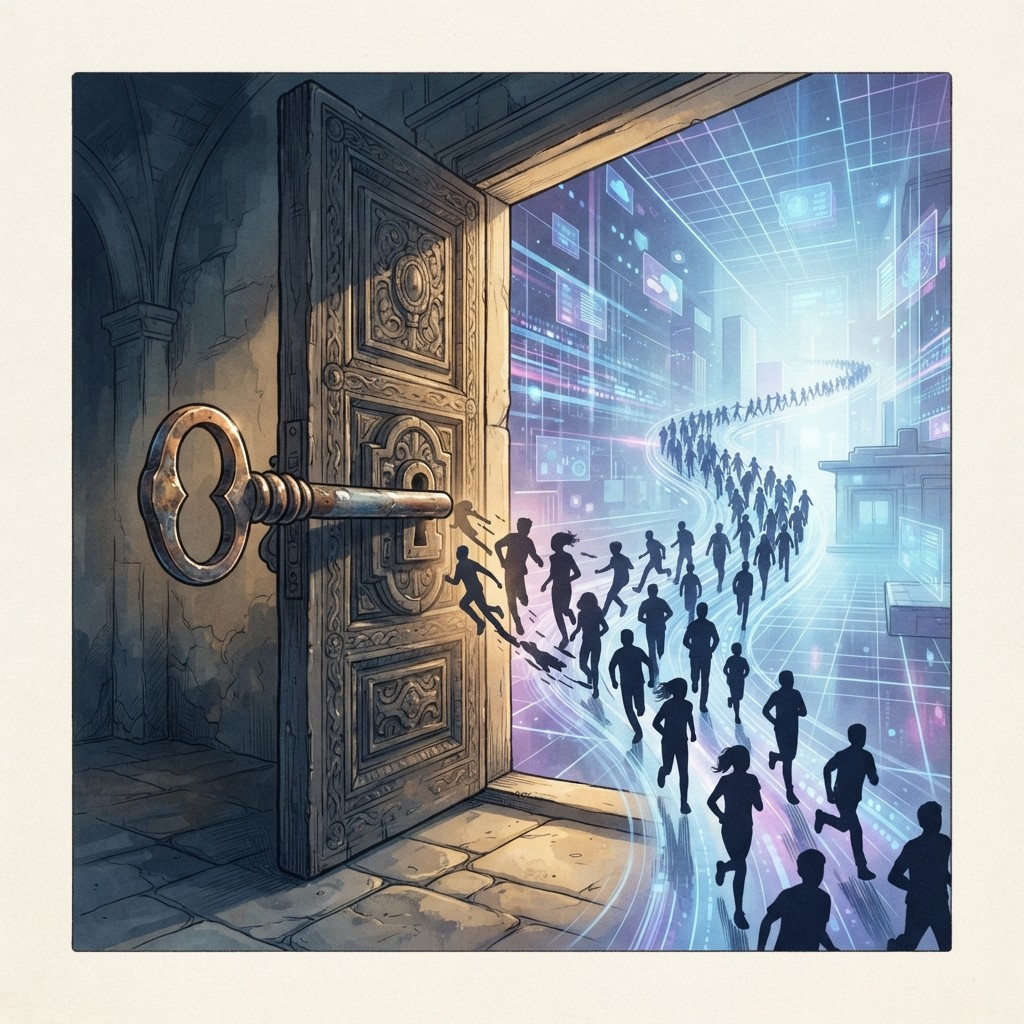
The hardest wall in a foreign consumer market is rarely the product — it's the cold start, the chicken-and-egg of needing users to attract users. ByteDance's lesson is to stop trying to climb that wall and buy a ladder that someone else already built: acquire the assembled audience, then point your own differentiated engine at it. The acquired thing is the door; the thing you bring is the key. But two cautions travel with the move. First, the engine has to be genuinely yours and genuinely better, or you've bought a crowd you can't keep. Second — and this is the one most entrants ignore — a cross-border acquisition of a national user base is a permanent legal handle. The same transaction that lets you in is the one a regulator can later grab to pull you out. Win the entry; plan for the audit.
ByteDance is often praised as the company that finally beat the West at its own game. The truth is quieter and sharper: it didn't beat the game, it skipped it. It paid a reported up to a billion dollars to teleport past the one obstacle that kills foreign entrants, then pointed an engine it had been building since 2012 at the people it had just acquired. The algorithm was real. The audience was bought. And the seam between a Western app and a Chinese parent — invisible to the teenagers migrated overnight — turned out to be the one thing the strategy could never own outright. ByteDance cracked the market that breaks others. The question it is still answering is whether you can keep a market you entered by purchase, when the purchase itself is the thing they can take back.
Other ways into markets that break the obvious entrants
Market-Entry Gambit Canvas
A one-page canvas for staging an entry into a market you don't own yet: the beachhead you take first, the wedge that gets you in cheaply, the sequence that turns a foothold into a position, and the incumbent's likely counter-move. Blank to plan your own entry; filled as the worked example showing how the story's challenger picked its landing spot and walked the rest in.
Included, filled and blank, in the The Market-Entry Gambit Casebook. See the set → · Preview the blank →
Sources
Where this comes from — the filings, records, and reporting behind it.
- 1ByteDance was founded in March 2012 by Zhang Yiming and Liang Rubo; it launched Toutiao in August 2012, Douyin in September 2016, and TikTok internationally in September 2017; it acquired Musical.ly in November 2017 and merged it into TikTok on 2 August 2018.
- 2Douyin was launched on 20 September 2016 under the original name A.me, before being renamed Douyin in December 2016; TikTok was first released to the public in September 2017; ByteDance acquired Musical.ly on 9 November 2017 for up to US$1 billion and merged it into TikTok on 2 August 2018; after the Musical.ly merger, TikTok became the most-downloaded app in the US in October 2018.
- 3The Musical.ly acquisition price was never publicly disclosed; TechCrunch reported from anonymous sources that ByteDance would pay between $800 million and $1 billion; Musical.ly claimed 60 million users, the majority US-based, and had been valued at $500 million in its 2016 funding round.
- 4Simpson Thacher & Bartlett represented Musical.ly in its merger into ByteDance 'at a price close to US$1 billion'; post-acquisition, Musical.ly was to operate as a wholly owned subsidiary integrating ByteDance's AI technology.
- 5The President of the United States issued an order finding credible evidence that ByteDance's acquisition of Musical.ly might threaten US national security; the order directed ByteDance to divest all US TikTok assets and data; CFIUS unanimously recommended this action.
- 6US Treasury Secretary Mnuchin confirmed CFIUS conducted an exhaustive review and unanimously recommended the President's order prohibiting ByteDance's acquisition of Musical.ly (TikTok), directing divestiture of all US interests and user data.
- 7In 2021, the state-owned China Internet Investment Fund purchased a 1% golden share in ByteDance's primary Chinese subsidiary and seated Wu Shugang, a government official with a propaganda background, on its board; ByteDance's broader ownership is 60% non-China investors, 20% founders/Chinese investors, 20% employees.
- 8In September 2016, ByteDance introduced Douyin to the Chinese market; Douyin surpassed 100 million users within one year; ByteDance then launched TikTok — the global version of Douyin — in September 2017; TikTok and Douyin share interface but carry entirely different content due to language and regulatory differences.
More like this — beyond ByteDance
New Strategically analyses as they publish: the defining moves in business, checked against the record. No noise, and one click to leave.