Pairs with the Bet-Sizing Worksheet — a ready-to-use strategy tool, filled for NextEra Energy. Included in the The Fork in the Road Casebook →
In 2001, while most American utilities were still treating wind turbines as a public-relations garnish, a subsidiary of a Florida power company added 844 megawatts of them in a single year — more than doubling everything it had built before.2 By January 2002 it ran 1,830 MW of wind across eight states and was already the U.S. leader.2 The parent company would not be called NextEra Energy for another eight years.4 The biggest renewable bet in American utility history was placed by a company that did not yet have the name everyone now associates with it.
The story usually goes like this: around the turn of the century, a forward-looking utility named NextEra made a bold, all-in wager on renewables and rode it to the top. Almost every beat of that is mis-dated or mis-framed. There was no company called NextEra until 2010. There was no all-in gamble. And the bet was never on a fossil-fuel exit at all.
| The popular telling | What the record shows | |
|---|---|---|
| When 'NextEra' existed | Since ~2000 | FPL Group until May 21, 2010 |
| The wind bet | A single bold gamble | Sequenced builds from 2001 onward |
| What drove it | Vision / mission | Federal production tax credits |
| The endgame | Going all-renewable | Renewable growth, fossil kept |
The bet was real. The 'all at once' part is a myth.
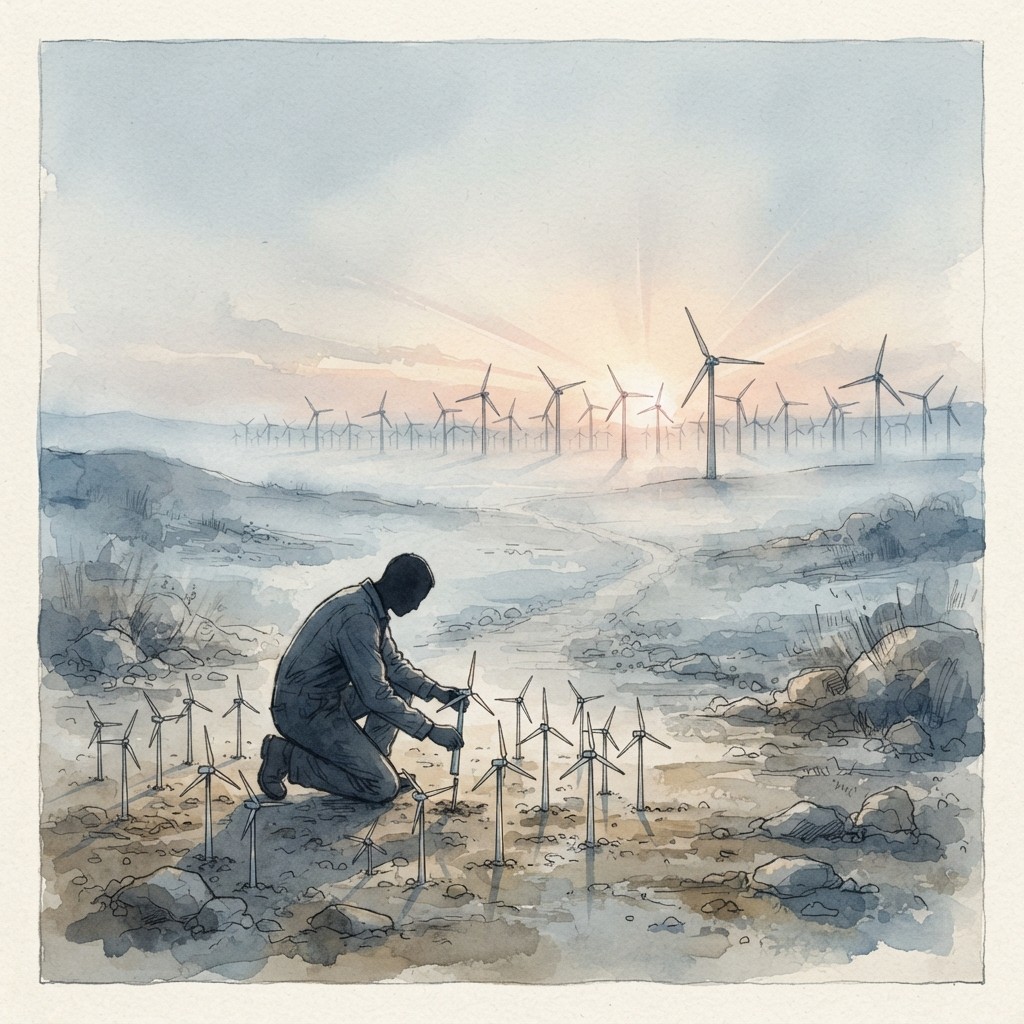
Here is the thesis a sharp analyst can argue with, and that the record supports anyway: NextEra's renewable dominance was not a moonshot wagered in one move. It was an incentive-harvesting machine, run patiently through a subsidiary, that turned a federal tax policy into the world's largest wind fleet — and it did so a full decade before the parent company carried the NextEra name. The 'early all-in bet' is true in operational terms and false in financial ones. Nobody bet the company. They financed turbines one credit at a time, and the credits paid for the turbines.
Start with the corporate plumbing, because the plumbing is the whole point. Florida Power & Light was created in 1925; the holding company, FPL Group, was formed in 1984.1 Wind never lived inside the regulated Florida utility. It lived in a separate competitive subsidiary, FPL Energy, that could chase merchant projects across the country. That structural split is what let the company be aggressive in wind while its core utility kept burning natural gas in Florida — two different risk appetites under one roof, by design.
How a tax credit became a turbine factory
The mechanism underneath the build is the federal production tax credit — a per-kilowatt-hour subsidy paid for every unit of wind electricity generated. For a normal developer, that credit is nice. For an entity with enormous, steady taxable income to shelter, it is transformative: the credit isn't a discount on a turbine, it's a stream of cash that arrives only if you build and run the turbine. FPL Energy sat inside a company with exactly that kind of tax appetite. So each new wind farm wasn't a gamble on power prices — it was a financed instrument whose return was partly underwritten by the U.S. Treasury. Build, generate, collect the credit, recycle into the next farm. The flywheel didn't run on faith. It ran on tax law.
That is why the growth looks the way it does — incremental and relentless rather than one dramatic leap. The Stateline Wind Energy Center on the Oregon–Washington border was the company's fourteenth wind farm, not its first.2 By mid-2006 the count had reached 47 wind farms and 3,912 MW of gross wind capacity, enough for FPL Energy to 'assume the position of world's largest wind energy producer.'3 At that point more than 90% of its roughly 13,000 MW came from clean or renewable sources, according to the man then running it, Jim Robo.3
The name nobody had until 2010
The rebrand is where most retellings break. FPL Group proposed becoming NextEra Energy on March 19, 2010; shareholders approved it by more than 95% at the May 21, 2010 annual meeting, and the NYSE ticker changed from FPL to NEE that June.4 The articles of incorporation were amended that same day.5 So when you read that NextEra 'made its renewable bet around 2000,' the timeline is impossible — the entity didn't exist. The wind empire was built first; the name was painted on a winner that was already crowned. That ordering matters, because it tells you the strategy preceded the story, not the other way around.
“FPL Energy... assumes position as world's largest wind energy producer.”3
Wasn't this just luck — and isn't it really still a fossil company?
The honest objection comes in two parts, and both have teeth. The first: this was timing, not genius — wind was subsidized, FPL Energy showed up early, and any competent operator could have done the same. There's truth there. But notice what the company actually had that rivals didn't: a regulated Florida utility throwing off stable cash and taxable income, and a competitive subsidiary structured to absorb tax credits at scale. The edge wasn't seeing wind coming. It was being built to monetize it better than anyone else when it did. Plenty of utilities saw the same credits. One was assembled to swallow them whole.
The second objection is sharper, and it punctures the marketing: NextEra never went all-in on renewables, because it never left fossil fuels. As of December 2015, the renewable crown belonged specifically to the subsidiary NEER — the largest North American generator of renewable energy from wind and sun by MWh produced — not the whole enterprise, whose 46,400 MW still leaned heavily on gas in Florida.6 As of March 2025, roughly 36% of generating capacity still came from fossil fuels and non-renewables, down from 41% in 2020.8 By the end of 2024 the company ran about 72 GW of net capacity and NEER held the title of world's largest wind-and-sun generator.7 Both facts are true at once. The bet was on renewable growth, financed by a fossil-and-nuclear base it had no intention of abandoning. 'All-in' is the slogan; 'all-of-the-above, weighted toward wind' is the strategy.
The durable move here wasn't conviction about clean energy — it was structure. NextEra paired a cash-rich, tax-paying regulated utility with a separate competitive arm purpose-built to convert federal production tax credits into owned assets. The credit only pays if you build and run the thing, so the policy underwrites the downside while you keep the upside. The lesson for any operator facing a subsidized frontier: don't bet the company on belief. Build a vehicle that turns the incentive into compounding ownership, run it patiently through cycles, and let the title — and the name — arrive after the fleet is already the biggest in the world. Two cautions: subsidies expire, and a position built on policy is exposed to policy. Defend it by becoming the lowest-cost builder, not just the best-subsidized one.
The tidy legend — visionary company makes daring green bet — gets the spirit right and every fact wrong. What actually happened is more useful. A 1984 holding company stood up a competitive subsidiary, pointed it at a tax credit, and quietly built the world's largest wind fleet years before anyone called it NextEra. The genius wasn't the gamble. It was refusing to make one. They didn't bet the future on renewables — they got the U.S. Treasury to co-sign the turbines, and then named the company after the lead they'd already taken.
When the strategy comes before the story
Bet-Sizing Worksheet
Most bets fail on size, not on direction — right call, ruinous stake. This worksheet forces the three numbers that matter: how much of the bankroll is on the table, how strong the conviction really is, and whether the worst case is survivable. Blank, it stops you betting the company on a hunch; filled, it reverse-engineers the story's wager so you can judge whether it was bold or reckless.
Included, filled and blank, in the The Fork in the Road Casebook. See the set → · Preview the blank →
Sources
Where this comes from — the filings, records, and reporting behind it.
- 1Florida Power & Light Company was created on December 28, 1925; FPL Group, Inc. was formed in 1984 as the holding company.
- 2FPL Energy added 844 MW of wind power in 2001 — more than doubling its prior capacity — and by January 2002 operated 1,830 MW of wind across eight states, making it the U.S. leader in wind generation. The Stateline Wind Energy Center in Oregon/Washington was its 14th wind farm.
- 3By mid-2006, FPL Energy assumed the position of world's largest wind energy producer, operating 47 wind farms in the U.S. with gross capacity of 3,912 MW. Jim Robo, then president of FPL Energy, stated that more than 90% of its ~13,000 MW came from clean or renewable sources.
- 4FPL Group proposed changing its name to NextEra Energy on March 19, 2010; shareholders approved the change by more than 95% at the May 21, 2010 annual meeting; the name formally became effective that day and the NYSE ticker changed from FPL to NEE in late June 2010.
- 5Effective May 21, 2010, FPL Group, Inc. amended its Restated Articles of Incorporation to change its name to NextEra Energy, Inc.; the company's Dividend Reinvestment and Direct Stock Purchase Plan was simultaneously renamed.
- 6As of December 31, 2015, NEE had approximately 46,400 MW of generating capacity across 27 U.S. states and 4 Canadian provinces, and NEER was the largest generator in North America of renewable energy from wind and sun based on MWh produced.
- 7At December 31, 2024, NEE had approximately 72 GW of net generation and storage capacity; NEER is the world's largest generator of renewable energy from wind and sun based on 2024 MWh produced on a net generation basis, and a world leader in battery storage.
- 8NextEra Energy is the world's largest electric utility holding company by market capitalization (approximately $190 billion as of March 2026); as of March 2025, approximately 36% of its generating capacity was from fossil fuels and non-renewables, down from 41% in 2020.
More like this — beyond NextEra Energy
New Strategically analyses as they publish: the defining moves in business, checked against the record. No noise, and one click to leave.