Pairs with the Adjacency / Synergy Map — a ready-to-use strategy tool. Included in the The Adjacency Expansion Casebook →
In December 1925, a new Florida electric company switched on roughly 70 megawatts of generating capacity and lit up about 76,000 customers in 58 communities along the coast.3 Almost exactly a century later, the same corporate lineage runs about 72 gigawatts of generation and storage and calls itself the largest generator of wind and solar power on the planet.4 That is a roughly thousand-fold leap across the whole enterprise — from a single Florida utility's generation base to a national portfolio spanning regulated and competitive arms alike — and it is told as a story about vision — a sleepy utility that saw the future and bet the company on it. The leap is real. The story has the cause backwards.
The official version is that a Florida utility transformed itself into a clean-energy giant. What actually happened is quieter and more interesting: a regulated monopoly never stopped being a regulated monopoly — it grew a second, competitive business alongside itself and used the predictable cash from the first to fund the riskier ambitions of the second. The utility didn't become the renewables company. It built one and paid for it.
The rename told you which story the company wanted you to hear
The popular shorthand is that FPL 'became' NextEra in 2010, as though the old company shed its skin. The SEC filings tell a more deliberate story. The parent was FPL Group, Inc.; the subsidiary already running competitive renewables was already named NextEra Energy Resources. On March 19, 2010, FPL Group announced it would take the subsidiary's name for itself, citing operations across 28 states and Canada and a 'forward-thinking clean energy approach.'2 The shareholder vote landed the change on May 21, 2010, and the ticker moved from FPL to NEE.1 Notice the direction of travel: the corporation chose to be identified by its growth engine rather than its cash engine. The Florida utility kept its name — Florida Power & Light — and kept doing the boring, lucrative thing. The brand reached for the future; the balance sheet stayed in the present.
“...reflecting operations across 28 states and Canada and a forward-thinking clean energy approach.”2
Two businesses wearing one logo
Here is the part the vision narrative skips. NextEra is not one company being clean; it is two companies running on opposite physics. Florida Power & Light is a regulated monopoly: it earns a state-sanctioned return on the assets it builds, its revenues are smoothed by rate cases, and its risk is low and predictable. NextEra Energy Resources sells power into competitive markets, lives and dies on contracts and project economics, and carries the volatility. The regulated side is the keel. The competitive side is the sail. The keel is what lets the sail be aggressive — a competitive developer with the cash profile of a monopoly behind it can outbid, out-build, and out-wait rivals who don't have that ballast. That, not foresight, is the engine of the lead.
| Florida Power & Light | NextEra Energy Resources | |
|---|---|---|
| Market structure | Regulated monopoly | Competitive / contracted |
| Revenue profile | Smoothed by rate cases | Project-by-project, market-exposed |
| Role in the story | The cash engine (the keel) | The growth engine (the sail) |
| Headline asset | Largest U.S. utility-owned solar portfolio, 6,400+ MW | World's largest wind-and-sun generator by MWh |
And the regulated side is itself building furiously. FPL's owned-and-operated solar crossed 6,400 MW in early 2024 — the largest utility-owned solar portfolio in the United States — with a ten-year plan calling for roughly 21 GW of solar and over 4 GW of storage by 2033.8 Those are rate-base assets: build them, and the regulated return follows. So even the 'clean energy vision' inside Florida is, in the cold light of the filing, also a rate-base growth strategy. Green and profitable are not in tension here. They are the same line item.
Read the superlative very carefully
'World's largest renewables company' is the phrase everyone repeats. NextEra's own 10-K is more disciplined than its fans. The Resources arm is described as the world's largest generator of renewable energy from the wind and sun 'based on 2024 MWh produced on a net generation basis.'4 That is a specific, chosen yardstick: megawatt-hours actually produced, not megawatts installed, not assets owned, not market value. It is the metric on which NextEra happens to win. A different measure could rank the field differently. This isn't dishonesty — it's the oldest move in superlatives. When a company tells you it is the largest at something, the load-bearing words are always the qualifier after 'based on.'
The lead also predates the CEO most often credited with it. By end-of-2022, the competitive arm already spanned 40 states and Canada with roughly 27,400 MW of wind, solar, gas and nuclear — and the wind-generation lead itself stretches further back still, predating multiple leadership transitions.9 Strategies that look like one founder's bet are usually a decade of compounding that someone later accelerated. NextEra is that pattern. The sail was already up; a later captain trimmed it for more speed.
What scale costs when nobody is counting the birds
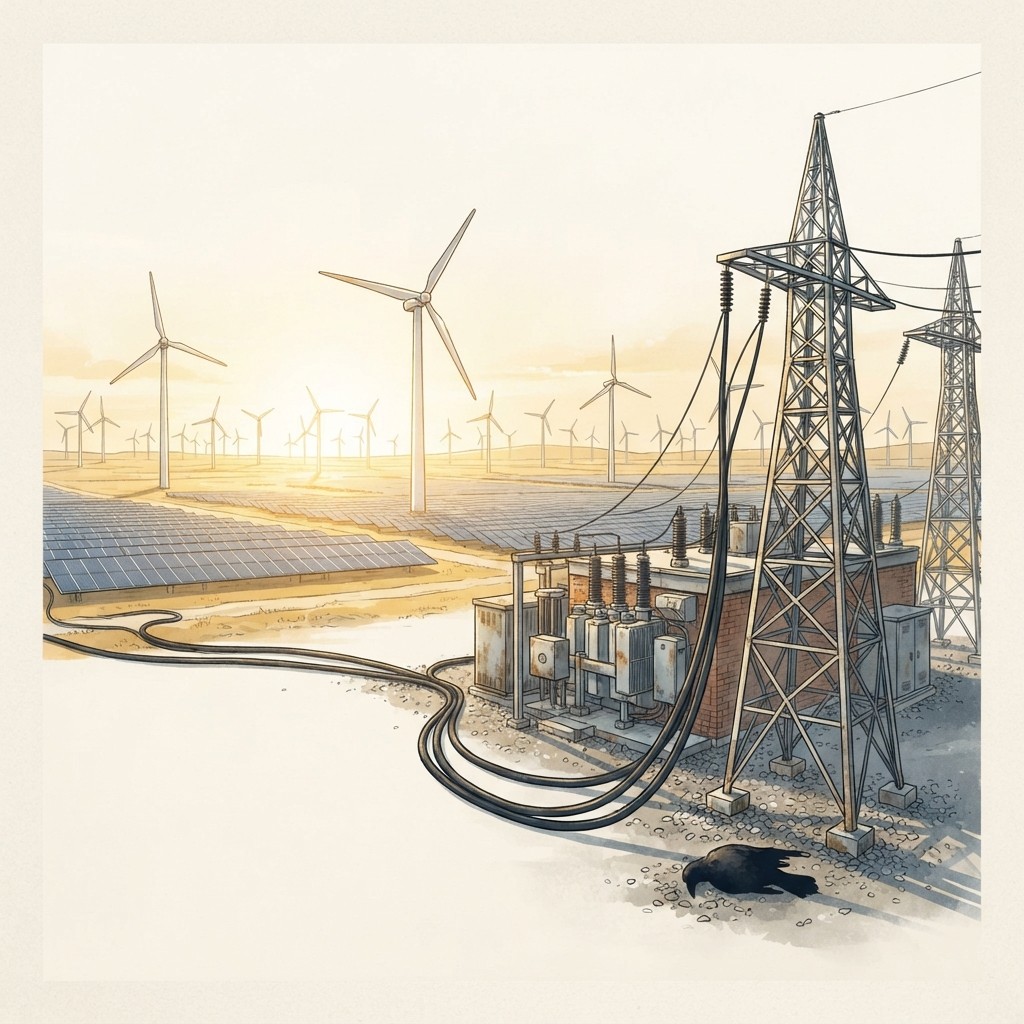
The hagiography almost never mentions the eagles. In April 2022, ESI Energy LLC — a wholly-owned subsidiary of NextEra Energy Resources — pleaded guilty to three misdemeanor counts of violating the Migratory Bird Treaty Act. At least 150 bald and golden eagles had died across 50 of its 154 wind facilities since 2012.7 The figure cited everywhere is '$8 million.' That number is real but misleading: the actual obligation was $8 million in fines and restitution plus up to $27 million more in mandated eagle-management compliance.7 The point isn't the dollars. It's that the same speed that built the lead — pour the turbines, win the origination year, place gigawatts into service — has a built-in liability. Build fast enough, in enough places, and the permitting discipline doesn't always keep pace with the construction crews. The bird dies where the scale outran the care.
When a company is celebrated for a bold, future-facing business, ask what quietly funds it. The visible story is the adjacency — the new market, the clean tech, the world-largest claim. The hidden story is usually the boring, defended cash machine in the back room: a regulated monopoly, a subscription base, a toll. NextEra's renewables didn't beat the boring utility; they were built on top of it, paid for by it, and de-risked by its predictable returns. Two cautions follow. First, scrutinize the superlative — the words after 'based on' decide whether the claim is true or merely flattering. Second, speed funded by a safe balance sheet builds liabilities as fast as it builds assets; the up-to-$35 million eagle bill is what happens when the buildout outruns the diligence. The adjacency is only as healthy as the engine no one is looking at.
NextEra is a genuinely great adjacency expansion — one of the cleanest in American industry — and it is almost nothing like the story told about it. It did not stop being a Florida utility and become a clean-energy company. It stayed a Florida utility, named the whole enterprise after its most exciting child, and used a century-old monopoly's reliable cash to bankroll the largest wind-and-sun buildout in the world, on a metric of its own choosing, at a pace fast enough to occasionally kill eagles. The lesson isn't 'be visionary.' It's quieter and more useful: the boldest bet a company makes is usually the one its dullest business is silently paying for.
When the quiet business funds the loud one
Adjacency / Synergy Map
A one-page canvas for an adjacency play: the new business next door, the shared assets that justify entering it, the synergies that actually transfer versus the ones that evaporate on contact, and the dis-synergies nobody put on the deck. Blank to test your own expansion; filled as the worked example showing where the story's 'natural adjacency' was real and where it was wishful.
Included, filled and blank, in the The Adjacency Expansion Casebook. See the set → · Preview the blank →
Sources
Where this comes from — the filings, records, and reporting behind it.
- 1FPL Group, Inc. changed its corporate name to NextEra Energy, Inc. effective May 21, 2010 by shareholder vote; the subsidiary NextEra Energy Resources, LLC retained its name; the NYSE ticker changed from FPL to NEE.
- 2FPL Group announced the proposed name change to NextEra Energy on March 19, 2010, stating it reflected operations across 28 states and Canada and a forward-thinking clean energy approach.
- 3Florida Power & Light Company was created on December 28, 1925; in its first year it served approximately 76,000 customers in 58 communities with a generating capacity of 70 MW.
- 4At December 31, 2024, NextEra Energy had approximately 72 GW of net generation and storage capacity; NEER is the world's largest generator of renewable energy from wind and sun based on 2024 MWh produced on a net generation basis, and a world leader in battery storage based on 2024 MW of net generating capacity.
- 5In 2024, NextEra Energy placed into service roughly 8.7 GW of new renewables and storage projects; for the third consecutive year, NextEra Energy Resources delivered its best-ever origination year, adding more than 12 GW of new renewables and battery storage to its backlog.
- 6As of the end of 2022, NextEra Energy Resources was already the largest generator of renewable energy from wind in the U.S. with operations in 40 states and Canada, and approximately 27,400 MW of wind, solar, natural gas and nuclear resources—a position the 2013 FPL Group 8-K confirms predated CEO Jim Robo's full tenure.
- 7ESI Energy LLC, a wholly-owned subsidiary of NextEra Energy Resources LLC, pleaded guilty to three misdemeanor counts of violating the Migratory Bird Treaty Act; at least 150 bald and golden eagles died across 50 of its 154 wind facilities since 2012; ESI was sentenced to pay $8 million in fines and restitution plus up to $27 million in Eagle Management Plan costs.
- 8FPL's first-quarter 2024 solar additions brought its owned-and-operated solar portfolio to over 6,400 MW—the largest utility-owned solar portfolio in the United States; FPL's Ten-Year Site Plan calls for roughly 21 GW of solar and over 4 GW of storage by 2033.
- 9As of year-end 2022, NextEra Energy Resources had approximately 27,400 MW of total net generating capacity, primarily in 40 states and Canada
More like this — beyond NextEra Energy
New Strategically analyses as they publish: the defining moves in business, checked against the record. No noise, and one click to leave.