Pairs with the Crisis Response Playbook — a ready-to-use strategy tool, filled for Toyota. Included in the The Crisis Response Casebook →
On August 28, 2009, a 2009 Lexus ES350 — a dealer loaner — accelerated out of control near San Diego and killed a California Highway Patrol officer named Mark Saylor, his wife, their 13-year-old daughter, and his brother-in-law.1 A passenger's call to 911 was recorded; the country heard a family die at full throttle. The cause was not a ghost in the wiring. It was a floor mat — an all-weather mat from a different Lexus model, improperly installed, longer than it should have been, physically wedged against the accelerator pedal.1 A piece of rubber. That is where the most expensive automotive scandal in history began, and almost nothing the public came to believe about it was true.
The story that took hold was that Toyota's cars had a mysterious electronic defect that made them surge on their own, and that the company recalled millions of vehicles because of it. That story is wrong twice over. There was no electronic defect — federal investigators went looking with NASA and found nothing. And the thing that nearly destroyed Toyota was not what was in the cars. It was what the company chose to hide.
NASA looked for the ghost. It wasn't there.
When the media decided the problem was "runaway electronics," the government did the unglamorous thing: it tested the claim to destruction. NHTSA brought in NASA engineers — the people who debug code that has to work at orbital velocity — and gave them ten months. They read 280,000 lines of software, pulled apart nine consumer vehicles, and bombarded cars with electromagnetic radiation to see if interference could open a throttle.6 The verdict, released February 8, 2011, was unambiguous: no electronic flaw capable of producing the large throttle openings needed for dangerous high-speed acceleration.6 The only confirmed causes were the two mechanical, mundane ones — floor mats trapping the pedal, and a sticky pedal that returned slowly. The phantom in the software was a story the evidence never supported.
There was a second tell that the "Toyota epidemic" was a media construction, not a defect signature. Japan's transport ministry pulled every sudden-acceleration complaint filed against all automakers from 2007 to 2009 — 134 of them — and counted. Toyota's share was 38 cases, about 28.3%, against a market share near 27.8%.8 In other words, exactly the number of complaints you'd expect from a company that size. There was no anomaly. There was a popular brand getting a proportional volume of complaints, amplified into a panic.
The real failure happened in a filing cabinet, not a factory
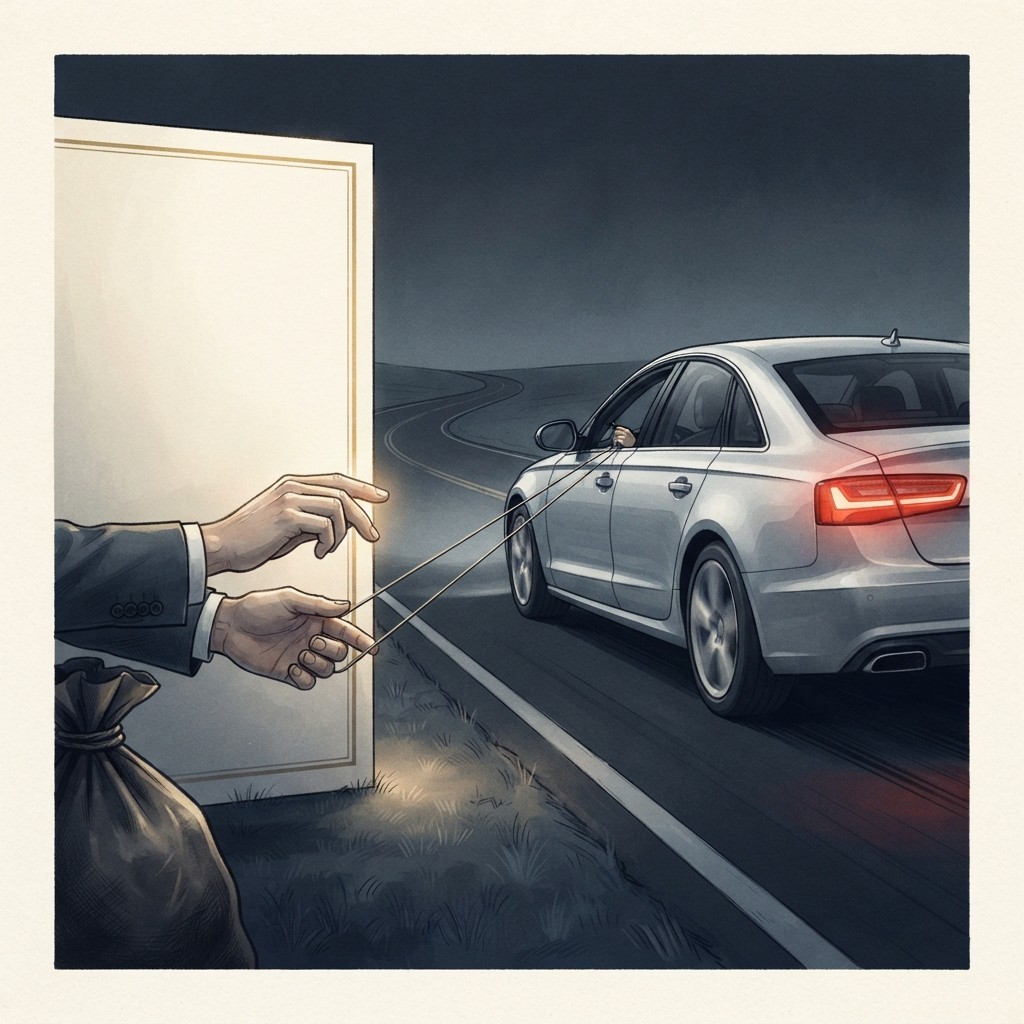
Here is the thesis a smart friend should repeat at dinner: Toyota's catastrophe was not an engineering failure. It was a disclosure failure dressed up as an engineering one. Both real defects were physical, fixable, and the kind of thing recalls exist to handle. The crime was the cover-up. According to the Justice Department's own Statement of Facts, Toyota had begun investigating the sticky pedal in the U.S. no later than August 2009 and reproduced the problem in a U.S. pedal by September 2009 — then deliberately withheld those findings from regulators.3 When it finally faced NHTSA and Congress, it claimed it first learned of the problem in "October 2009."3 That date was not a memory lapse. It was engineered to make a 90-day reporting window appear to have been met. Toyota didn't just fail to fix a pedal fast enough. It built a false timeline to hide that it hadn't.
“Toyota misled U.S. consumers by concealing and making deceptive statements about two safety-related issues affecting its vehicles, each of which caused a type of unintended acceleration.”4
Trace the recall sizes and you see how the cover-up unraveled in slow motion. The floor-mat recall came first — 3.8 million vehicles, October 5, 2009. The sticky-pedal recall followed on January 21, 2010, roughly 2.3 million more. Together, by the Department of Transportation's count, nearly eight million U.S. vehicles.2 Not the "ten million-plus" headline figure, which mashes together worldwide recalls across multiple years and unrelated problems. Two recalls. Two known mechanical causes. And a four-month gap between when Toyota knew about the pedal and when it told the agency whose entire job was to be told.
| The popular version | What the record shows | |
|---|---|---|
| The cause | Mysterious electronics | Floor-mat entrapment and sticky pedals[[cite:s6]] |
| The fine | A recall penalty | A criminal wire-fraud penalty[[cite:s4]] |
| The amount | $1.2 billion for bad cars | $1.2 billion for lying about them[[cite:s4]] |
| The timeline | Toyota moved fast | Knew by Sept. 2009, claimed Oct. 2009[[cite:s3]] |
| The verdict | Engineering failure | Concealment, criminally charged[[cite:s4]] |
Why the bill came as a criminal charge, not a recall fine
The number everyone remembers — $1.2 billion — is almost universally described as a fine for defective cars. It was nothing of the kind. On March 19, 2014, Toyota entered a Deferred Prosecution Agreement and paid a $1.2 billion financial penalty, the largest criminal penalty ever imposed on an automotive company, for misleading U.S. consumers about the two safety issues.4 That word — criminal — is the whole point. The defect-reporting failures were handled separately and far more cheaply: NHTSA hit Toyota with a maximum civil penalty of $16.375 million in April 2010 for sitting on the sticky-pedal defect for more than four months, another maximum penalty in December, and civil penalties exceeding $66 million in total.5 Notice the scale. The bad pedals cost tens of millions. The lying cost more than a billion. The market told Toyota exactly what it had actually been punished for.
The seriousness was visible long before the verdict. A federal grand jury in the Southern District of New York subpoenaed Toyota's unintended-acceleration documents on February 8, 2010, and within days the SEC's Los Angeles office demanded records on the company's disclosure policies.7 Prosecutors and securities regulators do not investigate floor mats. They investigate what a company said, when it said it, and whether the words were true.
Every company will ship something broken eventually — that is what recalls are for, and a disclosed defect handled in good faith is a manageable cost. What turns a contained product problem into an existential, criminal one is concealment: the moment you build a false timeline, you've stopped having a quality issue and started having a fraud issue, and those are governed by entirely different parts of the law. Toyota's two mechanical defects would have cost it some recalls and tens of millions in civil penalties. Hiding one of them, and lying to Congress about when it was known, cost it a $1.2 billion criminal charge and a decade of being remembered for a ghost that never existed. The defect was survivable. The cover story was not. When the bad news is true, the only cheap move is to say it first.
But weren't people really dying? Doesn't the cause matter less than the deaths?
The honest objection is that this reframe risks sounding cold: a family did die in that Lexus, real cars did accelerate, and treating the scandal as a paperwork crime can read like minimizing the harm. That objection deserves a straight answer. The harm was real — but the harm makes the concealment worse, not the engineering more guilty. Toyota knew its pedals had a defect that could trap a throttle, reproduced it in a lab, and chose to let the clock run on disclosure anyway.3 A second fair objection: maybe the electronics really were faulty and NASA simply missed it. But that is the rare case where the investigation was overwhelming rather than perfunctory — 280,000 lines of code, electromagnetic bombardment, ten months6 — and the burden shifts to anyone still asserting the phantom to produce the mechanism NASA couldn't find. The correct read isn't that Toyota's cars were fine. It's that the danger was mechanical and known, and the deepest culpability lies in the months the company spent making sure regulators couldn't see what it already had.
The most expensive thing Toyota lost in those years was not the recall budget and not even the $1.2 billion. It was the inversion of the truth — a public that still believes the cars were haunted, when the record shows the cars had two ordinary, fixable defects and the company had one extraordinary instinct to hide. NASA went looking for a ghost in the software and never found it. The real ghost was in the timeline Toyota handed Congress, the date that was off by a month and changed everything. The defect was rubber and steel. The crisis was a sentence that wasn't true.
When the cover story costs more than the problem
Crisis Response Playbook
A playbook for a crisis already in motion: who decides, which plays fire on which trigger, and what gets said to whom. It replaces panic and the all-hands meeting with a pre-agreed sequence each person can run alone. Blank to pre-load before a crisis hits; filled as the worked example reconstructing the plays the story's team ran — and the ones they should have.
Included, filled and blank, in the The Crisis Response Casebook. See the set → · Preview the blank →
Sources
Where this comes from — the filings, records, and reporting behind it.
- 1On August 28, 2009, CHP Officer Mark Saylor, his wife, 13-year-old daughter, and brother-in-law were killed in a 2009 Lexus ES350 dealer loaner near San Diego; the accelerator was jammed by an improperly installed all-weather floor mat from a different Lexus model.
- 2Toyota recalled 3.8 million vehicles for floor-mat entrapment (October 5, 2009) and approximately 2.3 million for sticky accelerator pedals (January 21, 2010); in total, Toyota recalled 'nearly eight million vehicles' in the U.S. under those two recalls.
- 3Toyota concealed the sticky-pedal defect from NHTSA: it had begun investigating the problem by August 2009, reproduced it in a U.S. pedal by September 2009, but provided NHTSA and Congress a falsified timeline claiming it first learned of the problem in 'October 2009.'
- 4On March 19, 2014, Toyota entered a Deferred Prosecution Agreement admitting it misled U.S. consumers about two unintended-acceleration safety issues and agreed to pay a $1.2 billion financial penalty — the largest criminal penalty ever imposed on an automotive company.
- 5NHTSA demanded the maximum $16.375 million civil penalty on April 5, 2010 for Toyota's failure to notify the agency of the sticky-pedal defect for more than four months after discovering it; Toyota paid in full on April 19. A second maximum penalty of $16.375 million followed in December 2010 for the scope of the pedal-entrapment recall. NHTSA's total civil penalties against Toyota exceeded $66 million.
- 6A ten-month NHTSA study conducted with NASA engineers — who reviewed 280,000 lines of software code, tested nine consumer vehicles, and subjected cars to electromagnetic radiation — found no electronic flaws in Toyota vehicles capable of producing the large throttle openings required to create dangerous high-speed unintended acceleration. The only confirmed causes remained floor-mat entrapment and sticky pedals.
- 7Toyota's SEC Form 6-K (FY2010) discloses that on February 8, 2010, a federal grand jury in the SDNY issued a subpoena for documents related to unintended acceleration; and on February 19, 2010, both TMC and TMS received requests from the SEC's Los Angeles office for documents on unintended acceleration and the company's disclosure policies.
- 8Japan's Ministry of Land, Infrastructure, Transport and Tourism analyzed 134 sudden-acceleration complaints across all automakers (2007–2009) and found Toyota's share (38 cases, 28.3%) was proportional to its ~27.8% market share, with no unusual rate identified — undermining claims of a Toyota-specific electronic epidemic.
More like this — beyond Toyota
New Strategically analyses as they publish: the defining moves in business, checked against the record. No noise, and one click to leave.