Pairs with the Culture Doctrine Canvas — a ready-to-use strategy tool. Included in the The Culture Doctrine Casebook →
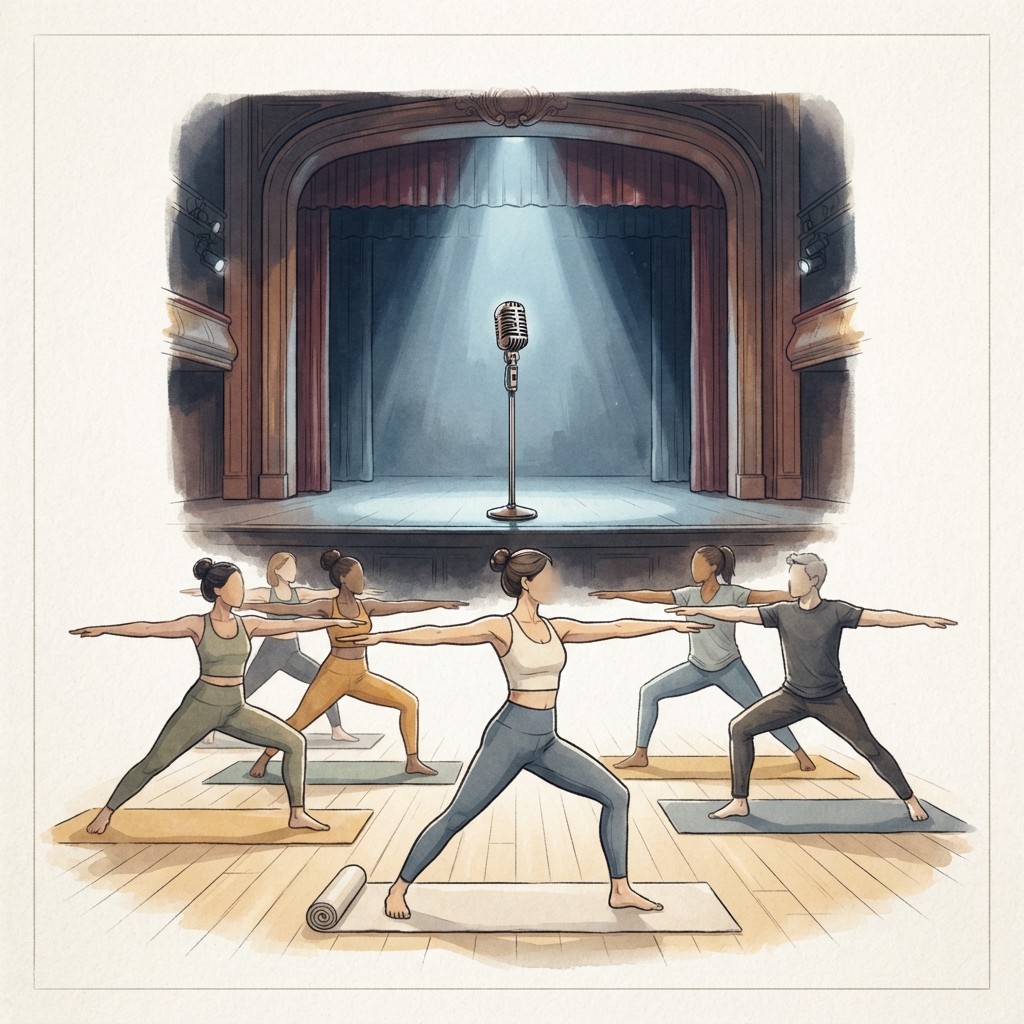
Walk into the first Lululemon store, which opened on West 4th Avenue in Vancouver's Kitsilano neighborhood, and you'd notice the place was confused about what it was. By day it was a design studio. By night it was a yoga studio. The retail floor that eventually grew up there had a stated goal that no other apparel company would have written down: to be 'a place that not only sells athletic apparel, but also serves as a community gathering place.'4 That sentence is the whole strategy. Lululemon never wanted to sell you pants. It wanted to own the room you put them on in.
The official legend is that Lululemon grew into a global brand on zero advertising - pure word of mouth, all community, no media spend. It's a beautiful story and it is not true. The company ran paid search on Google and paid social campaigns on Facebook and Instagram the entire time.7 What Lululemon actually skipped was something far more specific, and far more expensive.
What it really cut was the celebrity, not the campaign
Here is the part the myth gets backwards. Lululemon did not refuse to advertise. It refused to do one particular line item: the nine-figure celebrity-endorsement contract — the kind Nike signs with its marquee athletes.9 Instead of paying a famous athlete to wear the logo, it built an ambassador program out of local yoga instructors, elite athletes, and community influencers who taught the 6 a.m. class and gave product feedback.5 Compare the two budgets. Nike spent $3.11 billion on advertising and promotions in 2022.7 Lululemon's substitute for the endorsement half of that bill was a free pair of leggings and a poster of a local instructor on the studio wall. The ambassador isn't a cheaper celebrity. The ambassador is the person whose recommendation you'd actually trust - because she's the one correcting your downward dog.
| Nike-style endorsement | Lululemon ambassador | |
|---|---|---|
| The face | A global superstar | Your actual yoga teacher |
| Cost per relationship | Up to nine figures | Apparel, a poster, a feedback loop |
| Trust transfer | Aspiration from a distance | Recommendation from someone you know |
| Where you meet them | On a billboard | In person, at the local store |
| What it scales on | Money | Density of real community |
The mechanism is subtle and it is the entire moat. A celebrity endorsement buys reach - one face, broadcast wide. A local ambassador buys trust - many faces, each credible inside a small, dense circle that already gathers in the same room every week. To even join the official program, you couldn't apply online; you had to make an in-person connection at a local store.5 That friction was the point. It forced the company to recruit people who were genuinely embedded in a community, because the only way in was to already be standing in one. The geography did the authenticity check for them.
“Create transformative products and experiences that build meaningful connections.”1
The culture was engineered, not discovered
The grassroots story has one more inconvenient detail. The culture that made the community feel organic was, in fact, deliberately built. Founder Chip Wilson sold his snowboard company in 1997 and founded Lululemon in 1998, and that same year he wrote the company Manifesto - which he later called the number-one reason people came to work there.3 He credits a specific reading list for his theory of business: Good to Great, The E-Myth, Seven Habits, and the Landmark Forum, a commercial self-development program.3 The internal language was just as engineered: store employees are 'educators,' customers are 'guests.'6 So the 'authentic community' had a designer. It was a manufactured culture good enough to feel unmanufactured - which is harder, and more valuable, than the real thing.
Why a moat made of locals doesn't travel
A community moat has a structural flaw the celebrity model doesn't: it doesn't scale by spending. You cannot wire money into a thousand cities and conjure a thousand trusted local instructors who happen to embody your brand. Curating that takes judgment, presence, and time - exactly the things a founder has and a global org chart doesn't. Lululemon's own latest annual report confirms the model is still in use, leaning on global ambassadors to build awareness across Asia-Pacific and Europe.1 But there's a quiet tension in that sentence. The thing that made the model work was its locality. The thing the company now needs is global standardization. Those two requirements pull in opposite directions, and the layer of process required to run the program across continents is the same layer that strips out the founder-grade intuition that made each pick feel authentic in the first place.
Wilson, who stepped down as CEO in 2005 when private equity bought a 48% stake11 and left the board in February 2015,12 has said exactly this out loud. In 2024 he told Forbes the company was 'trying to become like the Gap, everything to everybody,' and in a paid Wall Street Journal op-ed declared 'Lululemon is in a nosedive,' arguing the creative, community-led culture had been replaced by a bureaucracy built for scale.8 He is, of course, a biased witness - an ousted founder rarely thinks the people who replaced him improved anything.
But isn't a $3 billion ad budget the better moat?
The fair objection is that the community model was always a constraint dressed up as a strategy - a small company that couldn't afford Nike's $3.11 billion ad budget telling itself a flattering story about why it didn't want one.7 There's truth in that. The community moat is slow, hard to scale, and dependent on a founder's taste, while Nike's checkbook scales instantly into any market on earth. And Lululemon's own response to Wilson is the honest counter-argument: it called itself 'a very different company today' and noted he hasn't been on the board since February 201512 — when Wilson formally resigned as a director.8 A company is allowed to outgrow its origin story. But notice what the company didn't say. It didn't claim the new, bureaucratic, globally-standardized version is more authentic than the founder-curated one. It claimed it's bigger. Those are not the same victory - and for a brand whose entire premium rested on feeling like it belonged to a community rather than to a marketing department, bigger may quietly be the more dangerous of the two.
The most defensible marketing asset isn't reach - it's the trust of people your customers already believe. Lululemon proved you can substitute a free pair of leggings on a local instructor for a nine-figure celebrity contract,[[cite:s9]] because credibility inside a dense community beats aspiration broadcast at a distance. But the catch is structural: that moat is curated, not bought, so it scales with founder-grade judgment, not with budget. The day the org chart takes over the ambassador list from the founder's gut, you keep the program and lose the thing that made it work. Audit the question honestly: are you building community, or are you spending money to look like you have one?
Lululemon's genius was never that it spent nothing on marketing - it spent plenty, on search and social, like everyone else. The genius was choosing which expensive habit to skip. It refused to rent a famous face and instead recruited the person already standing in the room, and for two decades that bought it something no ad budget can: a customer who believed the brand was theirs. The risk now is the oldest one in business. The community that grew because a founder could feel which instructor belonged becomes, at global scale, a line item managed by people who can only count. You can budget for reach. You cannot budget for belonging - and the moment you try, you've already started to lose it.
When the brand is the asset, not the product
Culture Doctrine Canvas
A one-page canvas for the unwritten rules that actually run a company: the core beliefs, the behaviors they reward and punish, the lines it won't cross, and the moments that prove the doctrine is real. Blank to articulate your own operating culture before it drifts; filled as the worked example that decodes why the story's company behaves the way it does — even when it costs them.
Included, filled and blank, in the The Culture Doctrine Casebook. See the set → · Preview the blank →
Sources
Where this comes from — the filings, records, and reporting behind it.
- 1Lululemon athletica inc. is principally a designer, distributor, and retailer of technical athletic apparel, footwear, and accessories; its vision is to 'create transformative products and experiences that build meaningful connections'; core values include 'valuing connection and inclusion'; the company explicitly leverages global ambassadors to build brand awareness in APAC and EMEA.
- 2Chip Wilson sold Westbeach Snowboard in 1997 and founded Lululemon Athletica in 1998. He was CEO until 2005 when he sold a 48% stake to private equity firms Advent International and Highland Capital Partners. He retired from his executive role as Chief Innovation and Branding Officer in January 2012 and stepped down as non-executive chairman in December 2013.Wikipedia, Chip Wilson ↗ · 2025
- 3Chip Wilson states on his own website that in 1997 he developed a new theory of business informed by books including Good to Great, The E-Myth, Seven Habits of Highly Effective People, and the Landmark Forum course; the Lululemon Manifesto was created in 1998 and was 'the #1 reason people came to work at lululemon'; he describes himself as CEO until 2007 when lululemon went public (at variance with the 2005 PE-deal CEO transition).
- 4The first brick-and-mortar lululemon store opened on West 4th Avenue in Vancouver's Kitsilano neighborhood with the goal of being 'a place that not only sells athletic apparel, but also serves as a community gathering place'; initially Wilson ran the company as a design studio during the day and a yoga studio at night before opening the retail store.
- 5Instead of paying for traditional celebrity endorsements, lululemon built an ambassador program of local influencers, elite athletes, and outstanding yoga instructors who create community, provide feedback on product, and partner with lululemon on social impact programs; joining the official Ambassador Program requires an in-person connection at a local store rather than an online application.
- 6The ambassador program's culture was cultivated by founder Chip Wilson and his close ties to the Landmark Forum, a controversial self-help program. The corporate culture encourages autonomy and personal growth and uses distinct internal language: store employees are 'educators' and customers are 'guests.'
- 7Lululemon does run paid advertising: the company leverages paid search (PPC on Google, Facebook, and Instagram), invests in paid social campaigns featuring influencer partnerships, and conducts digital advertising alongside its community model — contradicting the popular myth of zero paid media spend. Nike, by contrast, spent $3.11 billion on advertising and promotions in 2022.
- 8Wilson told Forbes in 2024 that lululemon was 'trying to become like the Gap, everything to everybody'; in a paid Wall Street Journal op-ed he declared 'Lululemon is in a nosedive,' arguing the creative, community-led culture had been replaced by bureaucratic structure optimized for scale. Lululemon responded that Wilson 'does not speak for the company' and called itself 'a very different company today' since he left the board in 2015.
- 9Kevin Durant's Nike deal was reported as a 10-year, $300 million contract, placing top-tier Nike athlete endorsement deals in the nine-figure range.
- 10Lululemon's first standalone retail store opened in November 2000 on West 4th Avenue in Vancouver's Kitsilano neighbourhood.
- 11Chip Wilson stepped down as CEO of Lululemon in 2005 when he sold a 48% stake to private equity firms Advent International and Highland Capital Partners.
- 12Chip Wilson announced on February 2, 2015 that he was stepping down from lululemon's Board of Directors.
More like this — beyond Lululemon
New Strategically analyses as they publish: the defining moves in business, checked against the record. No noise, and one click to leave.