Pairs with the Culture Doctrine Canvas — a ready-to-use strategy tool, filled for Reddit. Included in the The Culture Doctrine Casebook →
On June 12, 2023, more than 8,800 subreddits flipped a switch and disappeared.6 Whole continents of the site — millions of readers' worth of communities — went private at once, dark as a city in a blackout. The reason was almost absurdly small for the scale of the revolt: Reddit had decided to charge for an interface that had been free since 2008, at a price that would cost a large third-party app roughly $20 million a year.6 The protest wasn't really about an API. It was about a question nobody at Reddit wanted to answer out loud: whose site is this, anyway?
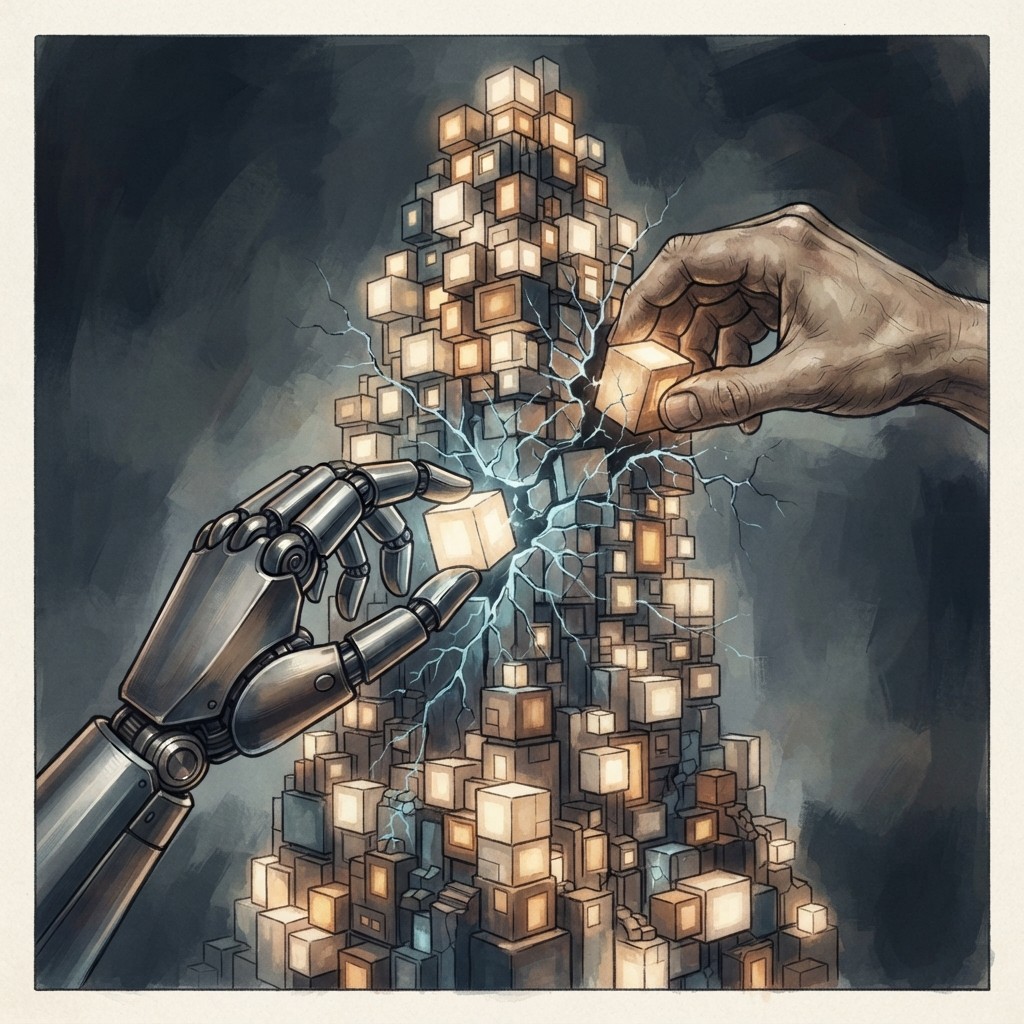
The official story is that Reddit is a community-owned platform that simply needed to monetize, and that a few angry power users overreacted. The real story is stranger. Reddit operates on a doctrine — that the volunteer-built norms of its communities are the moat, worth protecting even when protecting them costs money — and that doctrine has held through every internal revolt. The API crisis didn't break it. It revealed what it had been quietly papering over the whole time.
The doctrine: protect the unpaid workforce, even at a cost
Reddit's central bet is that the thing competitors can't copy is not its software but its people — specifically, the thousands of unpaid moderators who keep its communities alive and the norms each community evolves on its own. CEO Steve Huffman has framed this as compatible with growth, naming 'evolve' the company's number-one value and pointing to NSFW content as proof: the platform can host 'all parts of the human experience' while keeping the advertising next to it brand-safe.7 The implicit promise is that culture and commerce never have to collide. You can run a near-anarchic confederation of communities and a public advertising business at the same time, and the first will fuel the second.
And for a long stretch, the numbers said it was working. Reddit's revenue is reported to have grown more than fiftyfold from a base of roughly $15 million when Huffman returned around 2015 to $804 million in 2023 — a figure attributed to Sequoia's Roelof Botha rather than to any audited filing of that earlier period.7 The 2023 revenue itself is documented: $804 million, up 21% year over year, in the S-1 Reddit filed in February 2024.1 The doctrine, on the surface, looked vindicated. The unpaid workforce built the inventory; the ads sold against it.
“Reddit's number-one value is 'evolve' — and the company has publicly framed cultural preservation and business growth as compatible, not opposed.”7
The contradiction it can't paper over
Here is the part the doctrine cannot resolve. Reddit has two owners, and they are not the same people. Culturally, the site belongs to its users — the moderators who run it for free, the communities who write its rules, the regulars who believe, with some justice, that they built the place. Legally, the site belongs to its shareholders, a roster that since March 21, 2024 has traded under the ticker RDDT on the NYSE.2 These two owners want incompatible things. The cultural owner wants the platform left alone — free tools, open access, no extraction. The legal owner wants the platform to monetize every asset it controls, and one of the most valuable assets it controls is the very access the cultural owner takes for granted.
The 2023 API decision is exactly where those two masters met. To a shareholder, charging for high-volume API access is obvious housekeeping: you have a valuable feed, and people are pulling enormous quantities of it for free. To the cultural owner, the same decision read as a landlord suddenly billing tenants for the front door. Reddit then made the contradiction unmistakable. When moderators protested, administrators responded by threatening to remove them6 — that is, the company threatened to fire the volunteers whose unpaid labor was the entire basis of the moat the doctrine claimed to protect. You cannot say 'the community is our most precious asset' and 'we will replace the community if it disobeys' in the same week without the words canceling out.
| The cultural owner (users & mods) | The legal owner (shareholders) | |
|---|---|---|
| Believes it owns | The communities and their norms | The company and its assets |
| Wants from the API | Free, open access — as since 2008 | Revenue from high-volume access |
| Source of value | Unpaid moderation and content | Monetizable data and ad inventory |
| What the blackout meant | A landlord billing for the front door | A few power users overreacting |
The IPO was an attempt to merge the two owners — on paper
Reddit clearly understood the tension, because when it went public it tried to fuse the two owners into one. Its S-1 included a directed share program that let users and moderators who had 'meaningfully contributed' to the community — and who held an account on or before January 1, 2024 — buy shares at the $34 IPO price, a privilege normally walled off for employees and institutions.23 The logic is elegant: if your cultural owners become your legal owners, the two masters become one, and the contradiction dissolves. Make the moderator a shareholder and she now wants the API monetized too, because the proceeds accrue to her.
It is a real idea, and it may be the most interesting move in the whole story. But it only smooths the contradiction; it does not remove it. The directed shares went to a curated slice of long-tenured contributors, not to the millions of casual users and newer moderators who carry the daily load. And even for those who took shares, the alignment is partial: a moderator who is now a shareholder still moderates for free while the dividend of her labor — if there ever is one — flows to a cap table she barely sits at. The IPO converted a few thousand cultural owners into legal ones. It left the structural mismatch standing for everyone else.
But isn't the doctrine just winning?
The fair objection is that Reddit survived all of this and grew. The blackout faded, the protesting subreddits came back, revenue climbed to $1.3 billion in 2024 — up about 61.5% — on 91 million daily active users.8 If a doctrine can absorb its largest-ever revolt and accelerate afterward, maybe the contradiction is theoretical and the moat is just real. There's weight to this. The 2023 blackout was not even Reddit's first moderator uprising, only its largest, and the platform has metabolized every prior one. Resilience that consistent is itself evidence.
But two things sit underneath the growth that the 'doctrine wins' reading skips. First, the same 2024 in which revenue jumped also produced a net GAAP loss of $484 million — more than five times the prior year's loss, much of it stock-based compensation from the IPO.8 The company that proved its model is not yet a company that earns money, so the test of whether culture and commerce truly reconcile has not actually been run; it has been deferred by capital. Second, Reddit prevailed in 2023 not because it persuaded its cultural owners but because it could outlast them — it held the legal switch, and threatened to use it. A moat you defend by threatening to fire the people who are the moat is not a settled doctrine. It is a standoff that happened to end in the house's favor, this time.
The strongest community platforms run on a workforce they don't employ — volunteer moderators, contributors, curators — and that's exactly what makes them cheap to operate and impossible to copy. But unpaid labor only stays loyal as long as it feels like ownership, and the moment a public company has to monetize the assets that labor produces, the two definitions of 'owner' diverge. The danger isn't a single bad decision; it's the structural fact that your cultural owners and your legal owners want different things, and only one of them holds the switch. The durable version of this model isn't 'protect the culture' as a slogan — it's actually transferring economic ownership to the people doing the unpaid work, before they discover the slogan and the cap table point in opposite directions.
Reddit's doctrine is not wrong. The communities really are the moat, and protecting them really has built one of the most distinctive properties on the internet. But a doctrine is supposed to resolve a tension, and this one only suspends it. The platform tells its users they own the place, and tells its shareholders the same place is an asset to be harvested — and both are true, which is the problem. The API blackout wasn't a one-off PR mess. It was the first time both owners reached for the same thing at once and discovered there was only one of it. The doctrine has survived every revolt so far. It has not yet survived the question the revolts keep asking: whose site is this?
When a company's culture and its capital collide
Culture Doctrine Canvas
A one-page canvas for the unwritten rules that actually run a company: the core beliefs, the behaviors they reward and punish, the lines it won't cross, and the moments that prove the doctrine is real. Blank to articulate your own operating culture before it drifts; filled as the worked example that decodes why the story's company behaves the way it does — even when it costs them.
Included, filled and blank, in the The Culture Doctrine Casebook. See the set → · Preview the blank →
Sources
Where this comes from — the filings, records, and reporting behind it.
- 1Reddit filed its S-1 with the SEC on February 22, 2024, reporting 2023 revenue of $804.0 million (up 21% YoY), a net loss of $90.8 million, 73.1 million daily active unique users in Q4 2023, and 2,013 full-time employees as of end-2023.
- 2Reddit's IPO price was $34 per share; trading began on the NYSE under ticker RDDT on March 21, 2024. Lead underwriters were Morgan Stanley, Goldman Sachs, J.P. Morgan, and BofA Securities.
- 3Reddit's S-1 included an unusual directed share program allowing users and moderators who 'meaningfully contributed to Reddit community programs' and created an account on or before January 1, 2024, to buy shares at the IPO price — a privilege normally reserved for employees or institutional investors.
- 4Reddit was founded by Steve Huffman and Alexis Ohanian in June 2005 as part of Y Combinator's first class. Their original pitch ('My Mobile Menu') was rejected and Reddit was a pivot. Aaron Swartz joined via a merger of his company Infogami with Reddit between November 2005 and January 2006, and is disputed as a 'co-founder' — Ohanian described it as an acquisition, not a co-founding.
- 5Aaron Swartz did not technically co-found Reddit; Y Combinator's Paul Graham labeled him a co-founder after the Infogami-Reddit merger, but Ohanian's own public statements describe it as an acquisition. Swartz was asked to resign in January 2007 after Condé Nast acquired Reddit.
- 6On June 12, 2023, over 8,800 subreddits went dark in protest of Reddit's API pricing changes, which would have charged third-party apps approximately $12,000 per 50 million API requests — an effective cost of ~$20 million/year for large apps like Apollo. The API had been free since 2008. Reddit administrators responded by threatening to remove protest moderators.
- 7Reddit CEO Steve Huffman stated the company's number-one value is 'evolve,' and publicly framed cultural preservation and business growth as compatible — specifically citing NSFW content as an example of allowing 'all parts of the human experience' while keeping advertising brand-safe. Revenue grew from ~$15 million when Huffman returned (circa 2015) to $804 million in 2023 (Roelof Botha, Sequoia, attributed).
- 8Reddit generated $1.3 billion in revenue in 2024 (a 61.5% increase over 2023), had 91 million daily active users in full-year 2024 (a 51.6% YoY increase), and posted a net GAAP loss of $484 million in 2024 — more than five times the 2023 loss — largely attributable to IPO-related stock-based compensation.
More like this — beyond Reddit
New Strategically analyses as they publish: the defining moves in business, checked against the record. No noise, and one click to leave.