Pairs with the Adjacency / Synergy Map — a ready-to-use strategy tool, filled for Unilever. Included in the The Adjacency Expansion Casebook →
On 15 January 2022, the news that Unilever wanted to buy GSK's consumer health business did not come from Unilever. It came from GSK, which calmly disclosed that it had received and rejected three separate unsolicited bids from Unilever, the largest valuing the unit at £50bn - £41.7bn in cash and £8.3bn in shares.5 A target announcing its own suitor is not how confident acquirers operate. It is how a target raises the floor and dares the bidder to walk. Within four weeks, the bidder walked.6
The official story of the years that followed is a tidy one: Unilever, under new leadership, boldly pruned a sprawling conglomerate down to a focused four-segment machine, shedding the awkward ice cream business to concentrate on beauty, personal care, home care, and food. It is a flattering narrative. It is also backwards.
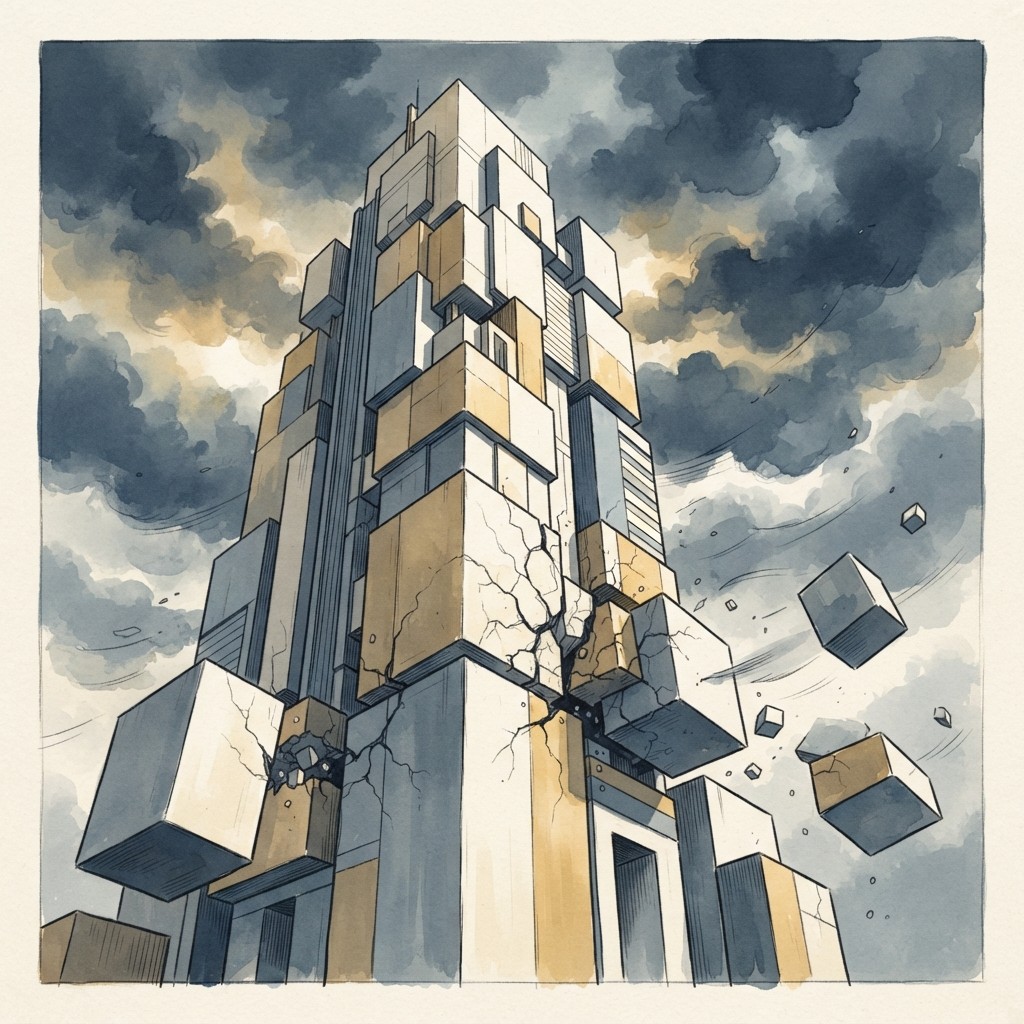
Unilever's portfolio reshape was not a plan executed from strength. It was a retreat conducted under fire - the GSK humiliation exposing a hollow adjacency thesis, and the ice cream spin-off forced out of a division that had been losing share and disappointing investors for years. The thesis here is simple: when a company tells you it is focusing, check whether it chose to, or whether it was made to.
The GSK bid told on itself
Unilever framed the GSK approach as an adjacency play - health, beauty, and hygiene as natural neighbours to its existing shelf. On paper, plausible. In practice, the price gave the game away. The final rejected offer represented only about a 10% premium over the business's existing value, while sources close to Pfizer - the 32% partner in the GSK joint venture - signalled that nothing under £60bn, a roughly 25% premium, would be taken seriously.7 A bidder who truly believes in an adjacency pays for it. Unilever lobbed in a number designed to look bold while costing little, and was told to go home three times.
Then came the part that mattered more than the rejection. Unilever's own shareholders revolted - not at the price, but at the very idea of a transformational deal from a management team that had not yet fixed the business it already owned. The pushback was severe enough that the CEO publicly surrendered the strategy within a month and handed investors a consolation prize.6 When you have to announce a €3bn buyback to apologise for a strategy, the strategy was never really yours.
“There is no appetite for a deal the size of GSK consumer health.”6
Ice cream wasn't pruned. It was a problem being managed.
Ice cream was never a peripheral rounding error in the Unilever empire. In FY2023 it generated €7.9bn in turnover - 13% of group revenue, the third-largest of five business groups - and it grew to €8.28bn, or 14%, by FY2024.4 You do not casually shed a division that size to sharpen focus. You shed it because it has become the part of the portfolio you can least defend.
And it had. Unilever's own words for the FY2023 ice cream performance were 'disappointing,' with volumes down 6.0% and share bleeding to private label.4 That is the real engine of the spin-off announced on 19 March 2024 - paired, tellingly, with a productivity programme targeting €800m in savings and up to 7,500 job cuts.1 A genuine focus play frees capital for the things you love. This freed capital from the thing you could no longer fix, with the seasonality, the cold chain, and the cabinet network sitting awkwardly inside a fast-moving consumer goods business built for shelf-stable products.
Even the execution carried the marks of a forced move rather than a confident one. The separation was announced in March 2024 with the route still undecided - demerger preferred, but a sale and other options explicitly left on the table.1 It was not until 13 February 2025 that Unilever confirmed both the demerger and the new name, The Magnum Ice Cream Company.2 And the company did not even walk away clean: at completion it kept a roughly 19.9% stake, to be sold down over time to cover separation costs and preserve flexibility, handing the other 80.1% to shareholders at one TMICC share for every five Unilever shares.3 You hold onto a fifth of something you genuinely wanted gone only if the exit was about housekeeping, not conviction.
| The focus narrative | What the record shows | |
|---|---|---|
| GSK bid | Bold adjacency move | Rejected three times; abandoned in four weeks[[cite:s5]][[cite:s6]] |
| Bid premium | Serious offer | ~10% premium; ~25% was needed[[cite:s7]] |
| Ice cream exit | Pruning to focus | 13-14% of revenue, losing volume and share[[cite:s4]] |
| Clean break | Full separation | Kept ~19.9% to fund the costs[[cite:s3]] |
Isn't a focused company still the right outcome?
The fair objection is that motives are cheap and results are real: whatever pushed Unilever to act, it now runs a leaner business of four continuing groups - Beauty & Wellbeing, Personal Care, Home Care, and Foods - with ice cream reported as discontinued operations and a productivity programme running ahead of schedule.9 A forced retreat that lands in a better place is still a better place. That is true, and it is the strongest case the reshape has.
But the burden of proof has simply moved, not disappeared. Discontinued ice cream still generated €7,691m of turnover in 2025 - a real business now standing on its own, debuting at roughly a €7.9bn market cap with about 21% of the global ice cream market and the world's largest cabinet fleet at some 3 million units.98 Unilever did not destroy that value; it gave it away. The question that decides whether this was strategy or retreat is whether the four remaining segments can now grow faster than the €8bn business they shed - because if they can't, focus was just a smaller stage for the same problem. A reshape only counts as vision if the part you kept outgrows the part you let go.
Every divestment is dressed as focus, but the two look nothing alike from the inside. Pruning frees capital from a healthy business to feed a better opportunity you chose. Amputation removes a part that was failing, under pressure you could no longer resist. The tells are in the details: Did the exit follow a position of strength or a stretch of bad numbers? Did the company commit cleanly, or hedge - a delayed route, a retained stake, a buyback to soothe the shareholders? And crucially, was the strategy announced by the company, or surfaced by someone else? When a target discloses your bid before you do, or when you keep a fifth of what you supposedly wanted gone, the polished story is doing work the facts won't. Judge a reshape not by what it sheds, but by whether what remains can outgrow it.
Unilever's two big moves of the decade are usually told as opposites - a failed acquisition and a successful spin-off. They are the same move seen twice: a company reacting to its own weakness, dressed up as a company exercising its judgment. The GSK bid was a hollow adjacency the market refused to fund. The ice cream demerger was a struggling division the market wanted out. Neither began with conviction; both ended with Unilever doing what its investors demanded. The leaner Unilever may yet prove the doubters wrong. But it will have to prove it - because focus you were forced into isn't a strategy. It's just the shape your hand was forced into, and now you have to make it pay.
Adjacency / Synergy Map
A one-page canvas for an adjacency play: the new business next door, the shared assets that justify entering it, the synergies that actually transfer versus the ones that evaporate on contact, and the dis-synergies nobody put on the deck. Blank to test your own expansion; filled as the worked example showing where the story's 'natural adjacency' was real and where it was wishful.
Included, filled and blank, in the The Adjacency Expansion Casebook. See the set → · Preview the blank →
Sources
Where this comes from — the filings, records, and reporting behind it.
- 1Unilever announced the separation of its ice cream business on 19 March 2024, paired with a productivity programme targeting €800 million in savings and up to 7,500 job cuts (targeting primarily office-based roles, ~6% of total workforce).
- 2On 13 February 2025, Unilever confirmed the ice cream business would be named The Magnum Ice Cream Company (TMICC) and separated via a demerger. The demerger completed on 6 December 2025 after a delay caused by the US government shutdown preventing SEC processing of the NYSE registration.
- 3At completion, qualifying shareholders received one TMICC share per five Unilever shares held. Unilever retained approximately 19.9% of TMICC, to be sold down over time to support separation costs and capital flexibility.
- 4Unilever's ice cream business generated €7.9bn turnover in FY2023 (13% of group revenue) and €8.28bn in FY2024 (14% of group revenue). The FY2023 performance was characterised by Unilever itself as 'disappointing,' with volumes down 6.0% and market share losses to private label.
- 5GSK publicly confirmed on 15 January 2022 that it had received and rejected three unsolicited, conditional bids from Unilever for its consumer healthcare unit (a JV 68% GSK / 32% Pfizer). The final offer on 20 December 2021 was £41.7bn in cash plus £8.3bn in Unilever shares (total £50bn / ~$68.4bn). GSK rejected all bids as fundamentally undervaluing the business.
- 6Following heavy investor pushback on the GSK bid, Unilever CEO Alan Jope told CNBC on 10 February 2022 there was 'no appetite for a deal the size of GSK consumer health' and ruled out transformational M&A, announcing a €3bn share buyback instead.
- 7GSK's final rejected Unilever bid represented only approximately a 10% premium over the business's then-current value; sources close to Pfizer (32% JV partner) indicated a bid above £60bn (~$81.8bn, ~25% premium) would be needed for serious consideration.
- 8TMICC debuted on 8 December 2025 at €12.96/share implying a market cap of ~€7.93bn, controls €7.9bn revenue, claims 21% global ice cream market share, and operates the world's largest fleet of ice cream cabinets (3 million units). TMICC is headquartered in Amsterdam.
- 9Unilever's Q4 and Full Year 2025 results confirm: ice cream is reported as discontinued operations (demerger 6 December 2025); discontinued operations generated €7,691m turnover in 2025; the productivity programme targeting €800m savings is ahead of schedule; and Unilever's four continuing business groups are Beauty & Wellbeing, Personal Care, Home Care, and Foods.
More like this — beyond Unilever
New Strategically analyses as they publish: the defining moves in business, checked against the record. No noise, and one click to leave.