Pairs with the Turnaround Diagnosis Worksheet — a ready-to-use strategy tool, filled for Burberry. Included in the Turnaround Casebook →
“Is this plan a turnaround, and can it be finished?”
In 2002, a soap actress named Danniella Westbrook was photographed in head-to-toe Burberry nova check - the coat, the bag, the cap, even the pram. Within a season, Harvey Nichols and Selfridges had pulled Burberry from their shelves entirely; Harrods kept only the old trench coats.8 One photograph did what a hundred boardroom memos couldn't: it told a luxury house that its most recognizable asset had become its most toxic one. Burberry has spent the twenty-plus years since then trying to decide what it is. It still hasn't.
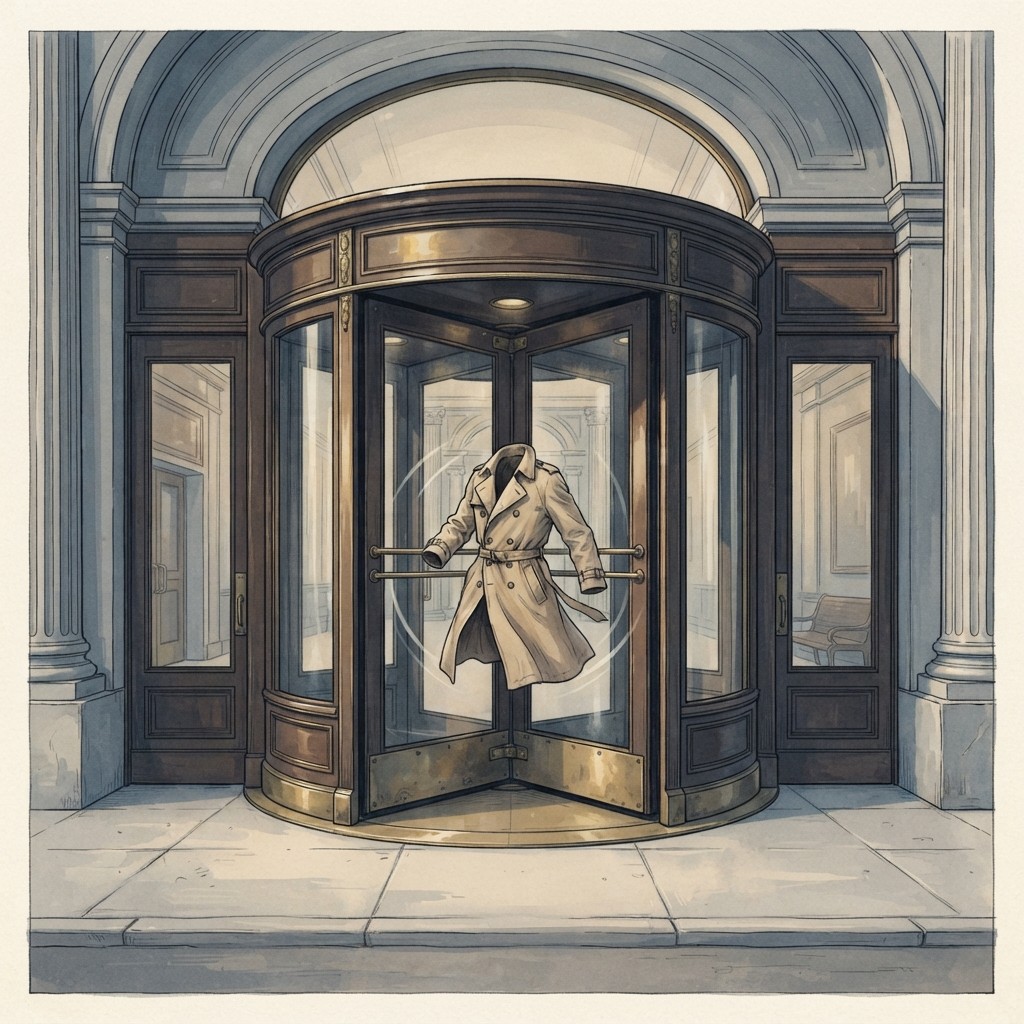
The official story is that Burberry is a great house that keeps hitting bad patches and bravely turning itself around. The truer story is the opposite: the turning around is the disease. The 'Burberry Forward' plan launched in late 20245 is at least the fifth full repositioning of the brand in a quarter-century, and the reason there is always a next one is that each one over-steers.
Here is the thesis a sharp analyst could argue against - and that the record keeps proving anyway: Burberry treats its brand identity as a costume to change rather than a durable asset to manage. So it lurches. Over-license until the check is everywhere and means nothing; over-elevate until it's a niche fashion label nobody recognizes; then panic, and reverse. Same pendulum, opposite ends.
The pattern hiding inside the comebacks
Strip away the personalities and a single oscillation appears. By the late 1990s Burberry was a tired house - profits had collapsed from £62m to £25m in a single year, and a new CEO, Rose Marie Bravo, was brought in to reverse it.1 That repositioning worked well enough to carry Burberry to a 2002 IPO that valued it between $1.7bn and $2.2bn at a moment when the luxury sector was weak.2 But the same democratization that built the comeback also spread the check into every market stall and counterfeit bag - and produced the chav moment that retailers reacted to by purging the brand.8
That set the template. Every subsequent rescue has been a reaction to the previous rescue's excess. And in the most recent cycle, the company didn't just repeat the pattern - it documented it. In its own annual report, the incoming leadership confessed that the brand had been pushed 'too modern at the expense of celebrating heritage,' had introduced 'unfamiliar brand codes,' had 'prioritised niche, seasonal fashion,' and had 'taken pricing too high.'3 Read that list again. It is not a description of neglect. It is a description of a repositioning that worked exactly as designed - and went too far.
| Over-democratized | Over-elevated | |
|---|---|---|
| The move | Check everywhere, broad licensing | Niche fashion, codes rewritten, prices up |
| What it fixes | A tired, low-relevance brand | A debased, ubiquitous brand |
| What it breaks | Exclusivity and desire | Recognition and accessible volume |
| The confession | Pulled from Harvey Nichols, Selfridges | 'Moved too far, too fast' |
Why over-steering is built into the org chart
A pendulum needs a pusher. At Burberry, the pusher is the revolving CEO chair, and each new occupant arrives with a mandate to be the opposite of the last one. Jonathan Akeroyd joined from Versace in 2022 and, in under two years, set a revenue target of £4-5 billion and aimed the house squarely upmarket, to compete with Dior, Louis Vuitton and Gucci.7 That is the elevation strategy in one sentence: more rarefied, more expensive, more fashion. When same-store sales fell 21% in a single quarter, he was out - the fourth CEO in ten years.7
His replacement, Joshua Schulman, was appointed in July 2024 - and his résumé is the tell.6 He came from Michael Kors and, before that, Coach: brands whose entire identity is accessible, broadly-distributed, attainable luxury. Burberry didn't hire a man to continue elevating. It hired a man whose career is the antidote to elevation. The board didn't choose a strategy; it chose a direction, and the direction is reverse. The mechanism is almost mechanical: when the brand swings too high, the cure is a leader steeped in lower, and vice versa. Each new CEO is hired precisely because they embody the correction - which guarantees the correction overshoots in turn.
“Moved too far, too fast... too modern at the expense of celebrating heritage... prioritised niche, seasonal fashion... took pricing too high.”3
What 'Burberry Forward' is actually correcting
The 2024 plan reads as renewal and is, underneath, a retreat from the elevation push. 'Burberry Forward' promises to reignite brand desire and drive long-term value, paired with cost cuts including roughly 1,700 job losses by FY2027.5 The revenue ambition tells the story most plainly: the company now expresses confidence in returning to £3 billion over time4 - a fraction of the £4-5 billion the previous CEO had chased.7 In two years the goalposts didn't move. They were yanked back to the halfway line. That is not a new strategy. It is the pendulum reaching the top of its arc and starting back down.
The most expensive mistake in brand management is treating identity as something you re-stage each time the numbers dip. A position is earned slowly and held through cycles - the thing customers can rely on through a recession and a fashion swing alike. When every new leader is hired to be the opposite of the last, the company isn't managing a brand; it's auditioning identities in public, and customers learn to distrust all of them. The fix is rarely a bolder repositioning. It's the discipline to pick a position and stop flinching. Burberry's repeated turnarounds aren't bad execution of good strategy - they're the symptom of having no fixed position to execute against.
The fair objection: maybe lurching is just luxury
The honest counter is that all luxury houses reposition, and reactive course-correction is simply the job. Gucci has swung between minimalism and maximalism; Dior and Louis Vuitton refresh creative direction constantly. Tastes move; a brand that never adjusts ossifies the way Burberry itself did before 1998, when profits more than halved.1 By this reading, Burberry isn't uniquely broken - it's a mid-tier house in a category that punishes standing still, and the constant motion is survival, not failure.
There's truth in that, and it's why the diagnosis has to be precise. The healthiest houses change their expression while holding their position - the codes evolve, the place in the customer's mind does not. Burberry does the reverse. It keeps the trench and the check as props while relocating the entire brand up and down the price and prestige ladder, then expresses surprise when the customer can't say what Burberry stands for. The distinguishing evidence is the company's own confession: it didn't say the world changed under it. It said it 'moved too far, too fast' and rewrote its 'brand codes' into something 'unfamiliar.'3 That is self-inflicted, and a house that does it five times in twenty-five years is not adapting to taste. It is failing to choose.
Burberry owns one of the most recognizable assets in fashion - a check, a coat, a name with a century behind it. The problem was never that the asset weakened. It's that the company keeps re-deciding what the asset means, and a meaning that gets re-decided every few years isn't a meaning at all. 'Burberry Forward' will probably move the numbers; it usually does, for a while. The pendulum always swings back through the middle on its way to the other extreme. The turnaround everyone is waiting for isn't a better repositioning. It's the day Burberry stops repositioning and finally stands still long enough to be believed.
Turnaround Diagnosis Worksheet
A worksheet that forces a turnaround down to first principles: is this a cash problem, a cost problem, or a strategy problem — and which one will kill you first. It separates the bleeding you must stop this week from the rebuild that takes years. Blank to triage your own situation; filled as the worked example tracing how the story's leader sequenced survival before revival.
Included, filled and blank, in the Turnaround Casebook. See the set → · Preview the blank →
Sources
Where this comes from — the filings, records, and reporting behind it.
- 1For the financial year ending 31 March 1998, Burberry's annual profits dropped from £62m to £25m; Rose Marie Bravo was appointed CEO in 1997 to reverse the decline, drawing on documentation published in the Burberry IPO prospectus.
- 2Burberry's 2002 IPO priced at $3.45–$4.35 per share, valuing the company between $1.7bn and $2.2bn USD, at a time when the luxury goods sector was weak; GUS floated 25% of Burberry stock.UPI, Burberry prices IPO ↗ · 2002-06-24
- 3Burberry's FY2024/25 Annual Report, signed by CEO Joshua Schulman, states the company 'moved too far, too fast'; brand expression was 'too modern at the expense of celebrating heritage'; 'unfamiliar brand codes' were introduced; the company 'prioritised niche, seasonal fashion' and 'took pricing too high,' resulting in significant financial underperformance.Burberry plc, Annual Report 2024/25 ↗ · 2025-05-13
- 4For FY2024/25, Burberry revenue was £2,461 million, a reduction of 15% at constant exchange rates. The company suspended dividend payments in July 2024 and stated confidence in returning to £3 billion in annual revenue over time.
- 5Burberry's official 'Burberry Forward' strategic plan, launched November 2024, aims to reignite brand desire, improve performance and drive long-term value creation, with cost savings including approximately 1,700 job cuts by FY2027.
- 6Joshua Schulman was appointed CEO on 17 July 2024, replacing Jonathan Akeroyd who departed 'by mutual agreement with the Board' with immediate effect; Schulman previously served as CEO of Michael Kors and Brand President of Coach.
- 7Akeroyd joined Burberry in 2022 from Versace (Capri Holdings); in under two years he set a revenue target of £4–5 billion at constant exchange rates, sought to move Burberry upmarket to compete with Dior, LV and Gucci, and was ousted after Q1 FY2025 same-store sales fell 21%. Schulman was Burberry's fourth CEO in ten years.
- 8The 'chav' association peaked most visibly in 2002 when soap actress Danniella Westbrook was photographed in head-to-toe nova check, causing UK department stores Harvey Nichols and Selfridges to cease stocking Burberry entirely; Harrods retained only traditional trench coats.
Weighing outside help with a decision like this? Hiring a procurement transformation consultant
More like this — beyond Burberry
New Strategically analyses as they publish: the defining moves in business, checked against the record. No noise, and one click to leave.