Pairs with the Turnaround Diagnosis Worksheet — a ready-to-use strategy tool, filled for Hyundai. Included in the The Turnaround Casebook →
In 1986 a small, cheap sedan called the Hyundai Excel went on sale in 31 US states and sold 168,882 of itself in a single year - an industry record for an import distributor's debut.2 Then those cars got a few years old. The transmissions slipped, the trim fell off, the resale value cratered, and 'Hyundai' became shorthand for a car you bought because you couldn't afford a real one. The same low price that opened the door slammed it shut: cheap got you in the showroom and out the door, and then it punished you for the next decade. The comeback story everyone tells starts with a warranty. The warranty is the famous part. It is not the part that did the work.
The official story is that Hyundai fixed its cars, slapped on America's best warranty, and climbed to the top of the quality charts. Almost every beat of that is true and almost every beat is in the wrong order. Hyundai did not fix the cars and then advertise it. It advertised a promise it could not yet fully keep - and then spent twenty years making the promise honest.
A warranty isn't a feature. It's a hostage.
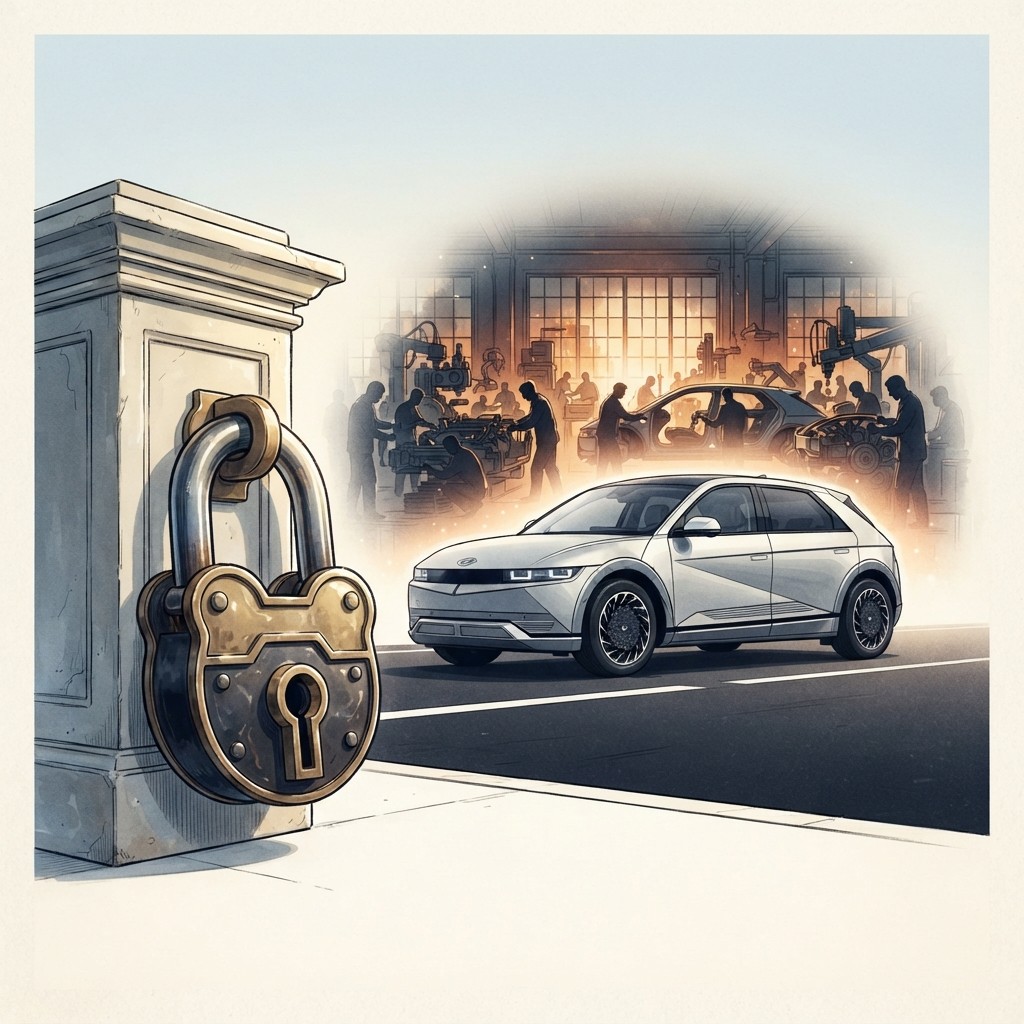
For the 1999 model year, Hyundai introduced a 10-year, 100,000-mile powertrain warranty paired with five years, 60,000 miles bumper-to-bumper - the first time any brand had offered that combination.1 Read it as a marketing perk and you miss the move entirely. A warranty is a company writing itself a contingent bill: every car that fails inside the window costs Hyundai money, so the only way to offer the longest warranty in the industry and survive is to actually build cars that don't fail. The promise was a hostage. Hyundai handed buyers a claim on its own future cash flows and said, in effect, if we're lying, you'll bankrupt us one repair at a time. That is why a warranty signal works when an ad does not. Anyone can say 'we got better.' Only a company that believes its own quality numbers will voluntarily eat the downside of being wrong about them. The warranty didn't make the cars good. It made Hyundai's confidence expensive enough to be credible.
“Hyundai Advantage warranty sets standard as the best in the automotive industry.”1
The boring engineering nobody puts in the headline
Behind the customer-facing bond was the unglamorous machinery that actually moved the needle. In 2000, Chairman Chung Mong-koo launched a Quality Management Initiative that reoriented the company away from chasing manufacturing volume and toward customer satisfaction.3 That is the kind of sentence that sounds like a slogan until you see it land in the rankings. By 2004, J.D. Power gave Hyundai its 'most improved' award, and the Sonata posted the highest initial quality in the midsized-car category - the first time a Korean-branded vehicle had beaten both European and US brands on initial quality.4 The warranty was the promise; the engineering discipline was the delivery. Crucially, these were two different things happening in parallel, and the company that conflates them learns the wrong lesson - that you can buy a reputation with a generous policy. You can't. You can only buy time to earn one, and the warranty bought exactly that: a window in which skeptical buyers would take a chance, during which the cars had to get good enough to honor the bet.
| The warranty (1999) | The engineering (2000s) | |
|---|---|---|
| What it was | A 10-yr/100k powertrain bond | Quality Management Initiative + systematic methods |
| Who it talked to | The skeptical buyer | The factory and the supply base |
| What it actually did | Bought trust on credit | Made the cars worth the trust |
| Why it gets the credit | It's visible and quotable | It's invisible and slow |
Two decades, not one - the climb in numbers
The shorthand version of this story is 'worst to first,' and it compresses the truth into a lie. Hyundai didn't leap. It ground. In the 2001 J.D. Power Initial Quality Study it ranked 32nd out of 37 manufacturers - near the bottom of the industry. A full decade later, in 2011, it had reached 10th out of 37: real, sustained, undramatic progress.5 Only in the 2025 study did Hyundai Motor Group reach the top, and even then the honest version carries an asterisk - the group tied for the highest ranking among corporations, for the second consecutive year, while the Hyundai brand itself placed third overall and second among mass-market brands.6 The arc kept extending: in the 2026 study the group took five model-level segment awards, with the Venue, Sonata, and Santa Cruz each ranking highest in their segments.7 The lesson hiding in those dates is that a credibility bond can be posted in an afternoon, but it can only be honored over a generation.
The visionary who was also a convict
Here is the part the strategy decks leave out. The same Chairman Chung Mong-koo who is canonized as the architect of the quality renaissance was arrested in April 2006 and convicted in February 2007 of embezzlement and breach of fiduciary duty, for running a slush fund of more than 103 billion won. He was sentenced to three years in prison, had the sentence suspended on appeal, and was later pardoned by the South Korean president.8 This matters not because it cancels the turnaround - the rankings are real, the cars got good - but because the heroic-CEO narrative quietly smuggles in a claim it can't support: that the whole thing was driven by one visionary's character. The man running the quality initiative was simultaneously running a criminal scheme. The cars improved anyway. That tells you the engine of the turnaround was the system - the bond, the methods, the relentless decade-over-decade grind - not the singular virtue of the man whose name sits on top of it.
Wasn't it just a brilliant warranty all along?
The fair objection is that I'm overcomplicating a simple story: Hyundai offered an absurdly generous warranty, customers bought the reassurance, sales recovered, end of analysis. There's truth in it - the warranty was genuinely the thing that got hesitant buyers to take the first chance. But test the counterfactual. A long warranty on a car that still fails is a check the company writes against its own balance sheet, and it cashes fast. Had the underlying quality not actually climbed - 32nd, then 10th, then top-tier across two decades56 - the warranty would have been the instrument of bankruptcy, not redemption: every aging Excel-style failure now arriving as a covered claim instead of a lost customer. The warranty only looks brilliant in hindsight because the engineering made it safe to keep. Reverse the order and it's a suicide note. So the warranty wasn't the cause of the turnaround. It was a bet that the turnaround would happen - and the engineering is what won the bet.
When your reputation is the thing standing between you and the customer, a costly, public commitment can buy you the trust you haven't earned yet - a long warranty, a money-back guarantee, a service-level promise with teeth. But understand what you've actually done: you've borrowed credibility against your future operations, and the loan comes due one failure at a time. The bond works only if you have a real plan to make it honest - the boring, multi-year operational grind that never makes the headline. Companies that post the bond without the engineering behind it don't buy a turnaround; they accelerate their own collapse. And beware the tidy founder myth that follows success: the system that delivered the climb is almost never the one person the story gets named after.
Hyundai's real achievement wasn't the warranty, and it wasn't a chairman's genius. It was the discipline to make an expensive promise in 1999 and then spend twenty years - through a recall-laden reputation, a financial crisis, and a chairman's criminal conviction - quietly building the cars that made the promise true. The cheap car got Hyundai through the door in 1986 and nearly buried it. The bond got it a second chance. The engineering is what it did with the time. A guarantee is just a way of telling the world you've already done the hard part - and the only companies that survive making it are the ones who actually have.
Turnaround Diagnosis Worksheet
A worksheet that forces a turnaround down to first principles: is this a cash problem, a cost problem, or a strategy problem — and which one will kill you first. It separates the bleeding you must stop this week from the rebuild that takes years. Blank to triage your own situation; filled as the worked example tracing how the story's leader sequenced survival before revival.
Included, filled and blank, in the The Turnaround Casebook. See the set → · Preview the blank →
Sources
Where this comes from — the filings, records, and reporting behind it.
- 1The 10-year/100,000-mile powertrain warranty was introduced for 1999 model-year Hyundais, paired with a 5-year/60,000-mile bumper-to-bumper warranty — the first time any brand offered this combination
- 2The Hyundai Excel sold 168,882 units in its 1986 US debut — an industry record for an import car distributor in its first year — with dealers in only 31 states
- 3Hyundai's quality turnaround is credited to Chairman Chung Mong-koo, who in 2000 launched the Quality Management Initiative, shifting the company's focus from manufacturing volume to customer satisfaction
- 4In 2004, J.D. Power & Associates gave Hyundai its 'most improved' ranking; the Sonata rated highest initial quality in the midsized car category — the first time a Korean-branded vehicle outpaced both European and US brands in initial qualityQuality Digest, Hyundai Makes Quality Turnaround ↗ · 2005-06-13
- 5Hyundai ranked 32nd out of 37 manufacturers in the J.D. Power IQS in 2001, rising to 10th out of 37 by 2011
- 6Hyundai Motor Group tied for the #1 ranking among all corporations in the J.D. Power 2025 U.S. Initial Quality Study for the second consecutive year; Hyundai brand individually ranked 3rd overall and 2nd among mass-market brands
- 7In the 2026 J.D. Power U.S. Initial Quality Study, Hyundai Motor Group won five model-level segment awards (second-most among all corporations); Hyundai Venue, Sonata, and Santa Cruz each ranked highest in their segments
- 8Chairman Chung Mong-koo was arrested April 2006, convicted February 2007 of embezzlement and breach of fiduciary duty for a 103+ billion-won slush fund, sentenced to 3 years in prison, then given a suspended sentence on appeal — he was subsequently pardoned by the South Korean president
More like this — beyond Hyundai
New Strategically analyses as they publish: the defining moves in business, checked against the record. No noise, and one click to leave.