Pairs with the Disruption Vulnerability Assessment — a ready-to-use strategy tool. Included in the The Fall Casebook →
On a single February evening in 2019, Kraft Heinz told the market that the brands in its pantry — names that had survived two world wars and a hundred recessions — were worth $15.4 billion less than the books had claimed. Some of that was $7.0 billion of goodwill written off; the larger $8.9 billion was the value of the brand names themselves, the indefinite-lived intangibles that are supposed to never lose worth — figures from the audited annual filing, which refined the preliminary amounts disclosed on the night of the announcement.4 A maker of ketchup and processed cheese had just announced, in the flat arithmetic of an SEC filing, that its most permanent assets had quietly been eroding for years. The strange part is that this was not a surprise the business sprang on its owners. It was the design of the deal arriving on schedule.
The official story is that Kraft Heinz got caught out by changing tastes — shoppers drifting to fresh food and away from boxes, a once-great portfolio overtaken by the times. It is a comfortable story because it blames the weather. The truer story is harder: the merger was structurally self-defeating from the day it closed, and the write-down was the mechanism, not the misfortune.
A price that demanded growth, run by people who cut
Berkshire Hathaway and 3G Capital had already taken Heinz private in 2013. In March 2015 they used it as the vehicle to absorb Kraft, handing Kraft shareholders 49% of the combined company plus a special cash dividend of $16.50 a share — roughly $10 billion of equity that Berkshire and 3G funded themselves.1 The deal closed that July, and H.J. Heinz Holding became The Kraft Heinz Company.2 Pay that kind of premium and you have, in effect, signed a contract with the future: the brands must grow enough to justify what you laid out. Brand growth in packaged food is bought — with advertising, with innovation, with shelf-space wars and product reinvention. It is paid for out of exactly the line items a cost-cutter is trained to eliminate. The merger married a price that required investment to an operator whose entire reputation was built on not investing. That contradiction is the whole story.
“The Company now expects its multi-year Integration Program to deliver $1.7 billion in cumulative, pre-tax savings by the end of 2017, up from $1.5 billion previously.”3
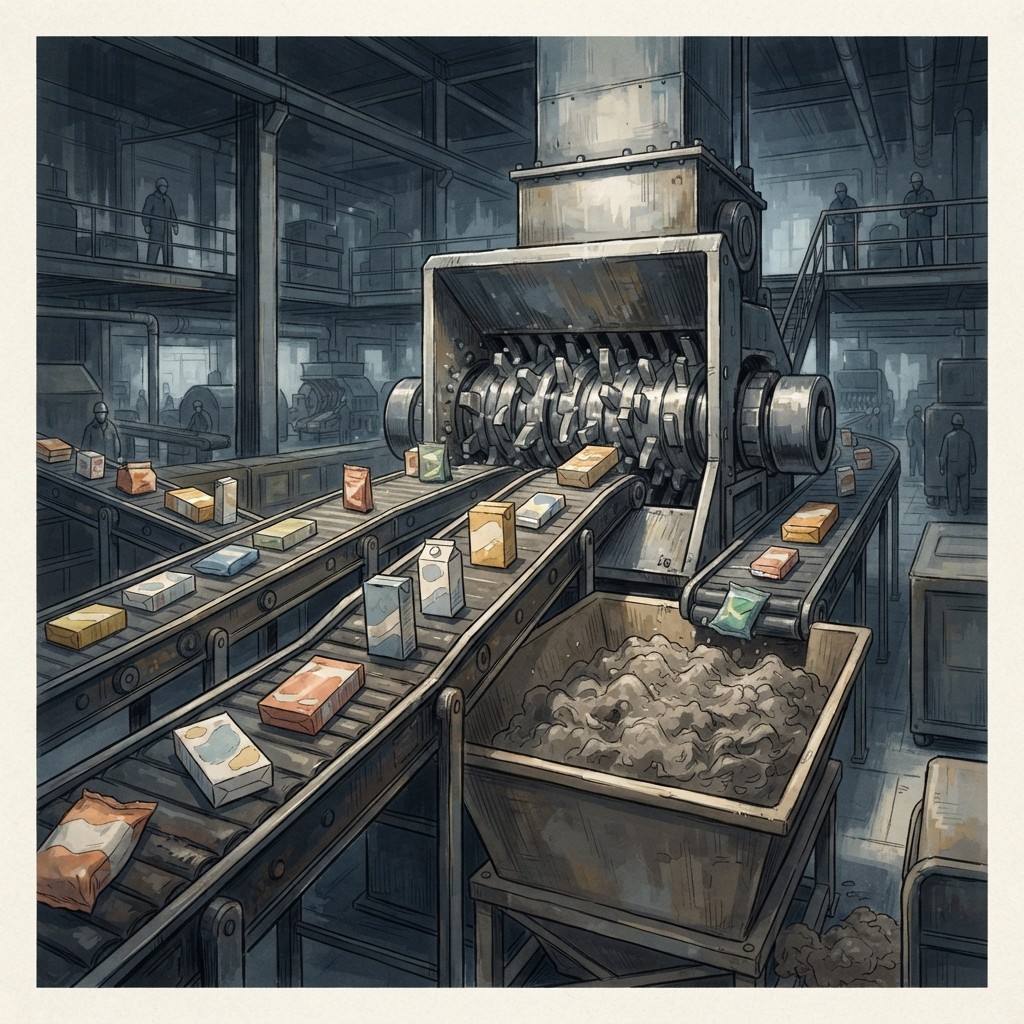
3G's instrument was zero-based budgeting: every expense rebuilt from zero each year, every dollar forced to re-earn its existence. Applied to travel and middle management, it is a tonic. Applied to a portfolio whose value lives in mindshare, it is a slow amputation. The savings target started at $1.5 billion in run-rate cuts by the end of 2017, then the company itself raised it to $1.7 billion in cumulative pre-tax savings.3 Bloomberg's reporting put the eliminated expenses at $1.7 billion, and for a glorious window it worked: the shares hit a record high in February 2017.8 The margins looked spectacular. What no one on the call said out loud was that margins manufactured by under-feeding a brand are a loan against its future, drawn down quietly, with the interest hidden off the income statement until it isn't.
| What the price required | What the model delivered | |
|---|---|---|
| The asset | Brand value that grows | Brand value harvested |
| The spending | Advertising, innovation, renewal | Zero-based cuts to those lines |
| The metric that improved | Long-term brand strength | Short-term operating margin |
| Where the cost went | Nowhere — paid as you go | Onto the balance sheet, deferred |
| The day it came due | — | The impairment |
Cutting investment lifts margin today and lowers the brand's long-term forecast tomorrow. Accounting lets you carry an indefinite-lived intangible at full value as long as your forecast supports it. So the gap between the harvested margin and the decaying brand hides on the balance sheet — invisible — right up to the moment the forecast is revised down. Then it all lands at once: $7.0 billion of goodwill and $8.9 billion of brand value, written off in a single quarter.4
The 2017 lunge that gave the game away
If the brands you own can only be milked, the only way to keep the machine running is to feed it new brands to milk. That is why, in February 2017 — the same month the stock peaked — Kraft Heinz lunged at Unilever with an unsolicited $143 billion proposal.7 Unilever's reply was a single contemptuous sentence: the offer 'sees no merit, either financial or strategic' and 'fundamentally undervalues Unilever.'7 Kraft Heinz withdrew within days, before it ever made a firm offer. Read it not as a failed acquisition but as a confession. A company confident in organic growth does not need to swallow a target many times its appetite at the exact peak of its own valuation. The lunge for Unilever was the model admitting it had run out of road inside its own walls — that the cost machine had no second act except to acquire and cut again. When the biggest target available told it no, there was nowhere left to go but down.
Why the fraud is the symptom, not the disease
There was real fraud, and it is tempting to make it the villain. The SEC found that from late 2015 through 2018, employees recognized unearned discounts and kept false supplier contracts to inflate EBITDA; the company restated $208 million of improperly booked cost savings across nearly 300 transactions, paid a $62 million penalty, and saw its former COO and former chief procurement officer personally charged.5 But here is the detail that reframes everything: by Kraft Heinz's own restatement filing, the cumulative misstatements were less than 1% of net income in any applicable period.6 The $15.4 billion impairment was not caused by the accounting corrections. It was driven by deteriorating long-term brand forecasts.4 The fraud did not break the model. The model bred the fraud. When the only way to clear an impossible savings target is to invent savings, people invent them — and the same pressure that fabricated $208 million of fake synergies was destroying billions in real brand value at the very same time, in plain sight, on the legitimate books.
An acquisition premium is a forecast about an asset. An operating model is a behavior. When you buy a brand at a price that only works if the brand grows, then hand it to a model that only knows how to cut, the behavior is what actually happens — and it quietly invalidates the forecast you paid for. Margins improve on schedule; the asset decays off-ledger; and an impairment is just the accounting catching up with what the behavior was doing all along. The warning sign is not falling profits. It is rising margins paired with falling investment in the exact thing that makes the profits possible. That combination isn't strength. It's a brand being eaten to pay for the deal that bought it.
Wasn't this just consumer tastes turning, like everyone says?
The honest counter is that the world really did shift under packaged food — shoppers did move toward fresh and away from the center aisle, and any owner of these brands would have faced a stiffer wind in 2019 than in 1999. That is true, and it matters. But it does not rescue the model; it indicts it harder. A secular headwind is precisely the condition under which a portfolio needs more investment in reinvention, not less — more new products, more brand-building, more reasons for a changing shopper to keep reaching for the familiar can. 3G's machine did the opposite at the worst possible moment, draining the very budgets that fight decline, and then booked the resulting margins as proof of genius. Tastes were the weather. The decision to face that weather by cutting the brands' coats to manufacture a quarter's margin was the strategy. Even Berkshire conceded the foundation was wrong — four days after the write-down Buffett told CNBC plainly, "We overpaid for Kraft," and the overpayment was never going to be saved by spending less on the asset that justified it.9
Kraft Heinz spent its first three-and-a-half years looking like the most efficient company in food — a record stock price, a famous savings number, a balance sheet that gleamed. The gleam was the brands burning. The $15.4 billion write-down was not the day the model failed; it was the day the model finished, the moment the deferred bill for years of harvesting finally appeared on a statement that could no longer hide it. You can cut your way to a beautiful margin. You cannot cut your way to a brand worth what you paid for it. The two ambitions were never compatible, and Kraft Heinz spent four years and fifteen billion dollars proving it in public.
When the model outlives the truth it was built on
Disruption Vulnerability Assessment
An assessment that rates a company across the dimensions that predict disruption: how cheaply a challenger can serve the unsexy bottom of the market, how trapped you are by margins and a satisfied core. Blank to score your own position before the cliff; filled as the worked example showing where the story's incumbent was already exposed while the numbers still looked great.
Included, filled and blank, in the The Fall Casebook. See the set → · Preview the blank →
Sources
Where this comes from — the filings, records, and reporting behind it.
- 1The merger was announced March 25, 2015. Under the terms, Kraft shareholders would own 49% of the combined company and current Heinz shareholders 51% on a fully diluted basis; Kraft shareholders received stock plus a special cash dividend of $16.50 per share, representing approximately $10 billion funded by equity contributions from Berkshire Hathaway and 3G Capital.
- 2The 2015 Merger was consummated on July 2, 2015, at which time H.J. Heinz Holding Corporation changed its name to The Kraft Heinz Company. Before that, the company was controlled by Berkshire Hathaway and 3G Capital following their acquisition of H.J. Heinz on June 7, 2013.
- 3In Q2 2015, management stated confidence in delivering 'aggressive, run-rate cost savings of $1.5 billion by the end of 2017.' By February 2017 (Q4 2016 earnings), the company raised that figure: 'The Company now expects its multi-year Integration Program to deliver $1.7 billion in cumulative, pre-tax savings by the end of 2017, up from $1.5 billion previously.'
- 4In fiscal year 2018, Kraft Heinz recognized goodwill impairment losses of $7.0 billion and indefinite-lived intangible asset impairment losses of $8.9 billion. In 2019, additional goodwill impairment losses of $1.2 billion and intangible asset impairment losses of $687 million were recognized.
- 5Per the SEC, from Q4 2015 to end of 2018, Kraft Heinz engaged in accounting misconduct including recognizing unearned discounts and maintaining false supplier contracts, inflating EBITDA. In June 2019, Kraft restated financials, correcting $208 million in improperly recognized cost savings from nearly 300 transactions. Kraft Heinz paid a $62 million civil penalty to settle; former COO Eduardo Pelleissone and former CPO Klaus Hofmann were personally charged.
- 6Per Kraft Heinz's own restatement 8-K filing, the cumulative impact of the misstatements to previously reported amounts from 2015 to 2018 was less than 1% of net income/loss for each applicable period, and the misstatements were 'not quantitatively material,' though restated for qualitative reasons.
- 7On February 17, 2017, Kraft Heinz presented Unilever with an unsolicited $143 billion merger proposal (18% premium to Unilever's February 16, 2017 share price: $30.23 cash plus 0.222 KHC shares per Unilever share, equating to $50/share). Unilever immediately rejected it, stating it 'sees no merit, either financial or strategic' and that it 'fundamentally undervalues Unilever.' Kraft Heinz withdrew before making a firm offer.
- 8Zero-based budgeting helped eliminate $1.7 billion in expenses and Kraft Heinz shares hit a record $96.65 in February 2017, before the model broke down. Bloomberg independently reported these figures in a contemporaneous investigative piece.
- 9Warren Buffett told CNBC's Squawk Box on February 25, 2019: 'We overpaid for Kraft.'
More like this — beyond Kraft-Heinz
New Strategically analyses as they publish: the defining moves in business, checked against the record. No noise, and one click to leave.