Pairs with the Crisis Response Playbook — a ready-to-use strategy tool. Included in the Crisis Response Casebook →
“What is one more quarter of not acting worth?”
Mexican law enforcement had a recording of a drug lord on tape, and in it he says something a bank's marketing department could never invent: that HSBC Mexico was the place to launder money.3 That line is not journalistic color. It sits in a sworn court document, the Statement of Facts the U.S. government attached to its 2012 agreement with HSBC.3 The cartels had a preferred bank, the way a regular has a preferred bar. And at least $881 million of their proceeds flowed through that bank's American arm without anyone stopping it.3
The story everyone remembers is tidy: HSBC laundered cartel money, got caught, and paid a $1.9 billion fine. Almost every load-bearing word of that is a simplification. It wasn't a fine — it was a forfeiture stacked with penalties across four agencies. It wasn't really about getting caught — regulators had been documenting the same failures for nearly a decade. And the headline number was never the point. The point was the one sentence the Justice Department was unwilling to put in the agreement: guilty.
The number you remember hides the decision you don't
Start with the money, because the money is where the misunderstanding begins. The $1.921 billion was not one fine; it was an architecture.2 $1.256 billion went to the DOJ as a forfeiture — money the government claims because it's tainted, not a punishment levied. $500 million went to the OCC and FinCEN. $165 million went to the Federal Reserve as a civil penalty — the largest the Fed had ever assessed for anti-money-laundering violations.24 Five regulators signed agreements on the same December day in 2012, each carrying its own instrument and its own leverage.1 Collapse all of that into 'a fine' and you lose the thing that actually mattered: not one of those instruments was a criminal conviction. HSBC signed a deferred prosecution agreement — a promise to behave, in exchange for the charges being held in suspension rather than tried.1
| Agency | Amount | Instrument |
|---|---|---|
| DOJ | $1.256 billion | Forfeiture (deferred prosecution) |
| OCC / FinCEN | $500 million | Civil penalty + consent order |
| Federal Reserve | $165 million | Civil penalty + cease-and-desist |
| OFAC | Part of the total | Sanctions settlement |
| What none of it was | — | A criminal conviction |
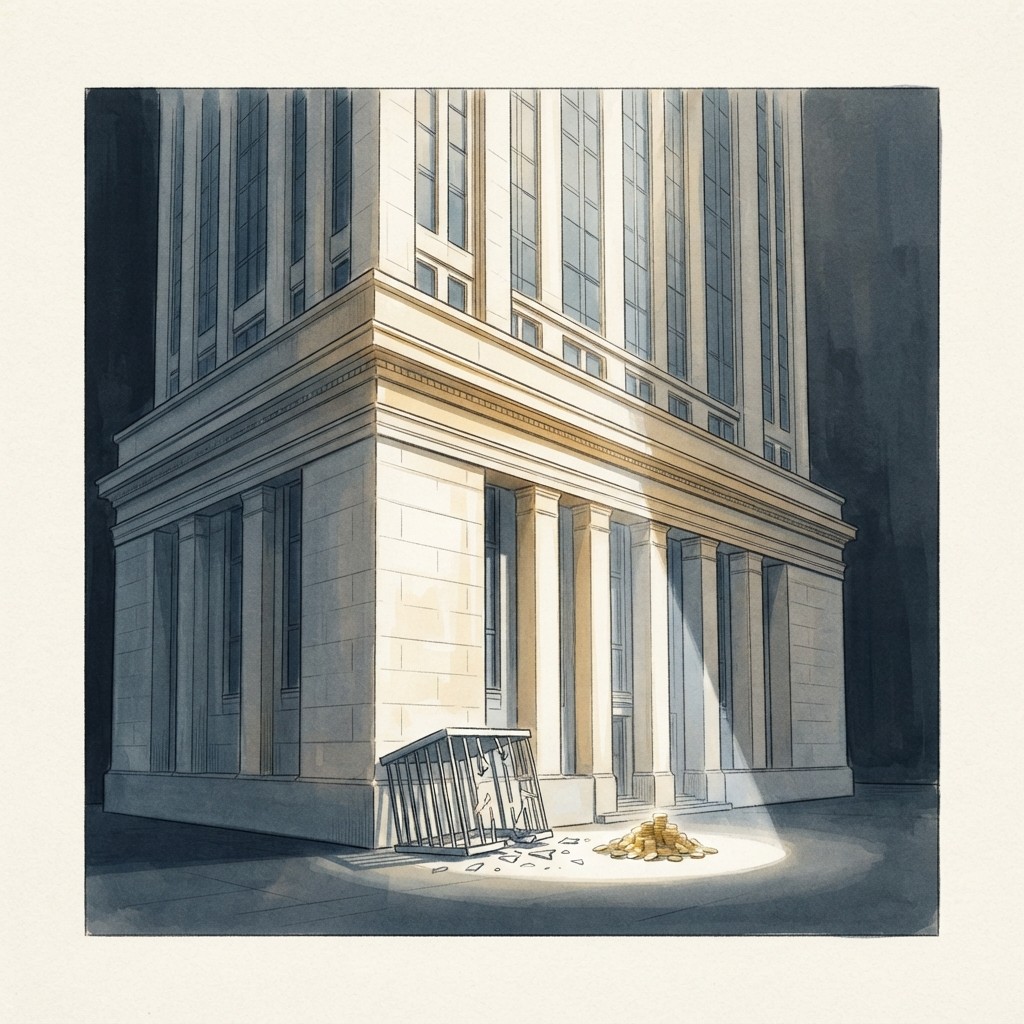
Here is the thesis, and it cuts against the way the case is usually told. HSBC's 2012 settlement was not a one-off accountability moment that the system produced after catching a wrongdoer. It was the structurally predictable outcome of a bank that had grown too large to indict — and we know that because the prosecutors who wanted to indict it were overruled by their own bosses, on the record.
Line prosecutors drafted the charges. Their bosses killed them.
The popular shorthand — 'the DOJ refused to prosecute' — gets the mechanism exactly backwards. The Justice Department's rank-and-file prosecutors did not refuse. According to a 2016 House Financial Services Committee staff report, line prosecutors had built a case and pushed to charge HSBC criminally. Senior DOJ leadership, including Attorney General Eric Holder, overruled them — citing concerns about financial stability, not a shortage of evidence.8 The will to prosecute existed where the cases are actually made. It was extinguished at the top, as a matter of policy. That same report found something quieter and just as telling: the UK's Chancellor, George Osborne, had written to the Federal Reserve's chairman expressing concern about American enforcement actions against British banks.8 A sovereign government, weighing in on the prosecution of one of its banks.
“Mexican law enforcement possessed a recording of a Mexican drug lord saying that HSBC Mexico was the place to launder money.”3
This is why 'too big to jail' stopped being advocacy rhetoric and became a documented finding. The phrase usually gets waved away as cynicism. But the case for it here doesn't rest on a hunch about what regulators were thinking — it rests on a congressional report describing prosecutors being overruled, and a foreign finance minister lobbying a central bank. The mechanism is the point: when an institution is large enough that its conviction could destabilize a system, the system protects itself by declining to convict. The size becomes the defense. The bank doesn't have to argue its innocence; its balance sheet argues for leniency on its behalf.
This wasn't the first warning. It was the third.
The settlement is usually told as a discovery — the moment regulators found the rot. It wasn't. The misconduct ran wider than the cartel money alone: separately, OFAC found that payments worth hundreds of millions of dollars had been routed through U.S. banks for sanctioned parties — Iran, Cuba, Libya, Sudan, Burma — using SWIFT messages with the originator and beneficiary information stripped or falsified.5 Two distinct pools of misconduct, one bank. And the failures behind them had been on the regulatory record long before 2012. By the time the DOJ agreement was signed, the Senate's Permanent Subcommittee on Investigations had already laid the whole case out in public, in a July 2012 hearing and report — during which HSBC's own head of group compliance announced his resignation from the witness table.6 The 2012 settlement was an enforcement cycle that arrived after years of warnings, not the first time anyone looked.
And the 'five years and a clean bill of health' story deserves the same correction. The DOJ's deferred prosecution agreement did expire on December 11, 2017, and the department moved to dismiss the charges, with HSBC stating it had met every commitment.7 But the DPA's expiration was not the regulatory all-clear it's often taken for. The Federal Reserve's separate cease-and-desist order — issued the same December day in 2012 — was not terminated until August 26, 2022.4 Nearly a decade. The supervisory leash outlasted the criminal one by years, which tells you the regulators who don't make front-page decisions weren't nearly as confident the problem was solved.
Wasn't a deferred prosecution the responsible choice?
The honest counter deserves a hearing, because it isn't frivolous. A criminal conviction of HSBC Bank USA could have triggered the loss of banking licenses, a cascade of counterparty flight, and genuine harm to depositors and employees who laundered nothing. Prosecutors weighing systemic stability against the punishment of a corporate entity — which cannot be jailed, only fined and shamed — were not acting in obvious bad faith. A deferred prosecution forces reform, extracts the money, and avoids detonating an institution over the conduct of a subset of it. That is a defensible theory of enforcement.
But notice what the theory concedes. It admits that the size of the institution determined the outcome — that the same conduct at a small bank would have drawn an indictment, and at a large one drew a settlement. That is not a flaw in the argument; it is the argument, and it's precisely the thing 'too big to jail' names. The deferral may have been the prudent call. It was still a call made because the defendant was too important to fail, by people who overruled the prosecutors who thought otherwise. Prudence and impunity can be the same decision viewed from two sides of the desk.
The lesson for any large institution is uncomfortable but real: past a certain size, your balance sheet starts arguing for you in rooms you're not in. Regulators weigh your conviction against the system's stability, and stability often wins. That looks like a permanent shield — but it isn't. The protection in 2012 depended on the decision staying quiet. What turned HSBC from a settled case into a lasting symbol was the 2016 congressional report that put the override in writing: line prosecutors wanted charges, leadership said no. The shield holds only as long as the reasoning stays invisible. Document the override, and the deal that protected the bank becomes the evidence against the system that protected it.
HSBC paid $1.921 billion and never said the word guilty. By 2017 the criminal charges were dismissed; by 2022 the last supervisory order was lifted. On paper, the episode closed. But the most expensive thing HSBC bought that December was not the settlement — it was a permanent entry in the record showing that the prosecutors who wanted to indict it were overruled because it was too large to indict. The bank got its deferral. The system got a sentence, sworn and on file, that it could never quite delete: too big to jail was not a slogan. It was a finding.
When the institution is bigger than the rules
Crisis Response Playbook
A playbook for a crisis already in motion: who decides, which plays fire on which trigger, and what gets said to whom. It replaces panic and the all-hands meeting with a pre-agreed sequence each person can run alone. Blank to pre-load before a crisis hits; filled as the worked example reconstructing the plays the story's team ran — and the ones they should have.
Included, filled and blank, in the Crisis Response Casebook. See the set → · Preview the blank →
Sources
Where this comes from — the filings, records, and reporting behind it.
- 1On December 11, 2012, HSBC Bank USA, N.A. and HSBC Holdings plc entered into a Deferred Prosecution Agreement with the DOJ; HSBC Holdings also entered a separate DPA with the District Attorney of New York County; and HSBC reached simultaneous consent orders with OCC, FinCEN, the Federal Reserve, and a settlement with OFAC — all on the same date.
- 2Under the December 11, 2012 agreements, HSBC will make payments totaling US$1.921 billion; the forfeiture to DOJ was $1.256 billion; civil penalties were $500 million to OCC/FinCEN and $165 million to the Federal Reserve.
- 3At least $881 million in drug trafficking proceeds, including proceeds of the Sinaloa Cartel in Mexico and the Norte del Valle Cartel in Colombia, were laundered through HSBC Bank USA without being detected, per the DOJ's sworn Statement of Facts attached to the DPA.
- 4The Federal Reserve assessed a $165 million civil money penalty — the largest it had ever assessed for BSA/AML violations — against HSBC Holdings plc and HSBC North America Holdings, Inc., and issued a consent cease-and-desist order on December 11, 2012; that order was not terminated until August 26, 2022.
- 5OFAC's settlement with HSBC resolved findings that more than 2,300 payments totaling approximately $430 million were routed through U.S. banks for sanctioned parties (Iran, Cuba, Libya, Sudan, Burma) via SWIFT messages that had originator/beneficiary information stripped or falsified.
- 6The Senate Permanent Subcommittee on Investigations held its HSBC hearing on July 17, 2012, releasing a report titled 'U.S. Vulnerabilities to Money Laundering, Drugs, and Terrorist Financing: HSBC Case History'; HSBC's head of group compliance David Bagley announced his resignation during the hearing itself.
- 7HSBC's five-year DPA expired December 11, 2017; HSBC announced the DOJ would file to dismiss the deferred charges, stating HSBC had lived up to all its commitments.
- 8A 2016 House Financial Services Committee staff report found that senior DOJ leadership, including Attorney General Holder, overruled rank-and-file prosecutors' push to criminally charge HSBC; the report also found that UK Chancellor George Osborne sent a letter to Fed Chairman Bernanke expressing concern about U.S. enforcement actions against British banks.
- 9Rank-and-file DOJ prosecutors had prepared a list of up to 175 criminal charges against HSBC that the government ultimately shelved.
Weighing outside help with a decision like this? Hiring a supply chain strategy consultant
More like this — beyond HSBC
New Strategically analyses as they publish: the defining moves in business, checked against the record. No noise, and one click to leave.