Pairs with the Turnaround Diagnosis Worksheet — a ready-to-use strategy tool. Included in the Turnaround Casebook →
“Is this plan a turnaround, and can it be finished?”
In 1992, the most glamorous name in Italian leather goods was a money pit. Gucci's American arm lost more than $30 million that year and was carrying past debts north of $100 million.1 The handbags were everywhere — duty-free shops, discount racks, a proliferating web of licensed products bearing the house's name across categories that had little to do with luxury — and that was precisely the problem. By September 1993, the family that had built the house since 1921 was gone from it entirely; the investment firm Investcorp bought the last 50% from Maurizio Gucci and the founding name no longer owned a share.1 The handbags were everywhere — duty-free shops, discount racks, a proliferating web of licensed products bearing the house's name across categories that had nothing to do with luxury. A brand can die two ways at once. Gucci was managing both.
The story you've heard is that a young Texan named Tom Ford walked in, put models in white satin shirts unbuttoned to the navel, and single-handedly saved Gucci from bankruptcy. It is a wonderful story. It is also half of one.
Ford was real, and his collections were the spark that made the world look again. But the house he made desirable had first to be made solvent — and that job belonged to someone else. Dawn Mello, who hired Ford as a ready-to-wear designer in 1990, had already begun steadying the creative direction; Ford wasn't even promoted to Creative Director until 1994, after she left.3 The man who kept Ford in the building when Maurizio Gucci wanted him fired, and who set about dismantling the distribution that was strangling the brand — reining in licenses, franchises, and secondary lines that had cheapened the name across a decade — was Domenico De Sole.311
Two engines, pulled at the same time
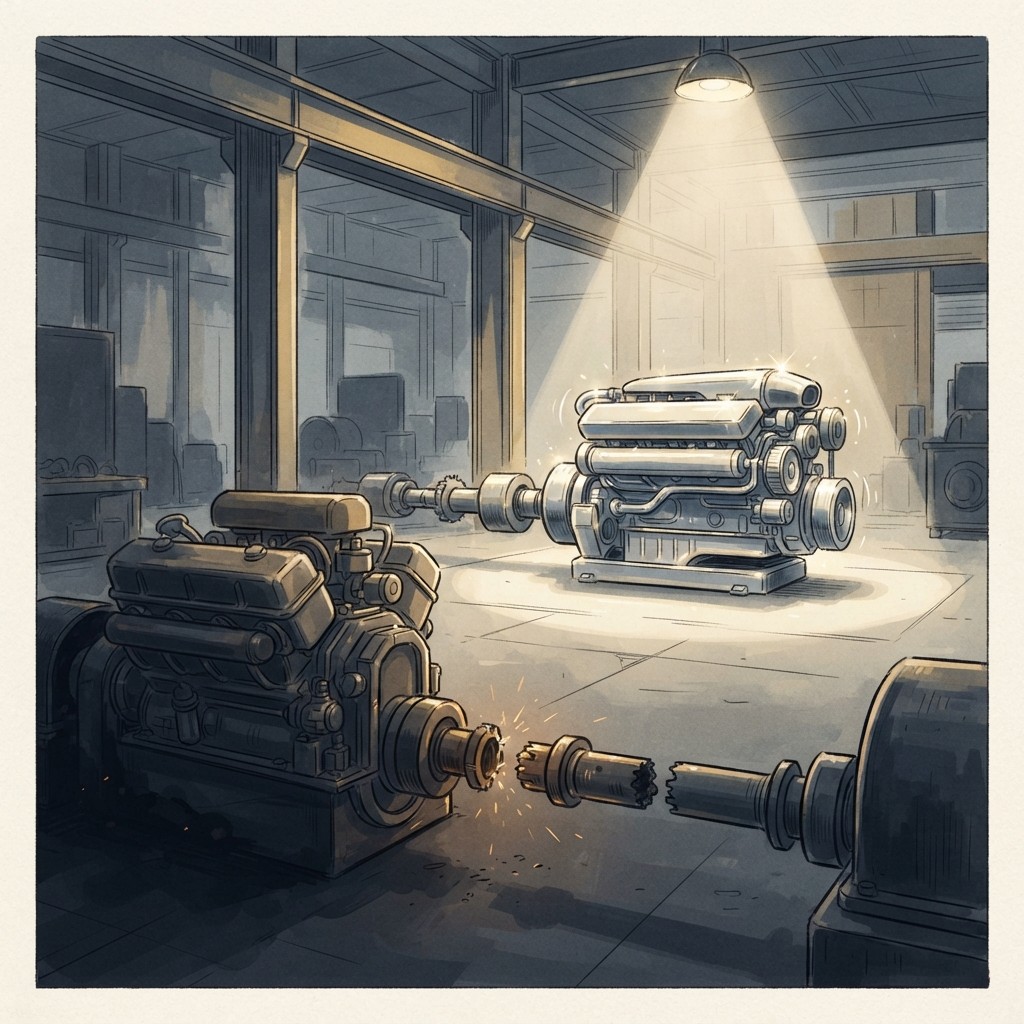
Here is the thesis, and it is the whole piece: Gucci's 1990s comeback was a two-lever operation, and the levers only worked because they were pulled together. One lever was desire — Ford's creative reset, the thing that made a Gucci bag something a person wanted again. The other was scarcity and control — De Sole's brutal retrenchment of the distribution and licensing that had turned exclusivity into ubiquity. Make the product desirable while it's available on every corner, and you've simply made the discount rack more popular. Make it scarce while it's still ugly, and you've just made an undesirable thing harder to buy. You need both engines, firing at once, or the plane doesn't climb.
| The desire lever | The control lever | |
|---|---|---|
| What it did | Made the product wanted again | Made the product scarce and consistent again |
| Who is credited | Tom Ford (correctly) | Domenico De Sole (rarely) |
| Tool | Creative reset, runway, image | Buying back franchises, cutting licenses |
| Fails alone because | A desirable bag on every discount rack is still a cheap bag | A scarce, controlled bag nobody wants is just unsold inventory |
And both levers needed a third thing to even be pullable: money. Investcorp had taken its first 50% of Gucci in 1987 and the rest by 1993, paying $245.8 million in total for the company per the IPO prospectus.2 That financial restructuring bought the runway. The October 1995 IPO, priced at $22 a share, gave the rebuilt house a public currency and a verdict from the market.2 The desire lever and the control lever were the operation; the capital was the operating table.
“Maurizio Gucci wanted to fire Tom Ford. De Sole insisted he remain.”3
The white knight who took six years to win
Once Gucci was desirable again, it became prey. By the late 1990s LVMH had quietly accumulated 34.4% of Gucci's capital — a figure that was not accidental: Ford's contract contained language allowing him to walk away without penalty if any single shareholder crossed 35%, and Arnault stopped at 34.4%.512 Gucci's answer was to invite a friendlier giant in. On 19 March 1999, PPR — the French retail conglomerate that would rename itself Kering in 2013 — signed a Strategic Investment Agreement, taking roughly 40% of Gucci's capital for about $2.9 billion, or $75 a share.5 A Dutch court upheld the deal that May.5 This is where the popular story compresses time: PPR did not simply 'buy Gucci in 1999.' It bought a controlling minority and then spent years finishing the job — settling the LVMH litigation in September 2001 by buying out 8.6 million of its rival's shares at $94 each, and only reaching 99.4% ownership in 2004, at $101.50 a share.7 The white-knight capital let Gucci go on the offensive, building the multi-brand group that PPR's filings would later report around its core Gucci Fashion & Accessories segment.6
Why the current crisis is the real proof
If the two-lever thesis is right, it should be falsifiable — and Gucci is busy falsifying the alternatives in real time. In 2022 the brand hit its all-time peak: €10.5 billion in revenue, €3.7 billion of recurring operating income, a 35.6% margin that is the kind of number most luxury houses only dream about.8 Then the desire lever broke. By Q3 2024, Gucci revenue had fallen 26% to €1.6 billion, and Kering warned its full-year operating income would drop more than 47%, to roughly €2.5 billion from €4.7 billion the year before.9 By the first quarter of 2026, Gucci revenues were down another 14.3% to €1.35 billion.10 The control machinery still exists — the distribution discipline, the operational muscle Kering inherited. What's missing, by this analysis, is the same thing that was missing in 1992 before Ford arrived: a creative anchor strong enough to sustain desire at scale. One engine is running. The plane is descending.
The fair objection is that this is too neat — that great luxury houses simply rise and fall on the talent of whoever is in the design studio, and 'two levers' is a tidy frame imposed after the fact. There's truth in it: a brand without a magnetic creative voice is in trouble no matter how clean its distribution. But the 1990s data cut the other way too. Ford alone, designing brilliantly into a brand still sold on discount racks through an unchecked network of licenses, would have produced beautiful clothes for a cheapening name. The reason his work compounded was that De Sole was simultaneously rebuilding the scarcity that made desire worth money. The current crisis confirms it from the opposite side: Kering kept the operational lever and lost the creative one, and a 35.6% margin collapsed anyway.8 One engine is necessary. It has never been sufficient.
When a brand or business comes roaring back, the press finds a single face to put on it — the visionary designer, the rockstar CEO. That face is usually real and usually only half the story. Behind almost every desirability story sits an unglamorous control story: the distribution cleaned up, the licenses killed, the headcount cut, the balance sheet restructured so the visionary even has a stage to stand on. Before you copy a famous comeback, find the lever nobody talks about — and ask whether you're pulling it too. The danger isn't admiring the wrong hero; it's running the visible engine alone and wondering why you're still losing altitude.
Luca de Meo, Kering's new chief, calls what's happening now 'a comprehensive turnaround underway,' and Gucci still carries the group — 59% of Kering's operating profit in 2025 rests on this one house.10 That dependence is exactly why the lesson of 1992 matters. The first comeback wasn't a miracle and it wasn't a man. It was two levers and a pile of capital, pulled in the same direction at the same time. Kering knows how to work the control lever; it has spent half a decade reaching for the other one in the dark. The brand that learned how scarcity and desire fit together is now relearning, at enormous cost, what happens when you hold only one of them.
When a company is brought back from the edge
Turnaround Diagnosis Worksheet
A worksheet that forces a turnaround down to first principles: is this a cash problem, a cost problem, or a strategy problem — and which one will kill you first. It separates the bleeding you must stop this week from the rebuild that takes years. Blank to triage your own situation; filled as the worked example tracing how the story's leader sequenced survival before revival.
Included, filled and blank, in the Turnaround Casebook. See the set → · Preview the blank →
Sources
Where this comes from — the filings, records, and reporting behind it.
- 1Gucci America Inc. lost over $30 million in 1992, with past debts exceeding $100 million; Investcorp acquired Maurizio Gucci's remaining 50% stake in September 1993, ending family control for the first time.
- 2Investcorp acquired an initial 50% stake in Gucci from family members in 1987 and 100% ownership in 1993; the IPO in October 1995 priced at $22/share; Investcorp paid a total of $245.8 million for its full stake per the IPO prospectus.
- 3Dawn Mello hired Tom Ford as women's ready-to-wear designer in 1990; Ford was promoted to Creative Director in 1994 after Mello's departure; Maurizio Gucci wanted to fire Ford but De Sole insisted he remain; Ford's first full collection as CD was Fall 1995.
- 4Tom Ford was credited with reviving Gucci during his creative directorship (1994–2004); the house had been almost bankrupt when Ford joined, but by 1999 was a public company worth approximately $4.3 billion.
- 5On 19 March 1999, PPR and Gucci signed a Strategic Investment Agreement under which PPR acquired approximately 40% of Gucci's capital for USD 2.9 billion ($75/share); LVMH had accumulated 34.4% of Gucci's capital before the deal; a Dutch court upheld the PPR deal in May 1999.
- 6Gucci Group N.V. SEC 20-F filing confirms the multi-brand structure of the Gucci Group under PPR ownership, with Gucci Fashion & Accessories as the primary operating segment, and that the company changed its reporting currency from USD to EUR in February 2002.
- 7In September 2001, PPR, Gucci, and LVMH resolved all litigation via settlement: PPR purchased 8.6 million LVMH-held Gucci shares at $94/share ($806 million total); PPR's final takeout bid in March 2004 was at $101.50/share; PPR reached 99.4% ownership in 2004.
- 8Gucci's 2022 revenue reached €10.5 billion (up 8% as reported), with recurring operating income of €3.7 billion and a recurring operating margin of 35.6% — the brand's all-time revenue peak.
- 9Kering projected a full-year 2024 operating income drop of more than 47% to approximately €2.5 billion from €4.7 billion in 2023; Gucci Q3 2024 revenue fell 26% to €1.6 billion.
- 10In Q1 2026, Gucci revenues fell 14.3% to €1.35 billion (down 8% organically); Gucci accounted for 59% of Kering group operating profit in 2025; new CEO Luca de Meo described 'a comprehensive turnaround underway.'
- 11De Sole began reining in licenses, franchises and secondary lines to reverse a decade that saw the overexposure of the brand and the cheapening of its image.
- 12LVMH's 34.4% stake was a calculated power move: Tom Ford's contract included language enabling him to resign without breaching his deal if any individual shareholder amassed a 35% ownership stake.
Weighing outside help with a decision like this? Hiring a procurement transformation consultant
More like this — beyond Kering (Gucci)
New Strategically analyses as they publish: the defining moves in business, checked against the record. No noise, and one click to leave.