Pairs with the Crisis Response Playbook — a ready-to-use strategy tool. Get it — included with a subscription, or $1.99 →
On January 18, 2025, roughly 170 million American phones opened TikTok to a message saying it was gone.9 The app went dark a full day before the legal deadline, before the ban was even in effect.9 Then, roughly fourteen hours later, it came back. The blackout lasted somewhere around fourteen hours — long enough to make every news bulletin in the country, short enough that most users never lost a night's sleep over it.9 A federal law banning the app had just been upheld, unanimously, by the Supreme Court of the United States. And TikTok closed for less time than a long-haul flight.
The official story is that the government banned TikTok and TikTok was eventually saved by a sale. Almost every load-bearing word of that is wrong. The ban was never struck down — it was upheld 9-0. The 'sale' left ByteDance holding the one asset the law was written to pry loose. And the thing that actually saved TikTok was not a court, not a buyer, and not the Constitution. It was a single executive order telling the Justice Department to do nothing.
TikTok lost at the Supreme Court, and it didn't matter
Start with the part that gets remembered backwards. Congress passed PAFACA — the Protecting Americans from Foreign Adversary Controlled Applications Act — and President Biden signed it on April 24, 2024. The law named ByteDance and TikTok by name and gave a hard deadline: divest within 270 days or the app becomes illegal to distribute in the United States. That clock ran out on January 19, 2025.1 TikTok sued, lost in the lower court, and took it to the top. On January 17, 2025, the Supreme Court issued a per curiam ruling in TikTok Inc. v. Garland — unsigned, unanimous — upholding the law under intermediate First Amendment scrutiny.2 This was not a near miss. It was a clean defeat. The most powerful court in the country looked at the ban and said: constitutional.
“Don't enforce it.”3
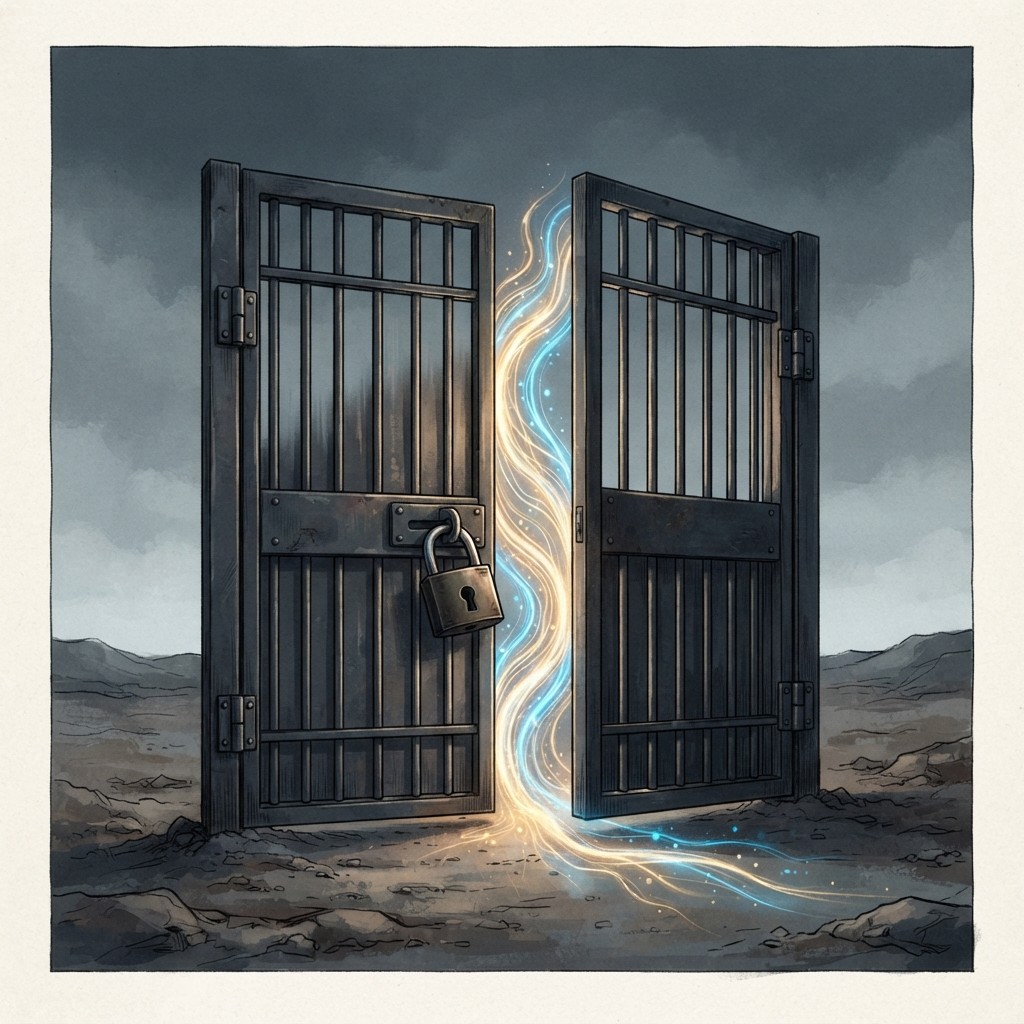
Here is where the saga stops being a legal story and becomes a strategy one. A statute is only as real as its enforcement, and enforcement of a federal criminal-penalty law runs through the Department of Justice — which answers to the President. On January 20, 2025, his first day in office, Trump signed Executive Order 14166 directing the Attorney General not to enforce PAFACA for 75 days, with coverage backdated to the 19th so the one day the ban had legally existed was retroactively wiped clean.3 The law was on the books. The Court had blessed it. And the executive branch simply declined to make it happen.
The seam between the law and the badge
This is the mechanism, and it is the whole piece. PAFACA had its own pressure valve — a one-time 90-day extension the President could grant, but only by certifying to Congress that a real divestiture was underway with binding agreements in place.1 That was the legal door, and it had a lock on it: you had to show your work. Trump never used it. Instead he used non-enforcement, which has no certification requirement, no congressional check, and no statutory limit on how many times you can re-up. The first 75-day order was followed by exactly four more — extensions in April, June, and September of 2025, the last one stretching to January 22, 2026.4 A law designed to be irreversible in 270 days was quietly held open for over a year by the simple expedient of a President instructing his own prosecutors to look away.
| The statutory extension | Executive non-enforcement | |
|---|---|---|
| Authorized by | PAFACA itself | Presidential discretion over DOJ |
| Requirement | Certify real divestiture progress to Congress | Nothing |
| Maximum length | One 90-day extension | Repeated indefinitely |
| Times used | Zero | Five-plus orders, Jan 2025–Jan 2026 |
The lasting lesson of the TikTok saga has nothing to do with social media. It is that the gap between 'what the statute says' and 'what the executive chooses to do' is a real, exploitable space — and a platform big enough, with users loud enough, can live inside it. Congress wrote a hard deadline and a single narrow escape hatch. The escape hatch went untouched. The deadline went unenforced. The thing that actually governed the outcome was a discretionary choice that no court reviewed and no vote constrained. When you map a regulatory threat, don't stop at 'is it legal.' Ask the harder question: who has to personally act for the penalty to land, and what would make them decline?
The divestiture that didn't divest the thing that mattered
Eventually a deal did arrive, and on its face it looks like the law working. The agreement signed December 18, 2025, and closed January 22, 2026, created TikTok USDS Joint Venture LLC. Oracle, Silver Lake, and Abu Dhabi's MGX each took 15% — 45% in American and allied hands. About 30.1% went to affiliates of existing ByteDance investors. And ByteDance kept 19.9%.5 Notably, none of the US government ownership Trump had publicly floated — he posted on Truth Social in January 2025 that he wanted "the United States to have a 50% ownership position" — made it into the final structure; the government holds no equity at all.105 On paper, control changed hands.
Except for the part the entire law was about. PAFACA existed because Washington feared the recommendation algorithm — the engine that decides what 170 million Americans see, and the thing a foreign-adversary parent could theoretically tune. And in the final deal, ByteDance did not sell the algorithm. It kept ownership of the intellectual property and licensed it to the joint venture.5 The Atlantic Council, looking at the closed structure, concluded it does not fully resolve the security concern: because the IP stays with ByteDance, PRC influence over how the algorithm evolves remains theoretically possible, and ByteDance's main concession — giving up majority ownership of the data-security entity — carries limited strategic cost.8 The cargo got a new paint job. The engine stayed in the original garage.
Wasn't TikTok actually Chinese-controlled all along?
The fair objection cuts the other way: maybe the law overreached, because TikTok was never the Beijing puppet the headlines implied. There's real substance here. ByteDance Ltd. is incorporated in the Cayman Islands; TikTok Inc. is a California corporation; roughly 60% of ByteDance's equity sits with global institutional investors like Sequoia and KKR, about 20% with employees and 20% with founder Zhang Yiming, and none of TikTok's senior executives are Chinese nationals.6 The famous 'golden share' the Chinese state holds is a 1% stake in a separate China-domestic subsidiary, not in ByteDance Ltd. or TikTok.7 So the cartoon of a state-owned company is false.
But the steelman has a hole. Zhang's dual-class shares give him majority voting control despite his minority economic stake6 — economics and control are not the same thing, which is exactly the distinction the new joint venture exploits in reverse. And ByteDance, whatever its cap table, is subject to Chinese laws requiring it to cooperate with intelligence work and grant government data access.7 That is why control of the algorithm, not the ownership percentages, was always the real question — and why a deal that redistributes equity while licensing the algorithm back to its original owner answers the cosmetic concern and dodges the actual one.
Put it together and the TikTok saga stops being a ban story. It is a proof of concept: a consumer platform large enough and beloved enough can absorb a unanimous Supreme Court loss and a binding federal deadline, and walk out the other side with its core asset intact — as long as it can survive in the seam between a law that says one thing and an executive who chooses to do another. The ban was real. The Court was unanimous. The algorithm never left home. The most expensive lesson here isn't about TikTok at all. It's that the last word on a law is rarely the judge who upholds it — it's the official who decides whether anyone ever has to obey.
Crisis Response Playbook
A playbook for a crisis already in motion: who decides, which plays fire on which trigger, and what gets said to whom. It replaces panic and the all-hands meeting with a pre-agreed sequence each person can run alone. Blank to pre-load before a crisis hits; filled as the worked example reconstructing the plays the story's team ran — and the ones they should have.
Included with any subscription, or unlock this tool for $1.99. Get it → · See plans →
Sources
Where this comes from — the filings, records, and reporting behind it.
- 1PAFACA (H.R. 7521, P.L. 118-50) was signed by President Biden on April 24, 2024; it explicitly names ByteDance and TikTok; the prohibition took effect January 19, 2025, 270 days after enactment; a one-time 90-day presidential extension was available upon statutory certification; a 'qualified divestiture' exempts covered apps from the ban.
- 2The Supreme Court issued a per curiam (unsigned, unanimous) decision on January 17, 2025, in TikTok Inc. v. Garland (Nos. 24-656 & 24-657), upholding PAFACA as constitutional under intermediate First Amendment scrutiny; oral argument was January 10, 2025; the Court assumed without deciding that the law triggered First Amendment scrutiny, then found it satisfied intermediate review; Justice Sotomayor concurred separately.
- 3Trump signed Executive Order 14166 on January 20, 2025, directing the Attorney General not to enforce PAFACA for 75 days and providing retroactive non-enforcement coverage back to January 19; the order bypassed PAFACA's statutory 90-day extension mechanism, which requires congressional certification.
- 4Trump issued at least four additional executive orders delaying PAFACA enforcement after the initial 75-day order: EO 14258 (April 4, 2025, to June 19), EO 14310 (June 19, 2025, to September 17), EO 14350 (September 16, 2025, to December 16), and a fifth order on September 25, 2025 extending non-enforcement 120 days to January 22, 2026 while also formally approving the divestiture framework.
- 5The deal signed December 18, 2025, and closed January 22, 2026, creates TikTok USDS Joint Venture LLC; Oracle, Silver Lake, and Abu Dhabi's MGX each hold 15% (combined 45%); ~30.1% is held by affiliates of existing ByteDance investors; ByteDance retains 19.9%; ByteDance retains IP ownership of the algorithm and licenses it to the JV; no US government equity stake.
- 6ByteDance Ltd. is incorporated in the Cayman Islands; TikTok Inc. is a California corporation; ~60% of ByteDance equity is held by global institutional investors (including Sequoia and KKR); ~20% by employees; ~20% by founder Zhang Yiming, whose dual-class shares give him majority voting control; none of TikTok Ltd.'s or TikTok Inc.'s senior executives are Chinese nationals; neither entity operates in China.
- 7The Chinese government holds a 1% 'golden share' in a ByteDance domestic subsidiary (Douyin Information Service Co. / Beijing Douyin Information Service Co.), not in ByteDance Ltd. or TikTok; ByteDance characterizes this as a common arrangement for Chinese news/information licensees; independently, ByteDance is subject to Chinese laws requiring cooperation with intelligence work and government data access.
- 8The Atlantic Council assessed that the final JV ownership structure does not fully resolve national security concerns: ByteDance retains IP ownership of the algorithm and licenses it to the JV, meaning PRC influence over the algorithm's evolution remains theoretically possible; ByteDance's principal concession — loss of majority ownership in the data-security entity — imposes limited strategic costs.
- 9TikTok went dark for its 170 million American users late on Saturday January 18, 2025, before the ban's legal deadline of January 19; the blackout lasted about 14 hours before service was restored.
- 10Trump posted on Truth Social on January 19, 2025 that he wanted the United States to have a 50% ownership position in a TikTok joint venture.
More like this — beyond The TikTok Ban Saga
New Strategically analyses as they publish: the defining moves in business, checked against the record. No noise, and one click to leave.