Licensed to an organization: checkout asks for the company the purchase is for, its website, and an email address to deliver the files to. A work address is best for the license record; a personal one is accepted. Digital download. All sales are final: no refunds or returns. Each format can be downloaded 3 times, and the links stay valid for 30 days. If you need more, reply to your confirmation email and we will sort it out.
Every crisis runs two clocks. The visible one is the news cycle: it runs in hours, and it is the one every playbook addresses. The decisive one is the gap between the moment somebody inside knew and the moment the company acted — it runs in quarters, it is measured from a document the company already holds, and it is what regulators, courts and juries actually price. This pack sets out the four costs and shows why three of them grow with the gap while remediation does not, prices what one more quarter of delay is worth, locates the quarter in which concealment starts costing more than the fix, and stops on two conditions: nobody has established the date, and the response addresses the reaction rather than the substance.
What is the Crisis Response Strategy Pack
The Crisis Response Strategy Pack is a complete decision-support kit for one question: what is one more quarter of not acting worth? It is built around one organizing claim: a crisis is priced on the interval between knowing and acting, not on the thing that went wrong. Sixteen files carry it: the foundations, a concept deck, a scored decision wizard, a gap model blank and worked, the moves at each length of gap, nine sourced positions, a fit worksheet, a roadmap template, a practitioner manual, a field checklist, and an orientation page.
The test that runs through every file
The interval between when somebody inside knew and when the company acted, and what each further quarter of it costs. It is the argument in the deck, it becomes the wizard’s axes, it drives the model’s inputs, and it reappears as lines on the checklist. That is what makes 16 files a product rather than 16 documents.
The model resolves to one number you can negotiate with: What one more quarter costs — the price of the deferral that is currently the default. It ships blank and worked, and every input is a named cell rather than a figure buried inside a formula, so the number arrives with its assumptions attached rather than on its own authority.
Why a crisis response is designed on the wrong clock
Every crisis playbook addresses the news cycle, because the news cycle is what everybody can see. It runs in hours. The clock that decides the bill runs in quarters, is measured from a document inside your own company, and is usually already running when the war room convenes.
This pack produces the number that clock generates: what one more quarter of delay costs, in cash, beside the remediation figure the room is already arguing about — and the quarter in which the expected penalty passes what the fix would have cost.
The four costs, and which of them grow
| The cost | What it is | What the gap does to it |
|---|---|---|
| Remediation | A fixed program cost plus a cost per affected unit. | Nothing. It is the only one that does not move, and the only one being argued about. |
| The penalty | What an authority imposes, times the chance one is imposed. | It scales with the interval rather than with the harm. |
| The exposed population | Everything in the field, plus everything shipped while unresolved. | It grows every quarter, and that growth is entirely within your control. |
| The revenue step-down | Customers who buy less once they learn how long it was known. | It deepens with the gap, and a share of it never comes back. |
What is in the Crisis Response Strategy Pack
- Foundations. The framework: two clocks, the four costs, the crossing, and the two halts.
- Concept deck. Twenty-two slides for the executive or board session, with the sourced positions and what each does not establish.
- Decision wizard. Eight scored questions returning the position, the band, and either of the two halt conditions.
- Gap model. Twelve quarters of the four costs, what one more quarter costs, and the quarter of the crossing.
- Strategies and tactics. The moves at each length of gap, the metering move and where its cost lands, and the five that make the interval more expensive.
- Case studies. Nine sourced positions read through the length of the gap and what the interval cost.
- Fit worksheet. The single page of record: the date, the two halts, the exposure, the crossing, who decides.
- Roadmap template. Five phases with gates and owners, the assumptions register, and a monthly reporting line.
- Practitioner manual. Finding the date, the conversation nobody schedules, the board paper, six failure modes and the indicators that show first.
- Field checklist. The one-pager that survives outside the binder.
- About the package. What each file does and the order in which to run them.
Who the Crisis Response Strategy Pack is for
An executive team that has just found something in its own files; a board member who wants the cost of deferral in the paper rather than a status update; a general counsel who needs the commercial arithmetic to sit beside the legal question; a head of quality or engineering who raised it and was filed; a chief financial officer being asked to fund a remediation no one has costed properly; and the adviser who would otherwise start from a blank page. It is worth buying when a real decision is in front of you. It is not worth buying to read.
An honest note on fit
This is a kit for running a decision, not a research report and not a course. Worked examples use an explicitly fictional company with numbers tuned to teach rather than to flatter. In the worked case the gap is three quarters, remediation has been costed at $117.7m against a figure of about $95m the room had been repeating, and one more quarter of delay costs $72.5m. The crossing is one quarter away — which means this is the last quarter in which the argument that the fix is too expensive is arithmetically true. Nothing in that tells the company what to disclose. It tells them what the deferral costs, which they did not know.
Two limits are stated on the page rather than worked around. The pack prices the interval and cannot tell you what you are obliged to do about it. And the case set is selected on enforcement rather than on conduct — these intervals are documented because a regulator, a prosecutor, or a court compelled the file, and the companies that closed a gap quietly and early leave no record. No probability of enforcement and no penalty multiplier is claimed anywhere; those inputs are yours to set and to defend.
This decision, in two minutes
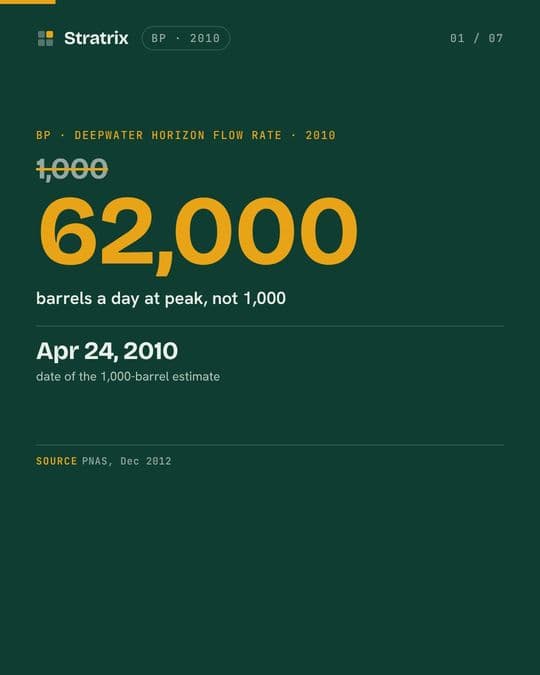
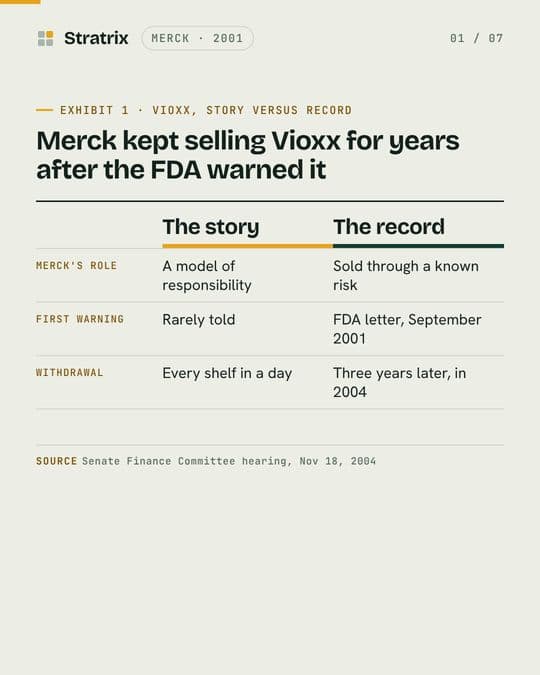
Short videos on companies that faced it, built from the casebooks this pack draws on.

The free guide to this decision
How companies ran this decision, case by case, and the method the pack is built on. Read the guide →
Questions about the Crisis Response Strategy Pack
- Is this legal advice?
- No, and it is careful about the boundary. This pack prices a commercial decision: what one more quarter of delay costs and when the arithmetic turns. What you are obliged to report, to whom, and by when is a legal question with a legal answer; it differs by jurisdiction, by regulator, and by year, and it belongs to your counsel. The pack says so on the model, on the worksheet, and in the manual. What belongs here is the cost of the interval. The obligation does not.
- What number does the model produce?
- What one more quarter costs. Twelve quarters are modeled, each column being the total cost of acting in that quarter — remediation on the population exposed by then, the expected penalty at the gap by then, the cumulative revenue step-down, and the permanent share capitalized. The headline figure is the difference between acting this quarter and next, and the model also reports what a year of deferral costs and the quarter of the crossing, where the expected penalty passes remediation.
- Is this for a live crisis or for preparation?
- Both, and the honest answer is that it is most valuable slightly before you think you need it — at the point where somebody has found something in the files and the response has not yet been designed. In a live crisis it takes about a week to run the first three phases, none of which requires a decision about disclosure. Used in preparation, the same work is a rehearsal that produces the one thing a rehearsal usually cannot: the actual date, from your actual records.
- Are the case studies real companies?
- Yes. Nine sourced positions: Toyota, General Motors, Meta, Tesco, 3M, Volkswagen, Southwest, CrowdStrike, and Johnson & Johnson. Each is dated, mapped to the length of the gap and what the interval cost, and each states what its evidence does not establish. Two of the nine are short-gap cases, in the set on purpose so it is not nine disasters read backward. The worked model, wizard, and worksheet use an explicitly fictional company, labeled as such on every file.
- What if we cannot establish when it was first known?
- Then the pack stops, and that is deliberate. It is the first of two halt conditions, and the wizard and the model both refuse to produce a headline number without it. The manual sets out where the date usually is and how to commission the search so it finds the earliest record rather than a defensible one. It is about a week of work, and it exists in documents you already hold — which is precisely why somebody else can find it too.
- Is this a subscription?
- No. It is a one-time purchase of a single-organization license, with no seat limit inside your organization and nothing to cancel.
- What is the Crisis Response Strategy Pack?
- The Crisis Response Strategy Pack is a decision-support kit for one question: What is one more quarter of not acting worth? It contains 16 files — foundations, concept deck, decision wizard, gap model, strategies and tactics, case studies, fit worksheet, roadmap template, practitioner manual, field checklist, about the package — built around a single organizing test: the interval between when somebody inside knew and when the company acted, and what each further quarter of it costs. It is what a leadership team uses to run the decision and leave a record of what they assumed, rather than a report about the topic.
- Who is the Crisis Response Strategy Pack for?
- Anyone who has to make this call and answer for it: an operator or owner facing the decision, the executive team running it, the board or investor testing the reasoning, or an adviser who would otherwise build the framework from a blank page. It is worth buying when a real decision is in front of you. It is not worth buying to read.
- What is in the Crisis Response Strategy Pack?
- 16 files in Word, PDF, PowerPoint and Excel: Foundations (Word + PDF) — The framework: two clocks, the four costs, the crossing, and the two halts. Concept deck (PowerPoint + PDF) — Twenty-two slides for the executive or board session, with the sourced positions and what each does not establish. Decision wizard (Excel) — Eight scored questions returning the position, the band, and either of the two halt conditions. Gap model (Excel, blank and worked) — Twelve quarters of the four costs, what one more quarter costs, and the quarter of the crossing. Strategies and tactics (Word) — The moves at each length of gap, the metering move and where its cost lands, and the five that make the interval more expensive. Case studies (Word) — Nine sourced positions read through the length of the gap and what the interval cost. Fit worksheet (Word, blank and worked) — The single page of record: the date, the two halts, the exposure, the crossing, who decides. Roadmap template (Word) — Five phases with gates and owners, the assumptions register, and a monthly reporting line. Practitioner manual (Word + PDF) — Finding the date, the conversation nobody schedules, the board paper, six failure modes and the indicators that show first. Field checklist (PDF) — The one-pager that survives outside the binder. About the package (PDF) — What each file does and the order in which to run them.
- How is the Crisis Response Strategy Pack delivered?
- As a single download of all 16 files, immediately after payment, with the same link sent by email. It can be downloaded 3 times and the link is valid for 30 days. There is nothing to install and no account to keep.