Licensed to an organization: checkout asks for the company the purchase is for, its website, and an email address to deliver the files to. A work address is best for the license record; a personal one is accepted. Digital download. All sales are final: no refunds or returns. Each format can be downloaded 3 times, and the links stay valid for 30 days. If you need more, reply to your confirmation email and we will sort it out.
A large liability is treated as a legal problem with financial consequences, and it is the other way round. Companies rarely fail because the number was large; they fail because it arrived faster than the business could pay it, or because an unbounded exposure froze the financing they needed for everything else. This pack makes conversion rather than minimization the objective, prices what closing the exposure is worth above its expected value, and tests the resulting schedule in its worst year — because a settlement inside the ceiling and outside the cash is not a settlement.
What is the Liability Reckoning Strategy Pack
The Liability Reckoning Strategy Pack is a complete decision-support kit for one question: what is it worth paying to close an open-ended exposure? It is built around one organizing claim: a reckoning is a financing problem with a legal trigger, and the objective is conversion rather than minimization. Sixteen files carry it: the foundations, a concept deck, a scored decision wizard, a reckoning model blank and worked, the moves available under each instrument, nine sourced reckonings, a fit worksheet, a roadmap template, a practitioner manual, a field checklist, and an orientation page.
The test that runs through every file
Whether the exposure can be converted into a schedule, and what that conversion is worth. It is the argument in the deck, it becomes the wizard’s axes, it drives the model’s inputs, and it reappears as lines on the checklist. That is what makes 16 files a product rather than 16 documents.
The model resolves to one number you can negotiate with: The conversion premium — how much above expected value it is worth paying to close the exposure. It ships blank and worked, and every input is a named cell rather than a figure buried inside a formula, so the number arrives with its assumptions attached rather than on its own authority.
Why companies that could have paid a liability still fail
Very few companies in a reckoning are killed by the amount. They are killed by a schedule that lands faster than cash is generated, by covenants that trip on a provision rather than on a payment, or by a capital market that will not price an unbounded exposure and therefore prices it at the worst plausible outcome.
Each of those is a financing failure, and each is addressable years before the first dollar leaves. This pack moves the exercise out of the legal frame and prices the one thing the legal frame cannot: what certainty is worth, and whether the schedule that buys it can actually be serviced.
The four instruments, and what each converts
| The instrument | What it converts | Where it fails |
|---|---|---|
| A negotiated settlement | Known claimants, present claims. | Future claimants. A settlement that does not bind them converts nothing, because the exposure reopens. |
| A trust with a channeling injunction | Present and future claims, in a defined class. | The class definition and the fairness of the funding. Courts have rejected both, repeatedly and years in. |
| A statutory or regulatory scheme | Everything inside the scheme's definition. | It is not available on demand, and waiting for one is a strategy only where somebody is already building it. |
| A reorganization | Everything, at the cost of the existing capital structure. | Late. Entered as the last option it costs the equity entirely; entered as a chosen instrument it does not. |
What is in the Liability Reckoning Strategy Pack
- Foundations. The framework: the four damages and their order, conversion as the objective, the four instruments, the premium and the two halts.
- Concept deck. Twenty-one slides for a leadership session, with the sourced reckonings and what each does not establish.
- Decision wizard. Eight scored questions returning the position, the band, and either of the two halt conditions.
- Reckoning model. A bounded distribution, ten years of carrying cost, the conversion premium, the ceiling, and coverage on the proposed schedule year by year.
- Strategies and tactics. The moves available under each instrument, the moves that clear each halt, and the ones that make conversion harder.
- Case studies. Nine sourced reckonings read through conversion, including the three that failed.
- Fit worksheet. The single page of record: the bounded range, the premium, the ceiling, the schedule, the coverage, who signed.
- Roadmap template. Five phases with gates and owners, the assumptions register, and the stop triggers.
- Practitioner manual. Disclosure, the provision, the counterparties, governance, six failure modes and the indicators that show first.
- Field checklist. The one-pager that survives outside the binder.
- About the package. What each file does and the order in which to run them.
Who the Liability Reckoning Strategy Pack is for
A chief financial officer who has just been told the exposure is credible and has no framework for what it is worth to end it; a board being asked to approve a settlement above expected value and refusing on instinct; a general counsel who wants the commercial case built alongside the legal one rather than after it; a treasurer trying to size what the exposure is costing before anything is paid; and the adviser who would otherwise start from a blank page. It is worth buying when a real decision is in front of you. It is not worth buying to read.
An honest note on fit
This is a kit for running a decision, not a research report and not a course. Worked examples use an explicitly fictional company with numbers tuned to teach rather than to flatter, and the worked case is deliberately uncomfortable: the settlement on the table is worth paying, sitting $59.3m below the ceiling, and on the schedule proposed it cannot be paid, with coverage of 0.90 in the worst year and three years short. The halt fires on the schedule, not on the number, and the move it points to is to re-profile rather than to walk away.
Two limits are stated on the page rather than worked around. The nine cases are the very largest reckonings, chosen because they are documented, and the largest are not representative of the thousands settled quietly. And the three that failed to convert failed on legal mechanisms that were genuinely open questions at the time — which is the honest limit of any commercial framework here. This pack can tell you what conversion is worth and what to do while you wait for one. It cannot tell you whether the route your counsel has identified will hold.
This decision, in two minutes
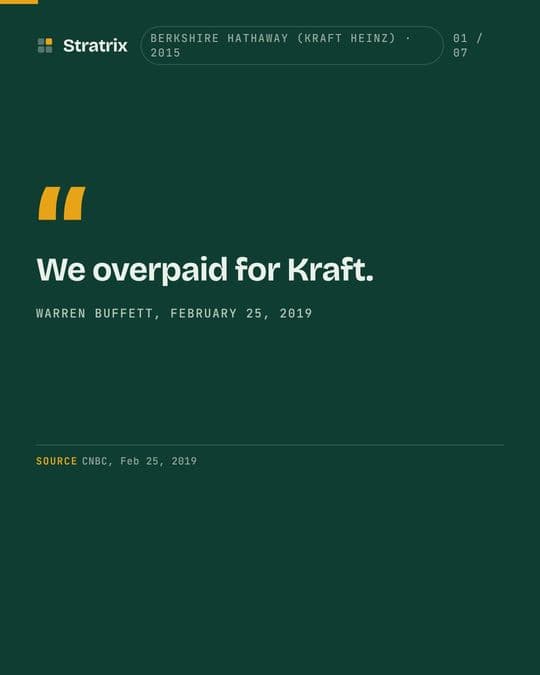
Short videos on companies that faced it, built from the casebooks this pack draws on.

Questions about the Liability Reckoning Strategy Pack
- Is this legal advice?
- No, and it is careful about the boundary. This pack supports a commercial decision: what an exposure costs you while it stays open, what closing it is worth, and whether the resulting schedule can be paid. Every instrument it describes has jurisdictional requirements it does not cover, several of the mechanisms in the case studies are actively contested, and the sequencing questions it raises sit inside obligations your counsel owns: what to disclose and when, what to provision, what to say publicly.
- What number does the model produce?
- Three, and they are meant to be read together. The conversion premium: what closing the exposure is worth above its expected value, built from the annual cost of staying open, the optionality cost, and the tail. The ceiling: the most you should be willing to pay for a resolution that binds the class. And coverage on the proposed schedule, year by year, which is the figure that most often changes the decision — a settlement inside the ceiling and outside the cash is not a settlement.
- Our exposure has not been quantified yet. Is it too early?
- It is the right moment, and the pack says so. Bounding the distribution, with a high scenario, a probability, and a named signatory on the range, is one of the two halt conditions precisely because everything else depends on it, and it is answerable in two weeks by people you already employ. The other halt, whether the schedule can be serviced, is answerable in the same two weeks. Both are routinely deferred because the answers are unwelcome, which is a different thing from being unavailable.
- Are the case studies real companies?
- Yes. Nine sourced reckonings: tobacco, Johns Manville, Volkswagen, BP, PG&E, 3M, Bayer, Purdue Pharma, and Johnson & Johnson. Each is dated, mapped to whether the exposure was converted, and each states what its evidence does not establish. Three of the nine did not convert, and they are in the set for that reason. The worked model, wizard, and worksheet use an explicitly fictional company, labeled as such on every file, with numbers tuned to teach rather than to flatter.
- Does this only apply to mass tort exposures?
- No. The arithmetic is indifferent to what produced the claim: it applies to an environmental remediation obligation, a regulatory penalty with an open scope, a product recall with an unknown population, a contractual indemnity, or a tax dispute with no agreed range. What matters is the shape — an exposure with no upper bound, a class that may or may not be bindable, and a business generating cash in the meantime. The instruments differ by jurisdiction and claim type; the framework does not.
- Is this a subscription?
- No. It is a one-time purchase of a single-organization license, with no seat limit inside your organization and nothing to cancel.
- What is the Liability Reckoning Strategy Pack?
- The Liability Reckoning Strategy Pack is a decision-support kit for one question: What is it worth paying to close an exposure that has no upper bound? It contains 16 files — foundations, concept deck, decision wizard, reckoning model, strategies and tactics, case studies, fit worksheet, roadmap template, practitioner manual, field checklist, about the package — built around a single organizing test: whether the exposure can be converted into a schedule, and what that conversion is worth. It is what a leadership team uses to run the decision and leave a record of what they assumed, rather than a report about the topic.
- Who is the Liability Reckoning Strategy Pack for?
- Anyone who has to make this call and answer for it: an operator or owner facing the decision, the executive team running it, the board or investor testing the reasoning, or an adviser who would otherwise build the framework from a blank page. It is worth buying when a real decision is in front of you. It is not worth buying to read.
- What is in the Liability Reckoning Strategy Pack?
- 16 files in Word, PDF, PowerPoint and Excel: Foundations (Word + PDF) — The framework: the four damages and their order, conversion as the objective, the four instruments, the premium and the two halts. Concept deck (PowerPoint + PDF) — Twenty-one slides for a leadership session, with the sourced reckonings and what each does not establish. Decision wizard (Excel) — Eight scored questions returning the position, the band, and either of the two halt conditions. Reckoning model (Excel, blank and worked) — A bounded distribution, ten years of carrying cost, the conversion premium, the ceiling, and coverage on the proposed schedule year by year. Strategies and tactics (Word) — The moves available under each instrument, the moves that clear each halt, and the ones that make conversion harder. Case studies (Word) — Nine sourced reckonings read through conversion, including the three that failed. Fit worksheet (Word, blank and worked) — The single page of record: the bounded range, the premium, the ceiling, the schedule, the coverage, who signed. Roadmap template (Word) — Five phases with gates and owners, the assumptions register, and the stop triggers. Practitioner manual (Word + PDF) — Disclosure, the provision, the counterparties, governance, six failure modes and the indicators that show first. Field checklist (PDF) — The one-pager that survives outside the binder. About the package (PDF) — What each file does and the order in which to run them.
- How is the Liability Reckoning Strategy Pack delivered?
- As a single download of all 16 files, immediately after payment, with the same link sent by email. It can be downloaded 3 times and the link is valid for 30 days. There is nothing to install and no account to keep.