Licensed to an organization: checkout asks for the company the purchase is for, its website, and an email address to deliver the files to. A work address is best for the license record; a personal one is accepted. Digital download. All sales are final: no refunds or returns. Each format can be downloaded 3 times, and the links stay valid for 30 days. If you need more, reply to your confirmation email and we will sort it out.
Control is discussed as something you have and dilution takes away. It is better understood as something you buy, every year, at a price nobody has written down: capital not raised, a structure somebody maintains, and an approach that never arrives. A company that has never computed that price is not keeping control — it is renewing the purchase annually without one. This pack names the four instruments and the specific question each one fails on, prices what holding control costs, states what it must be worth per year, and insists on the succession question that ends more of these structures than cost ever has.
What is the Founder Control Strategy Pack
The Founder Control Strategy Pack is a complete decision-support kit for one question: what does holding control cost you, and what must it be worth? It is built around one organizing claim: control is a recurring purchase rather than a possession. Sixteen files carry it: the foundations, a concept deck, a scored decision wizard, a control model blank and worked, the moves under each of the four instruments, nine sourced positions, a fit worksheet, a roadmap template, a practitioner manual, a field checklist, and an orientation page.
The test that runs through every file
Which of the four instruments is load-bearing, and whether it survives the person holding it. It is the argument in the deck, it becomes the wizard’s axes, it drives the model’s inputs, and it reappears as lines on the checklist. That is what makes 16 files a product rather than 16 documents.
The model resolves to one number you can negotiate with: What control must be worth — the annual value holding it has to create. It ships blank and worked, and every input is a named cell rather than a figure buried inside a formula, so the number arrives with its assumptions attached rather than on its own authority.
Why the argument about founder control never gets settled
"Should we keep control" is a question about identity. It is answered by whoever feels most strongly about it, and it comes up roughly once a generation while the cost is paid every year. That asymmetry is the whole problem, and it persists because the price has never existed as a number.
This pack produces the number: what control cost last year, and what it must be worth annually to justify that — a figure that can be put beside the decisions control has actually produced, in front of the people who bear it, once a year rather than once a generation.
The four instruments, and where each one fails
| The instrument | What it buys | Where it fails |
|---|---|---|
| Weighted voting | Control without capital: a small share of the equity carrying a large share of the vote. | The market prices it at issue, in public. It is the one instrument outsiders vote on before it exists. |
| A locked block | Defense against a specific acquirer, for a defined term. | The expiry date. A lock has a term, the term ends, and what happens then is usually undocumented. |
| A foundation or trust | Permanence: an owner that cannot sell and cannot be persuaded to. | Its own duty pointing the other way. A trustee obliged to diversify is obliged to sell. |
| Private ownership | Total discretion, and no obligation to explain anything. | Estate arithmetic. A death creates a bill that only a sale can pay. |
What is in the Founder Control Strategy Pack
- Foundations. The framework: control as a purchase, the four instruments and how each fails, the price, the succession question and the two halts.
- Concept deck. Twenty-two slides for a leadership or family session, with the sourced positions and what each does not establish.
- Decision wizard. Eight scored questions returning the position, the band, and either of the two halt conditions.
- Control model. Ten years of the three flows, the deferral carried as a compounding stock, and what control must be worth per year.
- Strategies and tactics. The moves under each instrument, the ones that make a structure brittle, and the section on reducing control deliberately.
- Case studies. Nine sourced positions read through the instrument used and what tested it, including three that failed on succession.
- Fit worksheet. The single page of record: the instrument, the two halts, the annual cost, the expiry, who signed.
- Roadmap template. Five phases with gates and owners, the assumptions register, and an annual reporting line.
- Practitioner manual. Building the annual figure, the succession conversation and its wording, six failure modes and the indicators that show first.
- Field checklist. The one-pager that survives outside the binder.
- About the package. What each file does and the order in which to run them.
Who the Founder Control Strategy Pack is for
A founder deciding how much to keep before the next round; a family holding a structure no one has priced and whose expiry no one can name; a chair asked to raise the succession question and looking for a way in; a chief financial officer who can see the deferred investment and has never been asked about it; a trustee whose duty and whose mandate point in different directions; and the adviser who would otherwise start from a blank page. It is worth buying when a real decision is in front of you. It is not worth buying to read.
An honest note on fit
This is a kit for running a decision, not a research report and not a course. Worked examples use an explicitly fictional company with numbers tuned to teach rather than to flatter. In the worked case the cost of control had never been computed beyond the structure's own $3.2m a year; the full figure is $22.6m in year one and $55.4m by year ten as the deferral compounds, and what control must be worth comes out at $36.4m a year, or 20.5% of EBITDA. Nothing in that says give up control. It says the price now exists, and the family can decide — which they could not do before, because no one had a number.
Two limits are stated on the page rather than worked around. The pack prices control and cannot value it: what your discretion is worth belongs to whoever holds it. And the selection problem here is worse than in any other pack in this series — control structures become documented because they were contested, litigated, or attached to a famous name, so the case set is chosen on attention rather than on outcome, and the structures that quietly held for a century leave no record at all. No survival rate for any instrument appears anywhere in the pack.
This decision, in two minutes
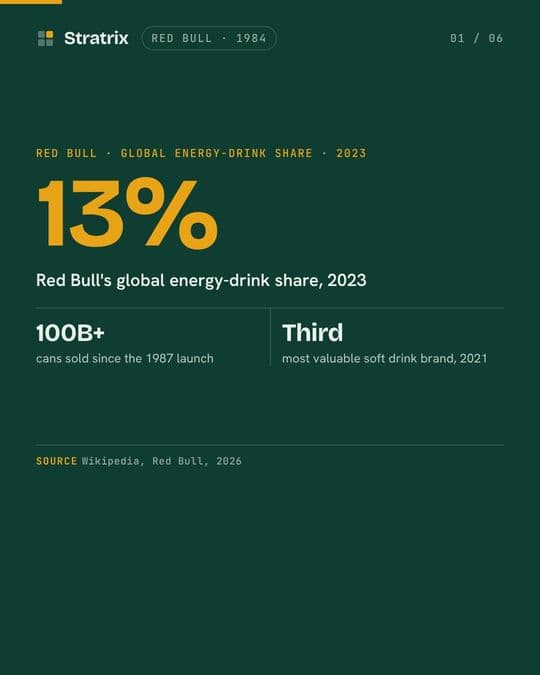
Short videos on companies that faced it, built from the casebooks this pack draws on.

Questions about the Founder Control Strategy Pack
- Is this legal, tax, or estate-planning advice?
- No, and it is careful about the boundary. This pack prices a commercial decision: what holding control costs, what it must be worth, and whether the structure survives the person holding it. Every instrument it describes has jurisdictional requirements it does not cover, the tax treatment of each differs by country and by year, and the succession mechanism it insists you document is a matter for counsel to draft. What belongs here is the price and the question. The drafting does not.
- What number does the model produce?
- What control must be worth, per year. It is the annual equivalent of the ten-year present value of three flows: the capital you did not raise, the structure itself, and the approach that never comes. The deferral is carried as a compounding stock rather than a flat annual charge, which is the treatment that changes the answer. The governance discount is reported separately, as a level, with a note saying it must not be added: it describes the same thing as the foregone approach from the other side.
- Does this pack argue that founders should give up control?
- No. It prices control and takes no view on whether you should hold it — what your discretion is worth is a judgment about decisions only you would take, and it belongs to you. Several of the sourced cases are companies that held control and were plainly right to. What the pack insists on is that the price exists as a number, so the judgment has something to be made against, and so it can be put to the people who bear it annually rather than once a generation.
- Are the case studies real companies?
- Yes. Nine sourced positions: Hermès, Richemont, WeWork, the Hershey Trust, Dell, Nordstrom, Mars, Patagonia, and the Murdoch family trust. Each is dated, mapped to the instrument used and to what tested it, and each states what its evidence does not establish. Three failed on succession rather than on cost. The worked model, wizard, and worksheet use an explicitly fictional company, labeled as such on every file.
- We are a private company with no outside shareholders. Does this apply?
- Yes, and private ownership is one of the four instruments the pack treats. It buys the widest discretion and it has the narrowest funding, and its failure mode is estate arithmetic: tax and buying out anybody who does not want to be inside it arrive together on a known date, and unfunded they are the specific reason private ownership becomes a forced sale. The governance discount line simply reads zero where nothing trades, and the model says so.
- Is this a subscription?
- No. It is a one-time purchase of a single-organization license, with no seat limit inside your organization and nothing to cancel.
- What is the Founder Control Strategy Pack?
- The Founder Control Strategy Pack is a decision-support kit for one question: What does holding control cost you, and what must it be worth? It contains 16 files — foundations, concept deck, decision wizard, control model, strategies and tactics, case studies, fit worksheet, roadmap template, practitioner manual, field checklist, about the package — built around a single organizing test: which of the four instruments is load-bearing, and whether it survives the person holding it. It is what a leadership team uses to run the decision and leave a record of what they assumed, rather than a report about the topic.
- Who is the Founder Control Strategy Pack for?
- Anyone who has to make this call and answer for it: an operator or owner facing the decision, the executive team running it, the board or investor testing the reasoning, or an adviser who would otherwise build the framework from a blank page. It is worth buying when a real decision is in front of you. It is not worth buying to read.
- What is in the Founder Control Strategy Pack?
- 16 files in Word, PDF, PowerPoint and Excel: Foundations (Word + PDF) — The framework: control as a purchase, the four instruments and how each fails, the price, the succession question and the two halts. Concept deck (PowerPoint + PDF) — Twenty-two slides for a leadership or family session, with the sourced positions and what each does not establish. Decision wizard (Excel) — Eight scored questions returning the position, the band, and either of the two halt conditions. Control model (Excel, blank and worked) — Ten years of the three flows, the deferral carried as a compounding stock, and what control must be worth per year. Strategies and tactics (Word) — The moves under each instrument, the ones that make a structure brittle, and the section on reducing control deliberately. Case studies (Word) — Nine sourced positions read through the instrument used and what tested it, including three that failed on succession. Fit worksheet (Word, blank and worked) — The single page of record: the instrument, the two halts, the annual cost, the expiry, who signed. Roadmap template (Word) — Five phases with gates and owners, the assumptions register, and an annual reporting line. Practitioner manual (Word + PDF) — Building the annual figure, the succession conversation and its wording, six failure modes and the indicators that show first. Field checklist (PDF) — The one-pager that survives outside the binder. About the package (PDF) — What each file does and the order in which to run them.
- How is the Founder Control Strategy Pack delivered?
- As a single download of all 16 files, immediately after payment, with the same link sent by email. It can be downloaded 3 times and the link is valid for 30 days. There is nothing to install and no account to keep.