Licensed to an organization: checkout asks for the company the purchase is for, its website, and an email address to deliver the files to. A work address is best for the license record; a personal one is accepted. Digital download. All sales are final: no refunds or returns. Each format can be downloaded 3 times, and the links stay valid for 30 days. If you need more, reply to your confirmation email and we will sort it out.
An order book, a pipeline, a remaining performance obligation, a total of signed reservations: all of it is reported gross, and a gross figure cannot say when it arrives or whether it will. It gets quoted as years of revenue anyway, put in the deck as evidence of safety, and used to justify a plan it may not cover. Three figures would make a backlog comparable to revenue, and almost no company reports them together — not because anybody is hiding them, but because each sits with a different owner: the conversion history with finance, the schedule in the contracts, the margin in the pricing of deals signed years ago. This pack turns them into arithmetic. The reported total at the share that has actually converted gives the honest backlog. Divided by the schedule, or by what the company can physically deliver in a year, whichever is slower, it gives the annual draw — and the delivery limit is usually what binds, which is the finding most companies have not made. That draw set against next year's plan gives the share the backlog covers, and the remainder is revenue that has to be won and is not sold yet. It stops on five conditions: no backlog figure, no historical conversion share, no schedule, nothing stated about what the company can deliver in a year, and no margin.
What is the Backlog Strategy Pack
The Backlog Strategy Pack is a complete decision-support kit for one question: what is your backlog actually worth, and when does it arrive? It is built around one organizing claim: a backlog is reported gross, and three figures would make it comparable to revenue. Sixteen files carry it: the foundations, a concept deck, a scored decision wizard, a conversion model blank and worked, the moves at each position, nine sourced backlogs, a fit worksheet, a roadmap template, a practitioner manual, a field checklist, and an orientation page.
The test that runs through every file
A backlog is reported gross, and three figures would make it comparable to revenue — the share that has converted before, the schedule it arrives on, and the margin it was signed at. It is the argument in the deck, it becomes the wizard’s axes, it drives the model’s inputs, and it reappears as lines on the checklist. That is what makes 16 files a product rather than 16 documents.
The model resolves to one number you can negotiate with: The honest backlog — the reported figure at the share that has actually converted. It ships blank and worked, and every input is a named cell rather than a figure buried inside a formula, so the number arrives with its assumptions attached rather than on its own authority.
Why the three figures behind a backlog are missing
Not because anybody is hiding them. Because no report asks for them together, and each sits with a different owner: the conversion history with finance, the schedule in the contracts, the margin in the pricing of deals signed years ago. And in most companies the conversion share does not exist at all, because no one has ever compared a backlog reported three or four years ago against what actually arrived — so there is nothing to discount by, so the gross figure is what gets reported.
This pack turns that into arithmetic. Reported backlog at the share that has actually converted gives the honest backlog; divided by the schedule, or by what you can deliver, whichever is slower, it gives the annual draw; and set against next year's plan it gives the share the backlog covers. The remainder is revenue that has to be won and is not sold yet.
What is in the Backlog Strategy Pack
- Foundations. The framework: what a backlog is reported as, the three figures that would make it comparable to revenue, the arithmetic, and the five halts.
- Concept deck. Twenty-two slides for a board or audit committee, with nine sourced backlogs and what each does not establish.
- Decision wizard. Eight scored questions returning the band, the weakest answer, and either of the two halt conditions.
- Conversion model. Eleven candidate conversion shares across the columns, the honest backlog, and the share of next year's plan it covers.
- Strategies and tactics. The moves at each of the four positions, what to do when the model halts, and four ways to make the next backlog easier to read.
- Case studies. Nine sourced backlogs — two disclosed the way this pack asks for, one on the wrong side of the ledger, and one that converted at zero.
- Fit worksheet. The single page of record: the basis, the contracted split, the conversion share and schedule, and what it covers.
- Roadmap template. Five phases with gates and owners, the assumptions register, a reporting change and a periodic review line.
- Practitioner manual. Separating contracted from intended, recovering the conversion share, reconstructing the schedule, checking throughput, six failure modes.
- Field checklist. The one-pager that survives outside the binder.
- About the package. What each file does and the order in which to run them.
Who the Backlog Strategy Pack is for
A chief executive whose backlog grows while revenue does not; a chief financial officer who reports the figure and has never been asked what share of it converts; a board member reading years of visibility and wondering what the phrase means; an audit committee looking at a definition that has moved; a commercial leader carrying a target set from a growth rate rather than from what is unsold; an investor discounting somebody else's order book; and the adviser who would otherwise start from a blank page. It is worth buying when a real decision is in front of you. It is not worth buying to read.
An honest note on fit
This is a kit for running a decision, not a research report and not a forecast. Worked examples use an explicitly fictional company with numbers tuned to teach rather than to flatter. In the worked case a $4.2bn backlog quoted as 2.3 years of revenue is $3.0bn at the 72 percent that has actually converted before — 1.6 honest years. It draws $650m a year because the factory binds rather than the four-year schedule, so it really takes 4.65 years; and it covers 31.7 percent of next year's plan, leaving $1.4bn to be won.
Four limits are stated on the page rather than worked around. The model does not value the backlog as an asset — what a buyer would pay for a book of contracts is a different question. It does not price the pipeline, and adding unwon opportunities to a backlog is the error the whole pack is about. It handles one book on one basis. And it says nothing about the years beyond the schedule: Pfizer's advance-purchase orders converted completely and were followed by a 42 percent revenue decline.
This decision, in two minutes
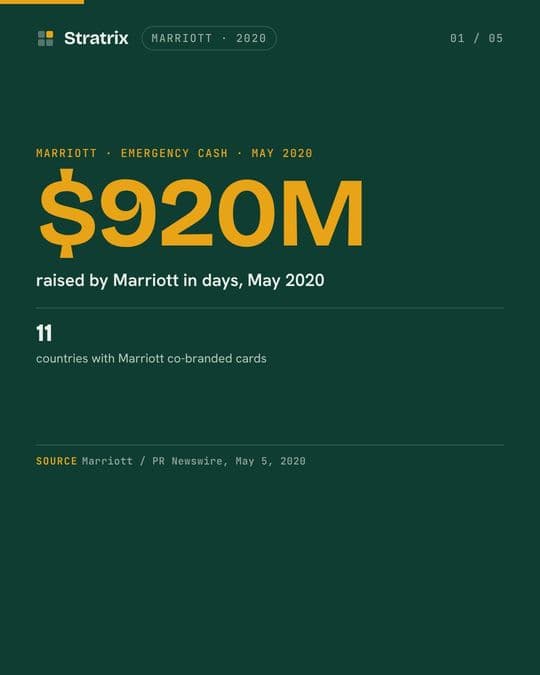
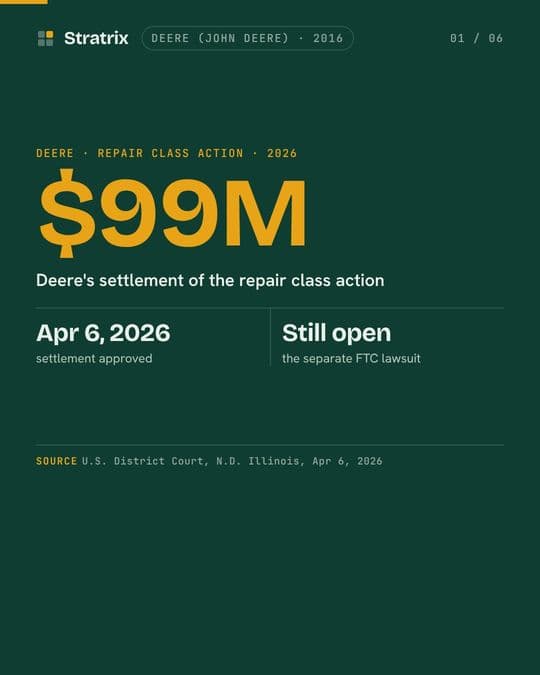
Short videos on companies that faced it, built from the casebooks this pack draws on.
Questions about the Backlog Strategy Pack
- What numbers does the model produce?
- Two headlines and eight supporting rows. The honest backlog, which is the reported figure at the share that has actually converted before, and the share of next year's plan it covers, whose remainder is revenue not sold yet. Around them: the figure quoted as years of revenue against the honest equivalent, what it draws a year, the years it actually takes once throughput is applied, the revenue that has to be won, the profit it carries at the margin it was signed at, and the largest customer's share in money. The Model tab sweeps the conversion share, and one row turns from No to Yes at the point where the factory rather than the contract sets the period.
- Are you saying our backlog is overstated?
- No, and one of the four readings says the backlog covers next year on its own. In almost every case in the evidence the gross figure was accurate — it was reported without the three figures that would make it comparable to revenue, which is a different criticism and a much easier one to fix.
- Does this only apply to manufacturers?
- No. It applies to anything reported as committed future revenue: remaining performance obligations in software, order book in aerospace, funded and unfunded backlog in defense, committed revenue in real estate, and reservations in consumer products. The inputs are named in dollars rather than in units.
- Are the case studies real companies?
- Yes. Nine sourced backlogs: Lockheed Martin, RTX, Oracle, Boeing, ServiceNow, WeWork, the A380, Pfizer, and the Cybertruck. Each is dated, read through what was reported and what converted, and each states what its evidence does not establish. Lockheed is in the set because it publishes the conversion schedule this pack asks for, and ServiceNow because its backlog renews at near completion; without them the set would teach that a backlog is a deception, which it is not. The worked model, wizard, and worksheet use an explicitly fictional company, labeled as such on every file.
- We report funded and unfunded separately already.
- Then you are ahead of most, and the pack says so. The model handles one book on one basis on purpose — run it twice, and the difference between the two conversion shares is worth having deliberately rather than by accident.
- Is this a subscription?
- No. One payment, one download, sixteen files, yours to keep and to use inside your organization under the license included in the pack.
- What is the Backlog Strategy Pack?
- The Backlog Strategy Pack is a decision-support kit for one question: What is your backlog actually worth, and when does it arrive? It contains 16 files — foundations, concept deck, decision wizard, conversion model, strategies and tactics, case studies, fit worksheet, roadmap template, practitioner manual, field checklist, about the package — built around a single organizing test: a backlog is reported gross, and three figures would make it comparable to revenue — the share that has converted before, the schedule it arrives on, and the margin it was signed at. It is what a leadership team uses to run the decision and leave a record of what they assumed, rather than a report about the topic.
- Who is the Backlog Strategy Pack for?
- Anyone who has to make this call and answer for it: an operator or owner facing the decision, the executive team running it, the board or investor testing the reasoning, or an adviser who would otherwise build the framework from a blank page. It is worth buying when a real decision is in front of you. It is not worth buying to read.
- What is in the Backlog Strategy Pack?
- 16 files in Word, PDF, PowerPoint and Excel: Foundations (Word + PDF) — The framework: what a backlog is reported as, the three figures that would make it comparable to revenue, the arithmetic, and the five halts. Concept deck (PowerPoint + PDF) — Twenty-two slides for a board or audit committee, with nine sourced backlogs and what each does not establish. Decision wizard (Excel) — Eight scored questions returning the band, the weakest answer, and either of the two halt conditions. Conversion model (Excel, blank and worked) — Eleven candidate conversion shares across the columns, the honest backlog, and the share of next year's plan it covers. Strategies and tactics (Word) — The moves at each of the four positions, what to do when the model halts, and four ways to make the next backlog easier to read. Case studies (Word) — Nine sourced backlogs — two disclosed the way this pack asks for, one on the wrong side of the ledger, and one that converted at zero. Fit worksheet (Word, blank and worked) — The single page of record: the basis, the contracted split, the conversion share and schedule, and what it covers. Roadmap template (Word) — Five phases with gates and owners, the assumptions register, a reporting change and a periodic review line. Practitioner manual (Word + PDF) — Separating contracted from intended, recovering the conversion share, reconstructing the schedule, checking throughput, six failure modes. Field checklist (PDF) — The one-pager that survives outside the binder. About the package (PDF) — What each file does and the order in which to run them.
- How is the Backlog Strategy Pack delivered?
- As a single download of all 16 files, immediately after payment, with the same link sent by email. It can be downloaded 3 times and the link is valid for 30 days. There is nothing to install and no account to keep.