Licensed to an organization: checkout asks for the company the purchase is for, its website, and an email address to deliver the files to. A work address is best for the license record; a personal one is accepted. Digital download. All sales are final: no refunds or returns. Each format can be downloaded 3 times, and the links stay valid for 30 days. If you need more, reply to your confirmation email and we will sort it out.
A year of maintenance not done arrives in that year's operating profit. It is visible, it is attributable, and somebody is usually thanked for it. The work stays where it was, and nothing in the accounts records that half: no line called what the base did not get, no balance carrying it forward, no year reporting it as owing. Depreciation runs on historic cost and says nothing about condition. This pack turns it into a subtraction and a multiplication. Replacement value times the rate the base has to be held at gives what a year needs; less what is actually spent, times the years the gap has run, gives what has accumulated. Then the honest other side: the money not spent went into profit and has been earning the company's return ever since, so the accumulation is read against what holding it back was worth rather than against nothing. What decides it is the price of doing the work late — work that arrives as a failure costs a multiple of the same work scheduled — so the whole decision reduces to the break-even unplanned share, how much of the accumulated work can arrive as a failure before holding the money back has cost more than it earned. It stops on six conditions: no replacement value, no rate, no split between holding and growing, no start year for the gap, no measured multiple, and no view of what would arrive unplanned.
What is the Underspend Strategy Pack
The Underspend Strategy Pack is a complete decision-support kit for one question: what has not been put into what you operate, and what will it cost when it arrives? It is built around one organizing claim: money not spent on a base is not saved, it is moved, and only one side of that trade is recorded anywhere. Sixteen files carry it: the foundations, a concept deck, a scored decision wizard, an asset base model blank and worked, the moves at each position, nine sourced situations, a fit worksheet, a roadmap template, a practitioner manual, a field checklist, and an orientation page.
The test that runs through every file
Money not spent on an asset base is not saved, it is moved — and only one side of that trade is recorded anywhere. It is the argument in the deck, it becomes the wizard’s axes, it drives the model’s inputs, and it reappears as lines on the checklist. That is what makes 16 files a product rather than 16 documents.
The model resolves to one number you can negotiate with: The underspend — what has not gone in, against what holding it back earned. It ships blank and worked, and every input is a named cell rather than a figure buried inside a formula, so the number arrives with its assumptions attached rather than on its own authority.
Why the deferred maintenance number is missing
Not because anybody is hiding it. Because it takes two figures that live in different buildings. What the base needs each year to hold its condition is a rate, and engineering can usually give it. What is actually spent on holding it is a budget line, and finance has it — mixed, in most companies, with the money spent on growing the base rather than holding it.
There is a second reason. No one owns the difference. Operations owns the consequences of a base falling behind and does not control the budget; finance owns the budget and does not see condition. So the gap is the one number in the business that is no one's to report, which is exactly why it can widen for six years without appearing in a single paper.
This pack turns that into arithmetic. Replacement value times the rate gives what a year needs; less what is spent, times the years it has run, gives what has accumulated. Set that against what the money kept has actually earned, and the whole decision reduces to one figure — how much of the work can arrive unplanned before holding it back has cost more than it earned.
What is in the Underspend Strategy Pack
- Foundations. The framework: why only one side of the trade is recorded, the arithmetic, what rises without anybody deciding it, and the six halts.
- Concept deck. Twenty-two slides for a board or a capital review, with nine sourced situations and what each does not establish.
- Decision wizard. Eight scored questions returning the band, the weakest answer, and either of the two halt conditions.
- Asset base model. Eleven candidate unplanned shares across the columns, what has accumulated, and the break-even unplanned share.
- Strategies and tactics. The moves at each of the four positions, what to do when the model halts, and four ways to make the next capital decision cheaper to judge.
- Case studies. Nine sourced situations — five physical bases, two software, one set of brands, and one public estate whose figure is published and still not funded.
- Fit worksheet. The single page of record: the replacement value, the rate, the spend, the years, the multiple, and what the money earned.
- Roadmap template. Five phases with gates and owners, the assumptions register, a reporting change and a periodic review line.
- Practitioner manual. The replacement value, the rate, splitting the capital plan, dating the gap, pricing the waiting, six failure modes.
- Field checklist. The one-pager that survives outside the binder.
- About the package. What each file does and the order in which to run them.
Who the Underspend Strategy Pack is for
A chief executive who has held a margin for six years and cannot say what it cost; a chief financial officer being asked for a catch-up number with no way to test it; a chief operating officer whose unplanned work is rising and whose budget is not; an engineering or asset director who has known the rate for years and has never been asked for it; a board member reading a capital plan with no requirement beside it; a private equity operating partner underwriting an asset-heavy business; and the adviser who would otherwise start from a blank page. It is worth buying when a real decision is in front of you. It is not worth buying to read.
An honest note on fit
This is a kit for running a decision, not a research report and not a forecast. Worked examples use an explicitly fictional company with numbers tuned to teach rather than to flatter. In the worked case a $4.2bn base needs 3.2 percent a year, or $134.4m, and receives $86m, a gap of $48.4m that has run for seven years and accumulated to $338.8m. The money kept has earned $473.5m at the company's own rate of return, which is the answer that usually ends the discussion. It is not the test: only 16.6 percent of the accumulated work has to arrive unplanned for the underspend to have cost more than it earned, and the plants are running at roughly 40 percent, which puts the bill at $664.0m, or 2.14 years of profit.
Four limits are stated on the page rather than worked around. The model does not forecast the unplanned share — that figure is your own judgment, and the Model tab sweeps it precisely because no one can settle it in advance. It prices the accumulated work at today's rates and holds that flat, so where construction costs have risen faster than the return on the money kept it understates the bill. It uses a cost multiple, which cannot describe a failure whose consequence is not a cost — a lost qualification, a license, a life. And it says nothing about whether the base should exist at all: a plant that is closing does not need holding, and the honest version of that is a closure rather than an underspend.
This decision, in two minutes
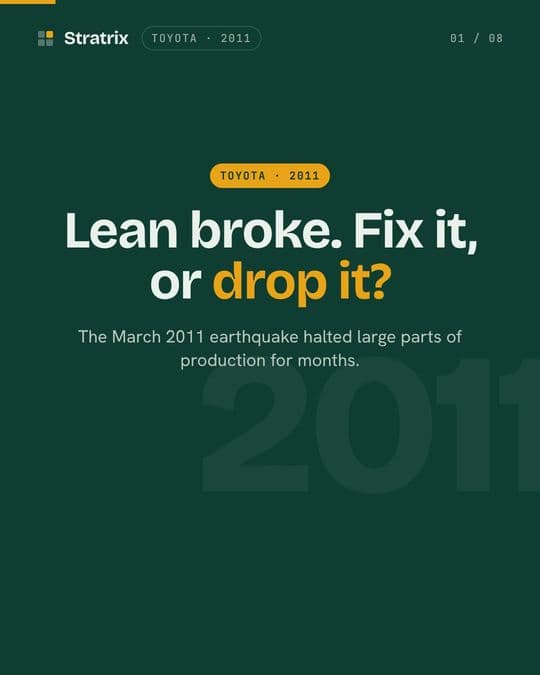
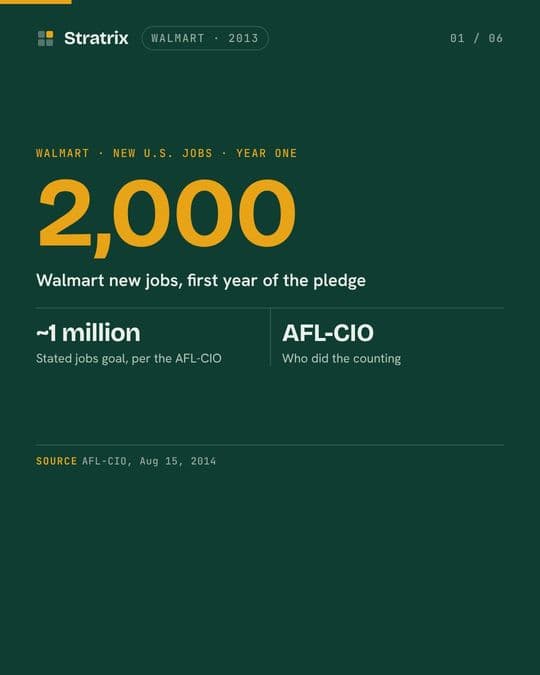
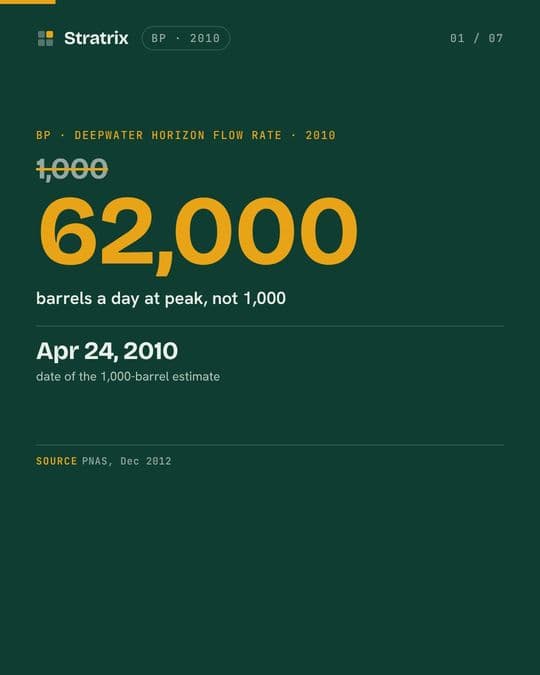
Short videos on companies that faced it, built from the casebooks this pack draws on.
Questions about the Underspend Strategy Pack
- What numbers does the model produce?
- Two headlines and ten supporting rows. What has accumulated since the spend last met what the base needs, and the break-even unplanned share — how much of that work can arrive as a failure rather than as a plan before holding the money back has cost more than it earned. Around them: what a year of holding condition costs, the annual gap and what it is as a share of profit, the accumulation against revenue and in years of the current budget, what the money kept has earned, the bill at your own unplanned share and in years of profit, and how much asset it takes to produce a dollar of sales. The Model tab sweeps the unplanned share, and one row turns from Yes to No at the point where holding the money back stops paying.
- Are you saying we should have spent more?
- No, and one of the four readings is a company where holding the money back was right and still is. Money has alternative uses and the return on it is real — the model computes it at full strength, compounding each year's gap at your own rate of return. What the pack refuses is a trade recorded on one side only.
- We spend a lot on maintenance.
- That is a budget, and the question is a rate. Ask engineering what share of replacement value the base needs each year to hold its condition, then set the two side by side. Total capital spend can rise every year while the share holding the existing base falls, which is why the split between holding and growing is one of the pack's five phases.
- Does this only apply to heavy industry?
- No. It applies wherever a company runs a base that decays at a rate: manufacturers with plant, utilities with networks, retailers and health systems with estates, banks and airlines with core systems, and consumer companies with brands. Two of the nine cases are software and one is a set of brands. The inputs are named in dollars, percentages, and years rather than in machines.
- Are the case studies real companies?
- Yes. Nine sourced situations: PG&E, Southwest, Norfolk Southern, Equifax, Kraft Heinz, Thames Water, Boeing, the NHS estate in England, and Delta. Each is dated, read through what was held back and what arrived, and each states what its evidence does not establish. Delta is in the set to hold the other end, having funded an older fleet deliberately and expensively while running a crew system no one had priced. The worked model, wizard, and worksheet use an explicitly fictional company, labeled as such on every file.
- Is this a subscription?
- No. One payment, one download, sixteen files, yours to keep and to use inside your organization under the license included in the pack.
- What is the Underspend Strategy Pack?
- The Underspend Strategy Pack is a decision-support kit for one question: What has not been put into what you operate? It contains 16 files — foundations, concept deck, decision wizard, asset base model, strategies and tactics, case studies, fit worksheet, roadmap template, practitioner manual, field checklist, about the package — built around a single organizing test: money not spent on an asset base is not saved, it is moved — and only one side of that trade is recorded anywhere. It is what a leadership team uses to run the decision and leave a record of what they assumed, rather than a report about the topic.
- Who is the Underspend Strategy Pack for?
- Anyone who has to make this call and answer for it: an operator or owner facing the decision, the executive team running it, the board or investor testing the reasoning, or an adviser who would otherwise build the framework from a blank page. It is worth buying when a real decision is in front of you. It is not worth buying to read.
- What is in the Underspend Strategy Pack?
- 16 files in Word, PDF, PowerPoint and Excel: Foundations (Word + PDF) — The framework: why only one side of the trade is recorded, the arithmetic, what rises without anybody deciding it, and the six halts. Concept deck (PowerPoint + PDF) — Twenty-two slides for a board or a capital review, with nine sourced situations and what each does not establish. Decision wizard (Excel) — Eight scored questions returning the band, the weakest answer, and either of the two halt conditions. Asset base model (Excel, blank and worked) — Eleven candidate unplanned shares across the columns, what has accumulated, and the break-even unplanned share. Strategies and tactics (Word) — The moves at each of the four positions, what to do when the model halts, and four ways to make the next capital decision cheaper to judge. Case studies (Word) — Nine sourced situations — five physical bases, two software, one set of brands, and one public estate whose figure is published and still not funded. Fit worksheet (Word, blank and worked) — The single page of record: the replacement value, the rate, the spend, the years, the multiple, and what the money earned. Roadmap template (Word) — Five phases with gates and owners, the assumptions register, a reporting change and a periodic review line. Practitioner manual (Word + PDF) — The replacement value, the rate, splitting the capital plan, dating the gap, pricing the waiting, six failure modes. Field checklist (PDF) — The one-pager that survives outside the binder. About the package (PDF) — What each file does and the order in which to run them.
- How is the Underspend Strategy Pack delivered?
- As a single download of all 16 files, immediately after payment, with the same link sent by email. It can be downloaded 3 times and the link is valid for 30 days. There is nothing to install and no account to keep.