Licensed to an organization: checkout asks for the company the purchase is for, its website, and an email address to deliver the files to. A work address is best for the license record; a personal one is accepted. Digital download. All sales are final: no refunds or returns. Each format can be downloaded 3 times, and the links stay valid for 30 days. If you need more, reply to your confirmation email and we will sort it out.
Make-or-buy is argued as a question of degree, and degree does not sort the good outcomes from the bad ones: the companies in this pack own wildly different amounts, one of the most successful deliberately owns almost nothing, and one that owned everything could not leave the layer it owned. What separates them is whether they can specify what they do not own. This pack supplies the test that settles that, locates the layer worth owning rather than the one on the delay report, prices owning now against buying back later at a premium somebody else sets, and stops on two conditions: the specification would not let anybody else build it, and the layer was chosen because it is visible.
What is the Vertical Integration Strategy Pack
The Vertical Integration Strategy Pack is a complete decision-support kit for one question: what must you own, and what can you safely buy? It is built around one organizing claim: you can outsource anything whose interface you can specify, and nothing you cannot. Sixteen files carry it: the foundations, a concept deck, a scored decision wizard, a buy-back model blank and worked, the moves at each position, nine sourced integration decisions, a fit worksheet, a roadmap template, a practitioner manual, a field checklist, and an orientation page.
The test that runs through every file
Whether a supplier who has never seen it could build to what you hold today. It is the argument in the deck, it becomes the wizard’s axes, it drives the model’s inputs, and it reappears as lines on the checklist. That is what makes 16 files a product rather than 16 documents.
The model resolves to one number you can negotiate with: The break-even probability — the chance of a forced buy-back at which owning and buying cost the same. It ships blank and worked, and every input is a named cell rather than a figure buried inside a formula, so the number arrives with its assumptions attached rather than on its own authority.
Why the make-or-buy argument never settles
Because it is conducted with two point estimates that are always close enough to argue about for a year, on an axis that does not sort the good outcomes from the bad ones: how much should we own. One of the most successful companies in the case set deliberately owns almost nothing. One of the most complete failures owned everything.
This pack replaces both. A test that decides whether make-or-buy is even the question in front of you, and a number: the break-even probability at which owning now and buying back later cost the same. No one can defend a probability, everybody is implicitly assuming one, and stating it is what makes the decision settleable in an afternoon.
The specification test
Take what you hold today — drawings, tolerances, acceptance criteria, the interface. Hand it to a supplier who has never seen the component. Ask whether they can quote from it. If they can, you are buying a part and can buy it from anybody. If they cannot, you are delegating a design, and what comes back can only be re-sourced, re-priced, or repaired by the firm that built it. It takes about a month and almost no one runs it, because it is only worth running on a supplier who is performing.
What is in the Vertical Integration Strategy Pack
- Foundations. The framework: the specification test, which layer to own, the cost nobody prices, and the two halts.
- Concept deck. Twenty-two slides for the board or leadership session, with the sourced decisions and what each does not establish.
- Decision wizard. Eight scored questions returning the position, the band, and either of the two halt conditions.
- Buy-back model. Ten years of both paths, and the break-even probability at which they cost the same.
- Strategies and tactics. The moves when you can and cannot specify it, four ways of holding a supplier, and the six that hide the problem.
- Case studies. Nine sourced decisions read through what was owned and what was specified — from Boeing to Kodak.
- Fit worksheet. The single page of record: the test, the layer, the break-even probability, and the review date.
- Roadmap template. Five phases with gates and owners, the assumptions register, and an annual reporting line.
- Practitioner manual. Running the specification test, locating the layer, the board paper, six failure modes and their indicators.
- Field checklist. The one-pager that survives outside the binder.
- About the package. What each file does and the order in which to run them.
Who the Vertical Integration Strategy Pack is for
An executive team with an acquisition of a supplier on the table; a board member being asked to approve capital on two point estimates; a chief operating officer who suspects the layer being bought is not the constraint; a head of engineering who knows the specification would not survive contact with an outside supplier and has no way to say so; a chief procurement officer holding a single-source position no one has priced; and the adviser who would otherwise start from a blank page. It is worth buying when a real decision is in front of you. It is not worth buying to read.
An honest note on fit
This is a kit for running a decision, not a research report and not a course. Worked examples use an explicitly fictional company with numbers tuned to teach rather than to flatter. In the worked case the two point estimates are $1,947m and $2,033m, close enough to argue about all year, and the finding is not the $86m between them. It is that the break-even probability is 40.1%: the decision rests entirely on whether you believe the chance of ending up owning this anyway is above or below that, and no one had ever stated it. The supplier's margin is 18% and the honest prize is 12, which is most of why the case looked better before it was written down.
Two limits are stated on the page rather than worked around. No layer transfers: where the value and the risk sit is specific to a technology at a moment, every case in the pack would answer differently a decade later, and that is a finding rather than a defect. And the case set is selected on scale and on failure — integration decisions become documented when they are enormous or when they go wrong, and a company that specified well and bought competently for thirty years leaves no record at all.
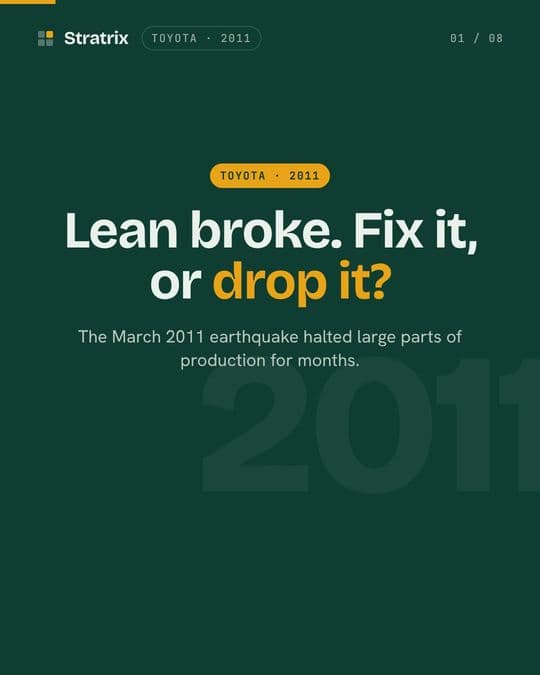
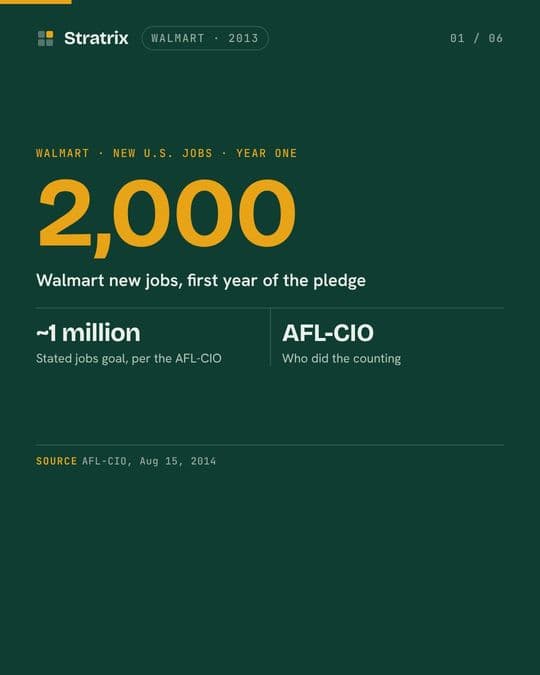
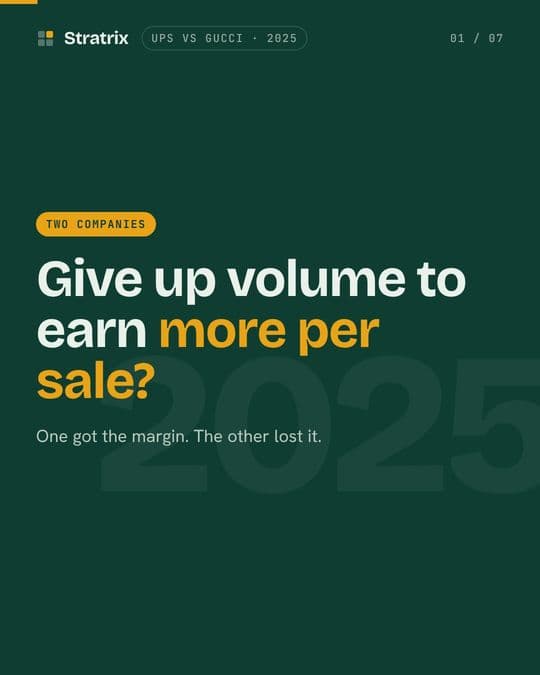
This decision, in two minutes
Short videos on companies that faced it, built from the casebooks this pack draws on.
The free guide to this decision
How companies ran this decision, case by case, and the method the pack is built on. Read the guide →
Questions about the Vertical Integration Strategy Pack
- Does this tell us how much of our supply chain to own?
- No, and it argues that the question does not sort good outcomes from bad ones. The companies in the case set own wildly different amounts — one deliberately owns almost nothing and took 64% of its market; one owned everything and could not leave the layer it owned. What the pack establishes is what you must be able to specify, which is a different question with a testable answer.
- What number does the model produce?
- The break-even probability: the chance of a forced buy-back at which owning it now and continuing to buy cost the same. It runs both paths over ten years — the capital, the overlap while you build, the running cost, and on the other side the supplier's price plus the expected cost of buying the capability back at a premium somebody else sets, plus the delay. The point estimates are there too; the probability is the one to put in the paper.
- We are a services business, not a manufacturer. Does this apply?
- Yes, wherever a capability is bought from somebody else. The component can be a manufactured part, a platform, a content library, a delivery network, or an engineering team, and the specification test works the same way: could a supplier who has never seen it deliver to what you hold today? Four of the nine sourced cases in the pack are not manufacturing decisions at all.
- Are the case studies real companies?
- Yes. Nine sourced decisions: Boeing and the 787, ASML with Cymer and Zeiss, Spotify in audio, Netflix and originals, Amazon and the last mile, Apple and silicon, Zara's two supply chains, TSMC's foundry model, and Kodak's chemical empire. Each is dated, mapped to what was owned and what was specified, and each states what its evidence does not establish. The worked model, wizard, and worksheet use an explicitly fictional company, labeled as such on every file.
- What if we cannot get an outside supplier to look at our specification?
- Then you have your answer, and it is the pack's first halt condition. Both the wizard and the model stop there, because a component no one outside could quote from is not being bought — it is being delegated, and the arithmetic would be comparing a real cost against an alternative that does not exist. The manual sets out how to assemble the package, who to send it to, and why the clarifying questions matter more than the reply.
- Is this a subscription?
- No. It is a one-time purchase of a single-organization license, with no seat limit inside your organization and nothing to cancel.
- What is the Vertical Integration Strategy Pack?
- The Vertical Integration Strategy Pack is a decision-support kit for one question: What must you own, and what can you safely buy? It contains 16 files — foundations, concept deck, decision wizard, buy-back model, strategies and tactics, case studies, fit worksheet, roadmap template, practitioner manual, field checklist, about the package — built around a single organizing test: whether a supplier who has never seen it could build to what you hold today. It is what a leadership team uses to run the decision and leave a record of what they assumed, rather than a report about the topic.
- Who is the Vertical Integration Strategy Pack for?
- Anyone who has to make this call and answer for it: an operator or owner facing the decision, the executive team running it, the board or investor testing the reasoning, or an adviser who would otherwise build the framework from a blank page. It is worth buying when a real decision is in front of you. It is not worth buying to read.
- What is in the Vertical Integration Strategy Pack?
- 16 files in Word, PDF, PowerPoint and Excel: Foundations (Word + PDF) — The framework: the specification test, which layer to own, the cost nobody prices, and the two halts. Concept deck (PowerPoint + PDF) — Twenty-two slides for the board or leadership session, with the sourced decisions and what each does not establish. Decision wizard (Excel) — Eight scored questions returning the position, the band, and either of the two halt conditions. Buy-back model (Excel, blank and worked) — Ten years of both paths, and the break-even probability at which they cost the same. Strategies and tactics (Word) — The moves when you can and cannot specify it, four ways of holding a supplier, and the six that hide the problem. Case studies (Word) — Nine sourced decisions read through what was owned and what was specified — from Boeing to Kodak. Fit worksheet (Word, blank and worked) — The single page of record: the test, the layer, the break-even probability, and the review date. Roadmap template (Word) — Five phases with gates and owners, the assumptions register, and an annual reporting line. Practitioner manual (Word + PDF) — Running the specification test, locating the layer, the board paper, six failure modes and their indicators. Field checklist (PDF) — The one-pager that survives outside the binder. About the package (PDF) — What each file does and the order in which to run them.
- How is the Vertical Integration Strategy Pack delivered?
- As a single download of all 16 files, immediately after payment, with the same link sent by email. It can be downloaded 3 times and the link is valid for 30 days. There is nothing to install and no account to keep.