Everyone is talking about Bending Spoons paying $3.68 billion for Mailchimp, which Intuit bought for $12 billion in 2021. The better question: can a collection of out-of-favor brands be a profitable strategy? That's our Short Take.
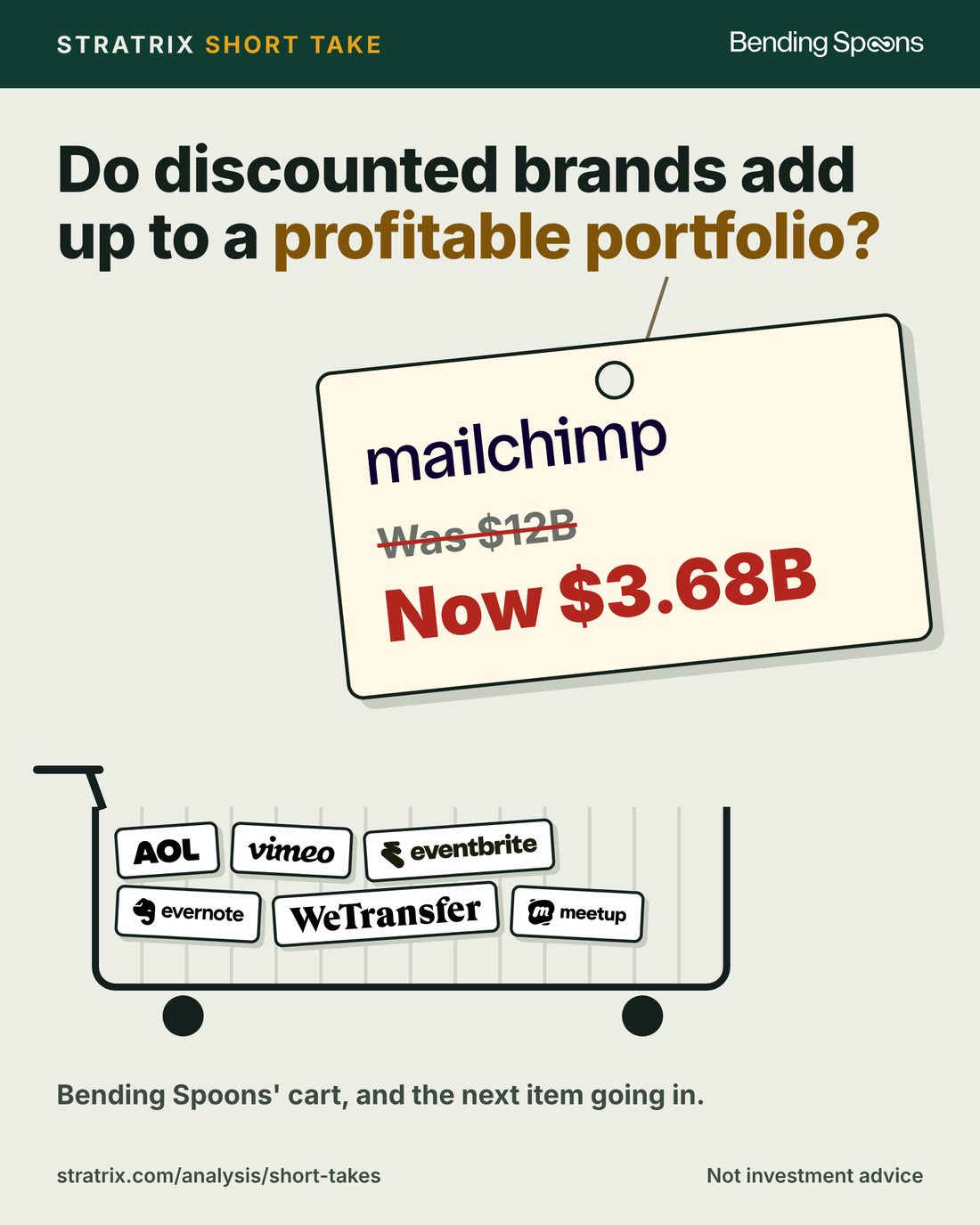
The deal everyone is talking about this week: Bending Spoons agreed to buy Mailchimp from Intuit for $3.68 billion. Intuit paid about $12 billion for it in 2021. The discount makes the headlines. The question that matters for anyone running or buying a business is a different one: can a collection of out-of-favor brands, bought cheaply, become a profitable company that lasts?
Bending Spoons is betting that it can. Its prospectus sets out the plan: "acquire digital businesses, implement deep transformations and ongoing optimizations to sustainably expand earnings, and reinvest in additional acquisitions." In practice, it says, a business it buys is usually restructured into "a much smaller, more talent-dense organization." AOL, Eventbrite, Vimeo and Evernote are among the brands it now owns.
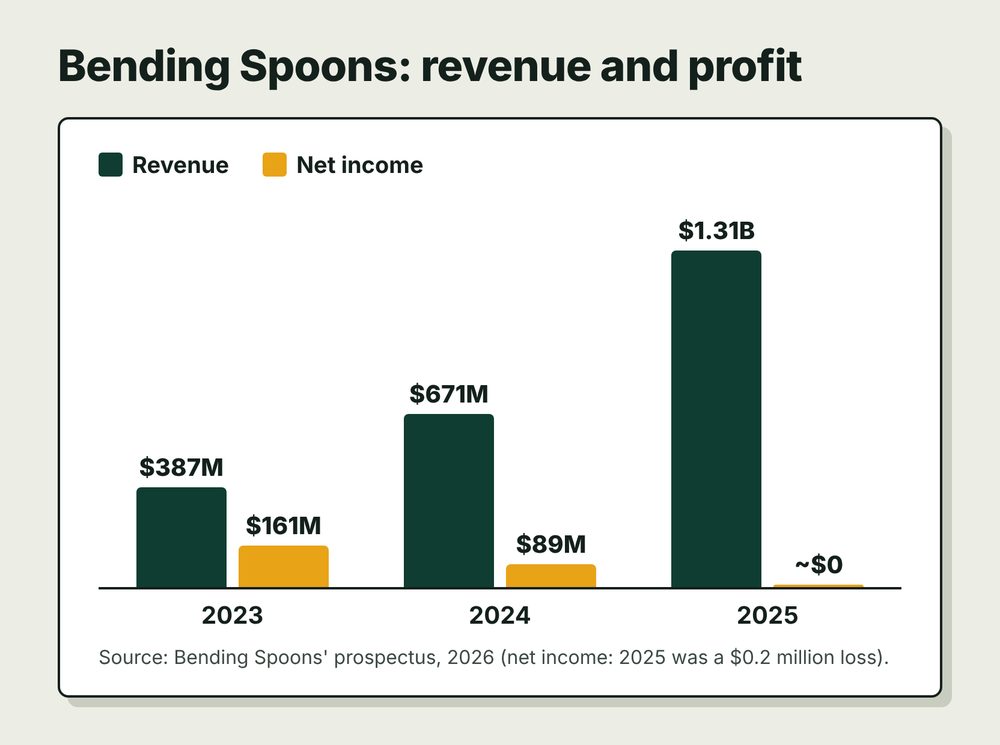
So far the record is mixed. Revenue grew from $387 million in 2023 to $1.31 billion in 2025, mostly from buying companies. Profit moved the other way: $161 million in 2023, $89 million in 2024, and a small loss in 2025. The first quarter of 2026 returned a $27 million profit. Mailchimp costs more than twice what Bending Spoons paid for Vimeo, so each deal is larger than the last.
History offers both answers. In 2015, Berkshire Hathaway, now an investor in Bending Spoons, joined 3G Capital to put $10 billion into Kraft Heinz, a bet on running famous food brands at lower cost. Four years later, Kraft Heinz wrote down $15.4 billion, mostly the value of the Kraft and Oscar Mayer brands. The costs came out, but the brands kept losing ground. Constellation Software has made the model work for decades. It says it buys software companies and "operates them indefinitely, respecting their culture, leadership, and autonomy."
The difference is what happens after the purchase. Cutting costs lifts profit once. A portfolio of discounted brands pays over time only if the brands keep their customers and get better.
That is also why Canva is worth watching. On November 4 it told staff that a restructuring affects 1,271 people, about 22% of its workforce, The Register reported. A company that cuts its own costs first leaves a buyer less to gain.
What it means for you: if you run a mature product, ask what a buyer would cut, and decide whether to do it yourself. If you are the buyer, look past the price and ask who will make the product better in year three.
Buying cheap is the easy part. Keeping the brands growing decides whether it pays.
Free download
Buying, or being bought? Our free checklist, with a worked example on a subscription software business.
Due Diligence Checklist: Test the Claim the Price Rests On →Sources
- Intuit (SEC Form 8-K), Agreement to sell Mailchimp, November 19, 2026.
- Intuit (SEC Form 8-K), Intuit to acquire Mailchimp, September 13, 2021.
- Bending Spoons, Final prospectus, June 30, 2026.
- Bending Spoons (SEC Form 6-K), New investment from Berkshire Hathaway, October 14, 2026.
- Vimeo (SEC Form 8-K), Agreement to be acquired by Bending Spoons, September 10, 2025.
- Kraft Foods Group (SEC Form 425), Kraft and Heinz merger announcement, March 25, 2015.
- The Kraft Heinz Company (SEC Form 8-K), Fourth quarter and full year 2018 results, February 21, 2019.
- Constellation Software, Acquisition criteria, November 20, 2026.
- The Register, Canva restructuring, November 4, 2026.
For information and strategic analysis only, not investment advice. Stratrix does not recommend buying, selling or holding any security.