Licensed to an organization: checkout asks for the company the purchase is for, its website, and an email address to deliver the files to. A work address is best for the license record; a personal one is accepted. Digital download. All sales are final: no refunds or returns. Each format can be downloaded 3 times, and the links stay valid for 30 days. If you need more, reply to your confirmation email and we will sort it out.
A family, a trust, a foundation, a founder, a state: whoever can decide the outcome of a vote holds two shares, not one. The economic share is what they own. The voting share is what they decide. In a company with a single class of stock the two are the same number, which is why nobody thinks about them separately — and when they come apart, both figures are usually still published, in different parts of the same document, with the distance between them stated nowhere. This pack turns that distance into arithmetic. Voting share less economic share gives the wedge, in points. Voting share over economic share gives votes per dollar. One minus the economic share, over the economic share, gives other people's money per dollar of the block's own, which is the arrangement in a single number. Then the discount to comparable companies prices it, and splitting that price by the economic share says who is paying — the block bears its own share and the outside holders bear the rest, which is usually several times more. The Model tab sweeps the economics rather than the votes, because the votes are written into a constitution and stay put while the economics fall through every sale, issuance and inheritance. It stops on five conditions: no economic share, no voting share, no equity value, no years the structure has run, and nothing said about what the stock trades at against comparable companies.
What is the Control Wedge Strategy Pack
The Control Wedge Strategy Pack is a complete decision-support kit for one question: how much of the company do you own, and how much of it do you decide? It is built around one organizing claim: two numbers describe every controlled company and they are never written on the same line. Sixteen files carry it: the foundations, a concept deck, a scored decision wizard, the model blank and worked, the moves at each position, nine sourced control structures, a fit worksheet, a roadmap template, a practitioner manual, a field checklist, and an orientation page.
The test that runs through every file
Two numbers describe every controlled company — what share of it the control block owns and what share of it the block decides — and they are almost never written on the same line. It is the argument in the deck, it becomes the wizard’s axes, it drives the model’s inputs, and it reappears as lines on the checklist. That is what makes 16 files a product rather than 16 documents.
The model resolves to one number you can negotiate with: The wedge — the distance between what the block owns and what it decides. It ships blank and worked, and every input is a named cell rather than a figure buried inside a formula, so the number arrives with its assumptions attached rather than on its own authority.
Why the distance between owning and deciding is never stated
Not because anybody is hiding it. Because no disclosure asks for the two figures together, and each belongs to a different function: the economic share to the registrar, the voting share to the corporate secretary and the constitution. Neither of them owns the sentence that would put them side by side.
There is a second reason and it is more interesting. The voting share most companies quote internally is the share at a typical annual meeting, which is not the same number — turnout flatters every control block, because the holders who stay home are always the ones outside it. So the figure people carry in their heads is the one that would not apply on the day it mattered.
This pack turns that into arithmetic. Voting share minus economic share gives the wedge; voting share over economic share gives votes per dollar; and one minus the economic share over the economic share gives other people's money per dollar of the block's own. Then the discount to comparable companies prices it, and splitting that price by the economic share says who is paying.
What is in the Control Wedge Strategy Pack
- Foundations. The framework: the two numbers, why the distance is never stated, the arithmetic, and the five halts.
- Concept deck. Twenty-two slides for a board or a nominations committee, with nine sourced control structures and what each does not establish.
- Decision wizard. Eight scored questions returning the band, the weakest answer, and either of the two halt conditions.
- Control model. Eleven candidate economic shares across the columns, the wedge, and other people's money per dollar of the block's own.
- Strategies and tactics. The moves at each of the four positions, what to do when the model halts, and four ways to make the next control decision cheaper to judge.
- Case studies. Nine sourced control structures — four still working, one run in reverse, one bought out of a family, and one the market refused.
- Fit worksheet. The single page of record: who holds the block, its two shares, what the control is for, and what the structure costs.
- Roadmap template. Five phases with gates and owners, the assumptions register, a reporting change and a periodic review line.
- Practitioner manual. Totaling the economics, taking the votes from the constitution, writing the purpose, pricing the structure, splitting the price, six failure modes.
- Field checklist. The one-pager that survives outside the binder.
- About the package. What each file does and the order in which to run them.
Who the Control Wedge Strategy Pack is for
A chair whose board has never seen the two shares on one line; a corporate secretary who knows the voting figure everybody quotes is the wrong one; a family holding company deciding whether to sell down; a chief financial officer asked why the stock trades below its peers; a nominations committee facing a succession the trust deed does not settle; an investor pricing somebody else's structure; a founder about to create one at a listing; and the adviser who would otherwise start from a blank page. It is worth buying when a real decision is in front of you. It is not worth buying to read.
An honest note on fit
This is a kit for running a decision, not a research report and not a legal opinion. Worked examples use an explicitly fictional company with numbers tuned to teach rather than to flatter. In the worked case a family holding 14 percent of the economics and 57 percent of the votes has a wedge of 43 points and 4.1 votes per dollar: fourteen cents of its own money decides over eighty-six cents of everybody else's, $8.3bn against $1.3bn. An 11 percent discount is worth $1,187m, of which the outside holders bear $1,020m and the family $166m — and a 57 percent voting block still leaves a blocking minority outside it.
Four limits are stated on the page rather than worked around. The model does not prove the structure causes the discount. It does not price control as an asset — what a buyer would pay for a block of voting stock is a different question. It does not judge succession, which is a different pack. And it says nothing about whether the block will use the votes well: Hermès, Hershey, and the Wilsdorf Foundation are in the evidence because they did, and this arithmetic would have looked the same on the day before any of them was tested.
This decision, in two minutes
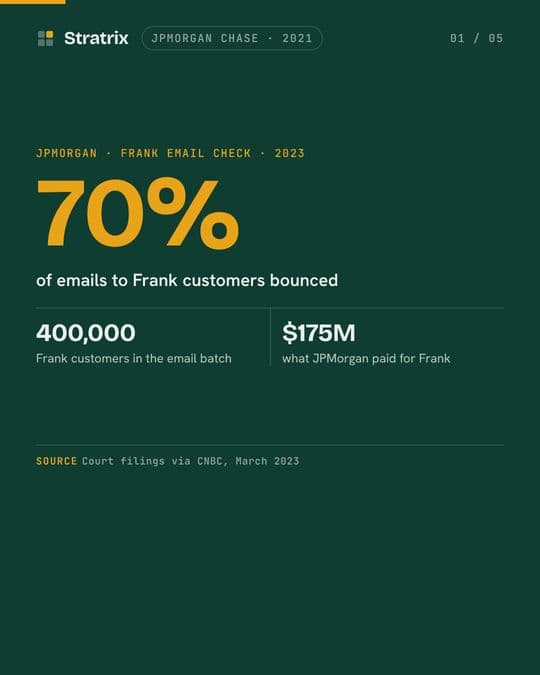
Short videos on companies that faced it, built from the casebooks this pack draws on.
Questions about the Control Wedge Strategy Pack
- What numbers does the model produce?
- Two headlines and ten supporting rows. The wedge, which is the voting share less the economic share in points, and other people's money per dollar of the block's own. Around them: votes per dollar of economics, the block's own money and the money it decides over, what the discount is worth, what it costs the outside holders and what it costs the block, that cost against a year of profit, the share of the market barred from owning the stock, the outside votes against the blocking threshold, and the years the structure has run or has left. The Model tab sweeps the economic share, and one row turns from No to Yes where the block starts deciding over more of other people's money than its own.
- Are you saying control structures are wrong?
- No, and one of the four readings is a structure with nothing to fix. Four of the nine cases in the evidence are still working and two of them refused an offer that would have ended the company. What separates them is not how narrow the wedge is but whether anybody can say in one sentence what the control is for.
- Can you prove the structure causes the discount?
- No, and the pack says so on the page rather than in a footnote. No one can prove that from outside. The discount is your own input; what the model does is state the gap, price it at your figures, and say who bears it.
- Does this only apply to dual-class companies?
- No. It applies wherever deciding and owning have come apart: family holding companies, foundations, trusts, golden shares, loyalty shares, state minority floats, and general partnerships. A share class is one way to build a wedge and not the commonest one.
- Are the case studies real companies?
- Yes. Nine sourced control structures: Richemont, Hermès, Hershey, Rolex, Aramco, Dell, Fox, Porsche SE, and WeWork. Each is dated, read through what was held and what became of it, and each states what its evidence does not establish. Richemont and Rolex are in the set because their structures are still working, one since 1988 and one since 1960; without them the set would teach that a control block is a defect, which it is not. The worked model, wizard, and worksheet use an explicitly fictional company, labeled as such on every file.
- Is this a subscription?
- No. One payment, one download, sixteen files, yours to keep and to use inside your organization under the license included in the pack.
- What is the Control Wedge Strategy Pack?
- The Control Wedge Strategy Pack is a decision-support kit for one question: How much of the company do you own, and how much of it do you decide? It contains 16 files — foundations, concept deck, decision wizard, control model, strategies and tactics, case studies, fit worksheet, roadmap template, practitioner manual, field checklist, about the package — built around a single organizing test: two numbers describe every controlled company — what share of it the control block owns and what share of it the block decides — and they are almost never written on the same line. It is what a leadership team uses to run the decision and leave a record of what they assumed, rather than a report about the topic.
- Who is the Control Wedge Strategy Pack for?
- Anyone who has to make this call and answer for it: an operator or owner facing the decision, the executive team running it, the board or investor testing the reasoning, or an adviser who would otherwise build the framework from a blank page. It is worth buying when a real decision is in front of you. It is not worth buying to read.
- What is in the Control Wedge Strategy Pack?
- 16 files in Word, PDF, PowerPoint and Excel: Foundations (Word + PDF) — The framework: the two numbers, why the distance is never stated, the arithmetic, and the five halts. Concept deck (PowerPoint + PDF) — Twenty-two slides for a board or a nominations committee, with nine sourced control structures and what each does not establish. Decision wizard (Excel) — Eight scored questions returning the band, the weakest answer, and either of the two halt conditions. Control model (Excel, blank and worked) — Eleven candidate economic shares across the columns, the wedge, and other people's money per dollar of the block's own. Strategies and tactics (Word) — The moves at each of the four positions, what to do when the model halts, and four ways to make the next control decision cheaper to judge. Case studies (Word) — Nine sourced control structures — four still working, one run in reverse, one bought out of a family, and one the market refused. Fit worksheet (Word, blank and worked) — The single page of record: who holds the block, its two shares, what the control is for, and what the structure costs. Roadmap template (Word) — Five phases with gates and owners, the assumptions register, a reporting change and a periodic review line. Practitioner manual (Word + PDF) — Totaling the economics, taking the votes from the constitution, writing the purpose, pricing the structure, splitting the price, six failure modes. Field checklist (PDF) — The one-pager that survives outside the binder. About the package (PDF) — What each file does and the order in which to run them.
- How is the Control Wedge Strategy Pack delivered?
- As a single download of all 16 files, immediately after payment, with the same link sent by email. It can be downloaded 3 times and the link is valid for 30 days. There is nothing to install and no account to keep.