Core insight
A platform is a price agreed with somebody who is not in the room. The rate the layer needs comes from your own costs and the most a builder will pay comes from its business, and most rooms price only the first, usually from an allocation that makes every rate look impossible.
Why a platform is a price agreed with somebody not in the room
A platform, as this page uses the word, is a product other people build on and sell through. A product becomes one when a third party can earn more by building on it than by building alone. That is a fact about two businesses, and the meeting where the platform is approved usually holds only one of them.
So the room picks a rate from a phone platform and argues about whether developers will accept it. Neither number that would settle the argument is on the table: what the platform layer costs on its own, and what a builder earns without you.
When does a product become a platform, and what does a third party need before it builds?
Two rates and the corridor between them
The method turns the decision into two rates. The first comes from your costs. The second comes from the builder's business. The gap between them is the corridor, and the rate you charge has to sit inside it.
| The rate | What goes into it | How it usually goes wrong |
|---|---|---|
| The rate the layer needs | The layer's running cost, the build spread over the years, and the contribution on your own sales that opening displaces, over what third parties would sell through you. | The layer is costed as the whole integration budget, an allocation made for a different purpose, and at that figure no rate works. |
| The break-even take rate | The builder's margin, less what it earns alone plus what building on you costs, over what it would sell through you. | Nobody has asked a builder what it earns without you, so the rate is copied from a phone. |
| The corridor | The space between the two rates. | The room reads one edge and never learns how far its rate can move before builders stop or the layer stops paying. |
In the worked case used in the Platform Bet Strategy Pack, a fictional fleet-software company with 38,000 customers arrived with a 30 percent rate copied from a phone and a $21m layer cost that was the integration team's budget. Costed on its own, the layer needs 8.0 percent; the allocation had put it at 18.6. A builder stops building at 22.5 percent. So 30 percent earns nothing, because the volume it is charged on does not exist, and 15 percent earns $10.7m a year net of the layer and the $5.0m of contribution it displaces.
The weak input is the builder's alternative, which came from one conversation. The answer survives a 25 percent error in it and not a 50 percent one, which is the reason to ask more than one builder.
| The need | What it means | What it looks like when it is missing |
|---|---|---|
| A waiting market | Customers it cannot reach alone, already standing on your product. | Third-party offers sit in a partner tab no customer visits. |
| A layer that works without you | Tools it can build on without your engineers in the room. | Every integration is a services project. |
| A rate that leaves it better off | A take rate below its break-even. | Builders list once and stop investing. |
| A promise | That you will not compete with it or close the door. | Builders keep a route to customers that does not run through you. |
A waiting market it cannot reach alone
The first thing a builder needs is customers already standing on your product. Without them, a lower rate or better tools change nothing.
Salesforce introduced AppExchange at its Dreamforce conference in September 2005, years before Apple's consumer App Store. The pitch to developers was to stop building standalone software nobody could find and build where a waiting market of customers already stood. By the end of that first fiscal year AppExchange held 575 apps from 250 independent software vendors. As of December 2025 it hosted 6,233 apps from 3,668 developers, and 91% of Salesforce customers used at least one.
Amazon's first two attempts failed because they sent buyers somewhere else. Amazon Auctions launched in March 1999 and zShops in September 1999; of Auctions, Jeff Bezos later wrote, "I think seven people came, if you count my parents and siblings." Marketplace, launched in November 2000, put the third-party listing on Amazon's own product page next to Amazon's own offer. Within a year it accounted for roughly 5% of units sold, and as of the first quarter of 2026 third-party sellers accounted for 60% of paid units on Amazon.
Walmart opened Walmart.com to third-party sellers in 2009 and held most of them at a gate for thirteen years. In August 2022 Walmart replaced the Request to sell button with an open flow, and nearly 1,000 new sellers a day joined that week. Walmart Marketplace crossed 200,000 active sellers by mid-2025. A September 2025 CNBC investigation found Walmart had made vetting "more lax in a bid to compete with Amazon," with sellers impersonating legitimate businesses.
A layer that works without you
The second need is a layer a builder can use without your help. It is expensive, it is built ahead of the demand that justifies it, and its absence is hard to buy back later.
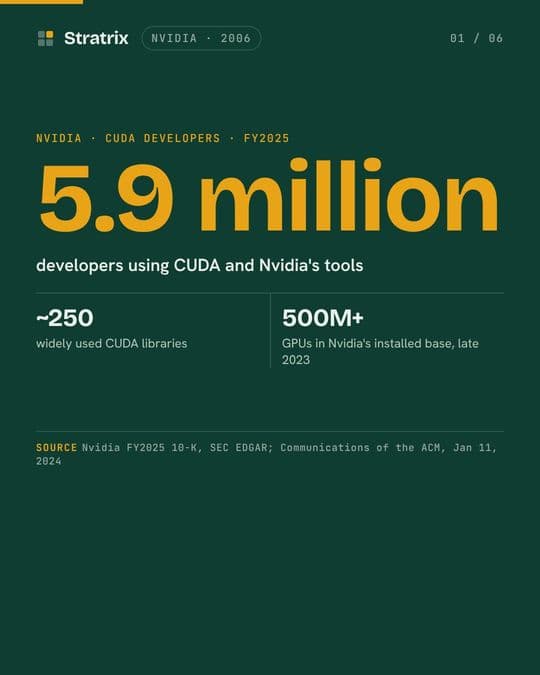
Nvidia introduced CUDA in November 2006 and kept building general-purpose computing into gaming chips whose buyers neither needed it nor paid for it. Nvidia's own executives have said it took roughly ten years before Wall Street believed the investment was worth anything. In 2012 AlexNet was trained on Nvidia GPUs through CUDA, and by Nvidia's fiscal 2025 filing over 5.9 million developers used CUDA and its other software tools.
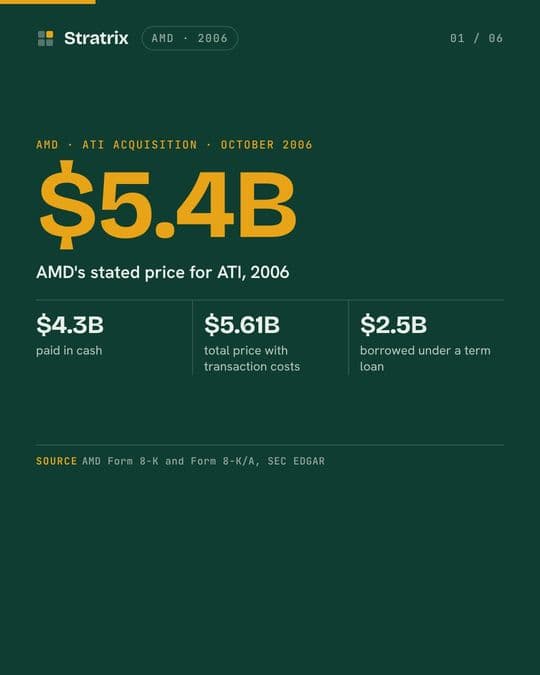
AMD bought ATI's graphics business in October 2006 for about $5.4 billion in stated value and did not fund a comparable software layer. AMD's answer, ROCm, launched in 2016, a decade behind CUDA, and AMD's fiscal 2025 filing still names Nvidia the share leader in discrete graphics. AMD owned world-class silicon; Nvidia owned the layer developers had written for.
Hugging Face started as a consumer chatbot with roughly 100,000 daily users. In 2019 Hugging Face retired the chatbot and made its free library and Hub the company: it stopped building a product and started building the place other people build theirs. In August 2023 Hugging Face raised $235 million at a $4.5 billion valuation.
A rate that leaves the builder better off
The third need is the rate. Apple, Salesforce and Shopify converge on 15 percent for most developers, and the cases show both edges of the corridor: rates builders fight, and a low rate that brought no one.
Salesforce takes 15% of revenue on apps sold through AppExchange Checkout, with no minimum and no setup fees.
Shopify let developers keep all of their app revenue up to $1 million, with the exemption reset every year since August 2021. From June 16, 2025 Shopify made the $1 million a lifetime cap and charges 15% on everything above it. Of 40,556 registered Shopify partners in January 2025, 7,874 had an app listed, and 79.5% of developers list only one app, so the first million is most of what small developers will ever see.
Apple's 30% commission is the rate builders fight. On August 13, 2020 Epic routed Fortnite purchases around Apple's payment system on purpose, to trigger Fortnite's removal and sue; iOS was only about 7% of Fortnite's revenue. After a 2021 injunction required Apple to allow external payment links, Apple charged 27% on linked-out purchases. In April 2025 a federal judge found Apple in willful civil contempt, and in December 2025 the Ninth Circuit agreed the rate was "large enough that no rational developer would offer them."
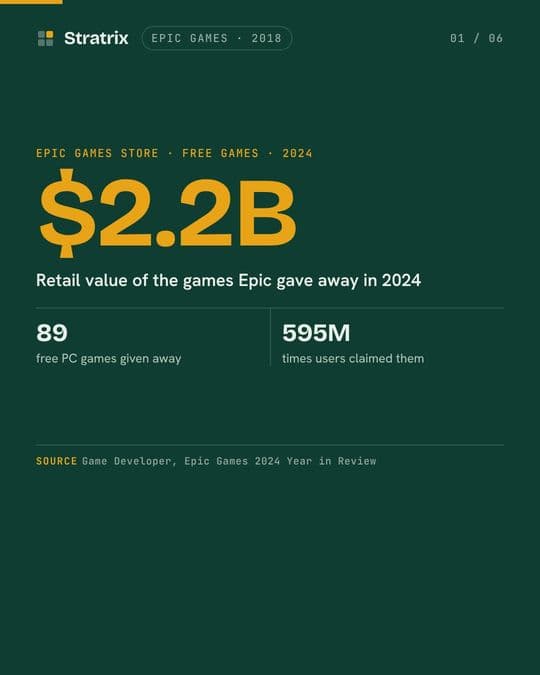
A low rate does not create builders by itself. The Epic Games Store launched in December 2018 taking 12% from developers against Steam's 30%, yet between 2019 and 2024 its third-party revenue moved only from roughly $251 million to $255 million. A rate inside the corridor is necessary; it does not supply the waiting market.
A promise not to compete or close the door
The last need is governance rather than arithmetic: a builder has to believe you will not take its business or shut it out once it has built.
In 1985 Bill Gates and Jeff Raikes urged Apple to license Mac technology to three to five major manufacturers. Apple's Jean-Louis Gassée killed every deal to protect hardware margins above 55%. When Apple later allowed Mac clones, its CFO Fred Anderson told Wired in 1997 that "somewhere around 99 percent" of clone sales went to the existing customer base. Steve Jobs killed the clone program by shipping Mac OS 8 in July 1997, which clone makers were not licensed to ship, and Apple bought Power Computing's core assets for $100 million in Apple stock that September.
The Apple case holds the other end of the method. Opening moved Apple's own sales to someone else rather than adding buyers, which is the displaced contribution the rate the layer needs is meant to count. And the door, once closed, ended the builders' business.
The promise is not absolute. Amazon's Marketplace put third-party sellers against Amazon's own retail managers on the same page, and sellers came anyway, because the page was where the buyers were. Hugging Face went the other way and stopped competing with its users altogether. Which promise a builder needs depends on what it can earn without you.
What these cases show
Each case is drawn from the Stratrix case library and checked against the filings and reporting listed under Sources. The last column says what each one does not establish.
| Company | The bet | What happened | What it does not establish |
|---|---|---|---|
| Nvidia, 2006 | Built the layer ahead of demand | Over 5.9 million developers by its fiscal 2025 filing | How much of Nvidia's share the layer, rather than the chips, explains |
| AMD, 2006 | Bought the silicon and skipped the layer | ROCm launched in 2016, a decade behind CUDA | That a layer funded in 2006 would have closed the gap |
| Salesforce, 2005 | Opened AppExchange to a waiting market | 6,233 apps from 3,668 developers by December 2025, at a 15% revenue share | What partners would have earned selling alone |
| Amazon, 2000 | Put third-party sellers on its own product page | 60% of paid units by early 2026 | Whether a separate store would have worked with more time |
| Walmart, 2022 | Removed the seller gate | Over 200,000 active sellers by mid-2025, with weaker vetting found | What the marketplace earns net of the vetting it gave up |
| Hugging Face, 2019 | Retired its product to become the platform | $235 million raised at a $4.5 billion valuation in 2023 | How the platform earns; a valuation is not a take rate |
| Shopify, 2025 | Turned a yearly exemption into a lifetime cap | 15% above the first $1 million, for life | Whether developers build less; no outcome is dated yet |
| Apple and Epic, 2020 | A 30% rate a builder fought in court | Apple's 27% linked-out rate found in contempt in 2025 | What rate a court will accept |
| Epic Games Store, 2018 | A 12% rate against Steam's 30% | Third-party revenue near $255 million in 2024 | That the rate, rather than the catalog, held it back |
| Apple, 1985 | Kept the Mac closed, later allowed clones | About 99 percent of clone sales came from Apple's own base | What licensing in 1985 would have done |
Running the decision
A sequence for the team deciding on a platform bet
Count the waiting market
The customers a third party would reach through you and could not reach alone, and what it would sell through you at maturity.
Cost the layer on its own
Running cost, the build spread over the years, and the contribution on your own sales that opening displaces. Not the integration team's budget.
Ask a builder
What it earns without you, and what building on you would cost it. Ask more than one, because the answer has to survive a large error in that figure.
Compute the corridor
The rate the layer needs and the break-even take rate. If the first is above the second, no rate makes this a platform yet.
Place the rate
Inside the corridor, and record how far it can rise before builders stop and fall before the layer stops paying.
Write the promise down
What you will not build and what you will not close, agreed before the first builder commits.
What this method cannot tell you
Platforms that worked are studied and the layers nobody built on are forgotten, so any set of cases is selected on its outcome. The cases above show what a builder needs. They cannot support a success rate for platform bets, and this page does not claim one.
The arithmetic has limits of its own. It prices one representative builder, and a platform has many. It holds the waiting market at maturity, which a real platform reaches over years. It does not price what a platform does to your own product's retention, which is a judgment rather than a number. And it says nothing about the promise not to compete or close the door, which is necessary and is governance rather than arithmetic.
Watch these decisions
Short videos built from the same Decision Records as this page.
Questions
When should a product become a platform?
When a corridor exists and your rate sits inside it: the rate the platform layer needs to pay for itself is below the most a builder will pay before building alone earns more. In the worked case in the Platform Bet Strategy Pack, the layer needs 8.0 percent and a builder stops at 22.5, so a 30 percent rate earns nothing and 15 percent earns $10.7m a year net.
What take rate should a platform charge third-party developers?
One inside your own corridor, not one copied from a phone. Apple, Salesforce and Shopify converge on 15 percent for most developers, but the right number depends on what your builders earn without you.
What does a third party need before it builds on a platform?
Drawn from the cases, and offered as analysis: a waiting market it cannot reach alone, a layer that works without your help, a rate that leaves it better off than building alone, and a promise that you will not compete with it or close the door.
Why do platform strategies fail?
Often at the rate no one priced. The platform layer is costed as the whole integration budget, which makes every rate look too low, and no one asks a builder what it earns without you, so the rate is set against nothing.
Does this apply beyond software and app stores?
Yes. It applies wherever a third party could sell to your customers through your product: marketplaces, developer platforms, connected equipment, payment rails and charging networks.
Continue learning
Sources & further reading
- Salesforce, Inc. (2025). History of Salesforce.
- TechCrunch (2016). Salesforce AppExchange Revolutionized Software Distribution When It Launched Ten Years Ago Today.
- Appnigma.ai (2026). What Is the Salesforce AppExchange? The 2026 Guide.
- Salesforce Developer Documentation (2024). How Is Revenue Shared in AppExchange Checkout?.
- Amazon.com (2001). Amazon Marketplace a Winner for Customers, Sellers, and Industry.
- Amazon.com (2015). 2014 Annual Letter to Shareholders.
- Marketplace Pulse (2026). Amazon Percent of Units by Third-Party Sellers 2004–2026.
- Walmart Global Tech (2022). Marketplace: What Makes it the Holy Grail of E-tail.
- Marketplace Pulse (2022). Walmart Opens Third-Party Seller Floodgates.
- Marketplace Pulse (2025). Walmart Marketplace Experiences Record Growth.
- CNBC (2025). Walmart's Marketplace boom: How lax vetting came with identity theft and fakes.
- NVIDIA Corporation (2024). CUDA C++ Programming Guide.
- NVIDIA Corporation (Form 10-K) (2025). Form 10-K, fiscal 2025.
- Understanding AI (2012). AlexNet trained on Nvidia GPUs (2012).
- Yahoo Finance (2023). Nvidia on the decade-long CUDA bet.
- Advanced Micro Devices, Inc. (Form 8-K) (2006). AMD Completes ATI Acquisition.
- Thunder Compute (2026). ROCm vs CUDA: GPU Computing Comparison.
- Advanced Micro Devices, Inc. (Form 10-K) (2026). Form 10-K, fiscal 2025.
- Contrary Research (2023). Hugging Face Business Breakdown & Founding Story.
- TechCrunch (2023). Hugging Face raises $235M from investors, including Salesforce and Nvidia.
- Shopify Developer Changelog (2025). Update to Shopify's app developer revenue share.
- Meetanshi (2025). Shopify App Store Statistics: 2026 Report.
- U.S. District Court for the Northern District of California (2021). Epic Games, Inc. v. Apple Inc., Order and Final Judgment.
- MobileSyrup (2021). Court documents reveal iOS only accounted for 7 percent of Fortnite's revenue.
- Lexology (Frankfurt Kurnit Klein & Selz) (2025). Apple violated U.S. court order, ending Apple's 27% commission on external purchases.
- Courthouse News Service (2025). Ninth Circuit confirms contempt finding against Apple in Epic Games battle.
- Wikipedia (2024). Epic Games Store.
- Windows Central (2026). Epic Games Store grew from 108M to 295M users, but third-party revenue barely moved.
- scripting.com (1985). Apple Licensing of Mac Technology (Gates and Raikes memo).
- Low End Mac (2006). The Apple vs. Microsoft GUI Lawsuit.
- IEEE Spectrum (2026). The Rise and Fall of Apple's Mac Clones Era.
- Macworld (2008). Reliving the Clone Wars.
More to learn
Other foundational guides worth reading.
Competitive Moat Analysis: How to Test Whether Your Advantage Is Real
A moat is the gap between what a challenger must spend to win your customer and what that customer is then worth to them. Name which of four sources produces the gap, compute it in the challenger's numbers rather than your own, and watch for the specific thing that erodes it.
Competitive StrategyHow to Respond to a New Competitor: Price Its Money, Not Its Product
Size a new competitor by its money, not its demo. Divide what it has for your market by what it costs it to take one of your customers, price what those customers would have earned you, and answer only if answering on every customer it reaches costs less than that.
Pricing StrategyProduct Bundling Strategy: When to Sell Together or Apart
A bundle first hands its discount back to every customer already paying for both products, and earns only on the customers it adds and the extra years bundled customers stay. Match the two customer lists to size the handback, measure the retention gap, and solve for the deepest discount at which selling together still beats selling apart.
Crisis ManagementCorporate Crisis Response: What One More Quarter of Delay Costs
A corporate crisis is priced on the gap between when somebody inside knew and when the company acted, not on the defect itself. Find the earliest internal date, cost what one more quarter of delay adds, and act before the expected penalty passes the cost of the fix.
Strategy DevelopmentMake or Buy: How to Decide What Your Company Must Own
You can outsource anything whose interface you can specify, and nothing you cannot. The test is whether a supplier who has never seen the work could quote from what you hold today; the number is the probability of having to buy the capability back.
Strategy FundamentalsWhat Is Strategy? A Complete Guide
Understand the foundations of strategic thinking—and why most organizations get it wrong.
See this framework in the wild.
Follow it across the companies and lenses where it actually shaped the strategy.