Licensed to an organization: checkout asks for the company the purchase is for, its website, and an email address to deliver the files to. A work address is best for the license record; a personal one is accepted. Digital download. All sales are final: no refunds or returns. Each format can be downloaded 3 times, and the links stay valid for 30 days. If you need more, reply to your confirmation email and we will sort it out.
Every conversation about pricing a locked-in base runs on the cost of leaving. That number is real, it is usually large, and it governs nothing: nobody crosses a project budget deliberately, and everybody crosses an irritation threshold quietly. This pack separates the two, counts what you are actually collecting once every mechanism is added together rather than list price alone, and prices the decision on the one window nobody reviews — because a migration takes two to three years, over-collecting looks profitable for exactly as long as it takes the departures to arrive. It stops on two conditions: nobody has measured the tolerance, and nobody is reporting new-customer share beside renewal.
What is the Ecosystem Lock-In Strategy Pack
The Ecosystem Lock-In Strategy Pack is a complete decision-support kit for one question: how much of your lock-in can you actually collect? It is built around one organizing claim: lock-in is what customers will bear before they start looking, not what leaving would cost them. Sixteen files carry it: the foundations, a concept deck, a scored decision wizard, a collection model blank and worked, the moves at each position, nine sourced positions, a fit worksheet, a roadmap template, a practitioner manual, a field checklist, and an orientation page.
The test that runs through every file
What customers will bear before they start looking, measured rather than assumed. It is the argument in the deck, it becomes the wizard’s axes, it drives the model’s inputs, and it reappears as lines on the checklist. That is what makes 16 files a product rather than 16 documents.
The model resolves to one number you can negotiate with: The break-even departure rate — the share of the base a single point of price can afford to lose. It ships blank and worked, and every input is a named cell rather than a figure buried inside a formula, so the number arrives with its assumptions attached rather than on its own authority.
Why switching cost is the wrong number for lock-in pricing
Pricing a captive base runs on the cost of leaving, because it is large and comfortable to model. It is also a project budget — a figure procurement would have to justify all at once, which no one crosses deliberately. What governs behavior is an irritation threshold, it sits far below, and people cross it quietly every year.
This pack produces both numbers and the one that reconciles them: the break-even departure rate, which is the share of your base a single point of price can afford to lose. It is a fraction of one percent, and almost no one has computed it.
What is in the Ecosystem Lock-In Strategy Pack
- Foundations. The framework: the two numbers, what collection consists of, the lag that hides it, and the two halts.
- Concept deck. Twenty-two slides for the board or leadership session, with the sourced positions and what each does not establish.
- Decision wizard. Eight scored questions returning the band, the weakest answer, and either of the two halt conditions.
- Collection model. Ten years of collecting now against sitting at tolerance, with the break-even departure rate and the expected regulatory charge.
- Strategies and tactics. The moves inside, at and past tolerance — and three ways to realize the asset without spending it.
- Case studies. Nine sourced positions read through what was collected and what the collection produced — from a repair key to a network good never pressed on.
- Fit worksheet. The single page of record: the two numbers, the break-even rate, the observed rate, and the re-measurement date.
- Roadmap template. Five phases with gates and owners, the assumptions register, and a quarterly reporting line.
- Practitioner manual. Counting collection, measuring tolerance, the board paper, six failure modes and the indicators that show first.
- Field checklist. The one-pager that survives outside the binder.
- About the package. What each file does and the order in which to run them.
Who the Ecosystem Lock-In Strategy Pack is for
An executive team with a price increase on a captive base in front of it; a board member looking at excellent renewal numbers and wondering what they actually measure; a chief financial officer who has never seen the collection mechanisms added together; a head of customer success who has been saying for two years that the last increase cost more than it earned and has never been in the pricing meeting; a general counsel who has not read the audit clause as a regulator would; and the adviser who would otherwise start from a blank page. It is worth buying when a real decision is in front of you. It is not worth buying to read.
An honest note on fit
This is a kit for running a decision, not a research report and not a course. Worked examples use an explicitly fictional company with numbers tuned to teach rather than to flatter. In the worked case the collection figure everybody had been using was five points and the real number, with every mechanism added together, was seventeen — against a tolerance of twelve. The break-even departure rate is 0.15% of the base per point and the company is losing six times that, which makes collecting less worth $177m over ten years. It has not noticed because collecting more is ahead until year four.
Two limits are stated on the page rather than worked around. No tolerance transfers: what customers will bear is specific to your alternatives and your moment, no case in the pack gives you a number, and it decays as substitutes improve. And the case set is selected on conflict — these positions became documented because somebody complained loudly enough to produce a regulator or a court, and a company that has collected sensibly for twenty years leaves no record at all.
This decision, in two minutes
Short videos on companies that faced it, built from the casebooks this pack draws on.

Questions about the Ecosystem Lock-In Strategy Pack
- Is this a guide to building lock-in?
- No. It takes the lock-in as given and prices the separate decision of how hard to press on it — which is taken far more often, by more people, with far less thought. It also takes no view on whether your lock-in is legitimate; that is a question for your counsel and, on the evidence in the pack, increasingly for legislators. What it supplies is the number the pricing decision has to be taken against.
- What number does the model produce?
- The break-even departure rate: the share of your base a single point of price can afford to lose before that point stops paying for itself. A point gains one year of margin from the customers who stay; a customer who leaves costs the whole remaining stream, so on a ten-year horizon the answer is a fraction of one percent. The model also runs ten years at what you collect now against collecting only to tolerance, and reports the year the second pulls ahead.
- We have very high renewal. Do we need this?
- That is the position this pack is written for. Renewal, backlog, and net revenue retention all measure whether customers who cannot easily leave have left — they are measures of the switching cost rather than of the proposition, and collection inflates retention, so they look best in exactly the years that should worry you. One case in the pack shows contracted backlog up 14% in the same period market share fell and revenue growth ran below the market.
- Are the case studies real companies?
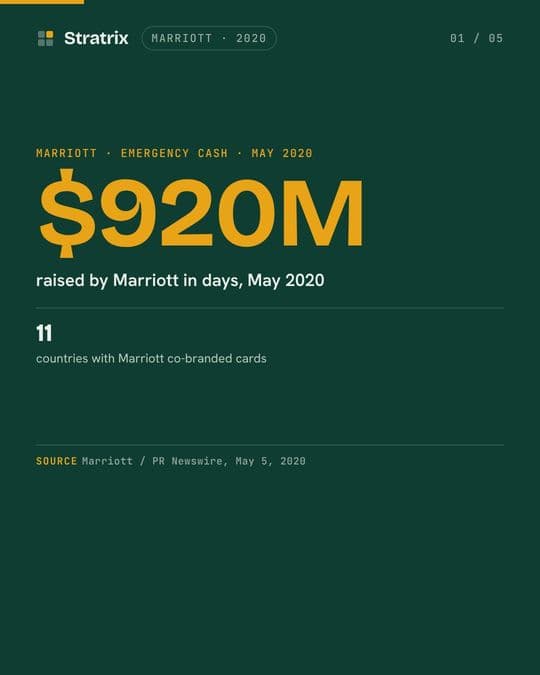
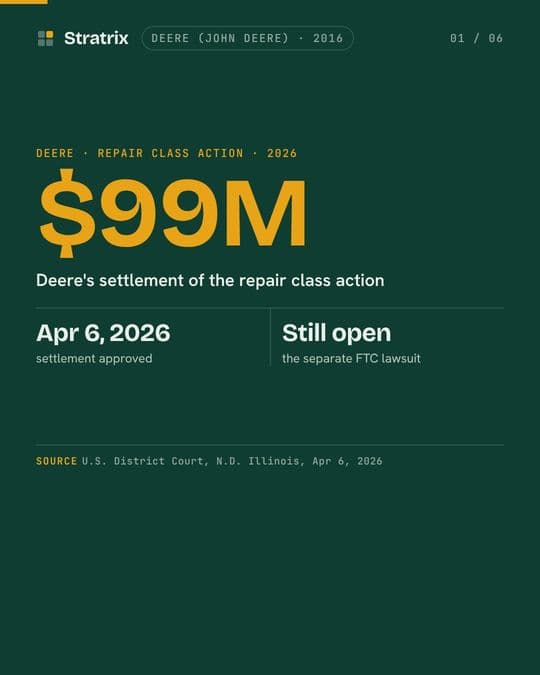
- Yes. Nine sourced positions: John Deere, Oracle, Microsoft, Amazon, Intuit, Salesforce, Thomson Reuters, Marriott, and Bloomberg. Each is dated, mapped to what was collected and what it produced, and each states what its evidence does not establish. Three of the nine realized the asset without collecting against the base at all, and they are in the set on purpose. The worked model, wizard, and worksheet use an explicitly fictional company, labeled as such on every file.
- What if we have never measured what customers will bear?
- Then the pack stops, and that is deliberate. It is the first of two halt conditions and both the wizard and the model refuse to produce a headline number without it. The manual sets out the two ways to get it, asking customers what increase would make them look or recovering what happened the last time you pushed, and why the second is better. It is two weeks of work.
- Is this a subscription?
- No. It is a one-time purchase of a single-organization license, with no seat limit inside your organization and nothing to cancel.
- What is the Ecosystem Lock-In Strategy Pack?
- The Ecosystem Lock-In Strategy Pack is a decision-support kit for one question: How hard can you press on lock-in you already have? It contains 16 files — foundations, concept deck, decision wizard, collection model, strategies and tactics, case studies, fit worksheet, roadmap template, practitioner manual, field checklist, about the package — built around a single organizing test: what customers will bear before they start looking, measured rather than assumed. It is what a leadership team uses to run the decision and leave a record of what they assumed, rather than a report about the topic.
- Who is the Ecosystem Lock-In Strategy Pack for?
- Anyone who has to make this call and answer for it: an operator or owner facing the decision, the executive team running it, the board or investor testing the reasoning, or an adviser who would otherwise build the framework from a blank page. It is worth buying when a real decision is in front of you. It is not worth buying to read.
- What is in the Ecosystem Lock-In Strategy Pack?
- 16 files in Word, PDF, PowerPoint and Excel: Foundations (Word + PDF) — The framework: the two numbers, what collection consists of, the lag that hides it, and the two halts. Concept deck (PowerPoint + PDF) — Twenty-two slides for the board or leadership session, with the sourced positions and what each does not establish. Decision wizard (Excel) — Eight scored questions returning the band, the weakest answer, and either of the two halt conditions. Collection model (Excel, blank and worked) — Ten years of collecting now against sitting at tolerance, with the break-even departure rate and the expected regulatory charge. Strategies and tactics (Word) — The moves inside, at and past tolerance — and three ways to realize the asset without spending it. Case studies (Word) — Nine sourced positions read through what was collected and what the collection produced — from a repair key to a network good never pressed on. Fit worksheet (Word, blank and worked) — The single page of record: the two numbers, the break-even rate, the observed rate, and the re-measurement date. Roadmap template (Word) — Five phases with gates and owners, the assumptions register, and a quarterly reporting line. Practitioner manual (Word + PDF) — Counting collection, measuring tolerance, the board paper, six failure modes and the indicators that show first. Field checklist (PDF) — The one-pager that survives outside the binder. About the package (PDF) — What each file does and the order in which to run them.
- How is the Ecosystem Lock-In Strategy Pack delivered?
- As a single download of all 16 files, immediately after payment, with the same link sent by email. It can be downloaded 3 times and the link is valid for 30 days. There is nothing to install and no account to keep.