Licensed to an organization: checkout asks for the company the purchase is for, its website, and an email address to deliver the files to. A work address is best for the license record; a personal one is accepted. Digital download. All sales are final: no refunds or returns. Each format can be downloaded 3 times, and the links stay valid for 30 days. If you need more, reply to your confirmation email and we will sort it out.
Every adjacency is sold as leverage: we already have the customer, the data, the distribution, the brand. That is a claim about transfer, and a claim about transfer is testable. This pack separates the strength a company can genuinely lend a new business from the strength it only believes it can, prices the difference, and prices the two things a business case habitually leaves out — the capability gap and the exit.
What is the Adjacency Expansion Strategy Pack
The Adjacency Expansion Strategy Pack is a complete decision-support kit for one question: when does the business next door belong to you? It is built around one organizing test: what transfers, and what only looks like it transfers. Sixteen files carry it: the foundations, a concept deck, a scored decision wizard, a model blank and worked, the strategies available in each position, nine sourced case studies, a fit worksheet, a roadmap template, a practitioner manual, a field checklist, and an orientation page.
The test that runs through every file
What transfers, and what only looks like it transfers. It is the argument in the deck, it becomes the wizard’s axes, it drives the model’s inputs, and it reappears as lines on the checklist. That is what makes 16 files a product rather than 16 documents.
The model resolves to one number you can negotiate with: Leverage premium — what the owned asset is actually worth in the new business. It ships blank and worked, and every input is a named cell rather than a figure buried inside a formula, so the number arrives with its assumptions attached rather than on its own authority.
Why an adjacency expansion needs more than a business case
Every adjacency is sold as leverage: we already have the customer, the data, the distribution, the brand. That is a claim about transfer, and a claim about transfer is testable. It is rarely tested, because by the time the proposal reaches a board it has a sponsor, a name, and a slide showing two circles overlapping. The overlap is the argument, and no one has to say what is inside it.
The cost of not testing it is not the acquisition price. It is the second column: everything that does not transfer and has to be bought or built at entrant prices, with none of the claimed advantage, plus an exit that gets dearer every month it is not priced.
How to tell whether the strength actually transfers
Two questions place any proposed adjacency, and only one of the four resulting positions is an adjacency at all.
| Position | An asset transfers? | You can do the work? | What it actually is |
|---|---|---|---|
| Extend | Yes | Yes | The only position where the leverage argument survives the numbers. |
| Buy the gap | Yes | No | A capability purchase. Price it as one, never as a synergy. |
| Just a new market | No | Yes | Competent entry with no advantage. It has to clear the bar as a standalone. |
| A different company | No | No | You would be an entrant with a bigger balance sheet and a slower clock. |
What is in the Adjacency Expansion Strategy Pack
- Foundations. The framework: the four lendable assets, the two questions that place the move, the leverage premium, and the exit price.
- Concept deck. Twenty-two slides for a leadership session, with the sourced cases and what they do not establish.
- Decision wizard. Eight scored questions returning the position, the band, and the conditions that halt it outright.
- Adjacency model. Ten periods, a stress case and a floor case, resolving to the leverage premium.
- Strategies and tactics. The moves available in each position, their entry conditions, and the cost of each one.
- Case studies. Nine sourced decisions read through the framework, including those that failed.
- Fit worksheet. The single page of record: the claim, the mechanism, the score, and what would reverse it.
- Roadmap template. Phases, gates, owners, the assumptions register, and the exit triggers.
- Practitioner manual. Sequencing, the control layer, five failure modes and their leading indicators.
- Field checklist. The one-pager that survives outside the binder.
- About the package. What each file does and the order to run them.
Who the Adjacency Expansion Strategy Pack is for
An operator or owner weighing a move into an adjacent business, the executive team preparing the case, the board or investor testing the reasoning behind it, and the adviser who would otherwise build the framework from a blank page. It is worth buying when a real decision is in front of you. It is not worth buying to read.
An honest note on fit
This is a kit for running a decision, not a research report and not a course. Worked examples use an explicitly fictional business with numbers tuned to teach rather than to flatter: the case is built so the advantage erodes, and so it fails outright under the floor assumption. A worked example where everything works is a brochure.
Where the pack reasons beyond its evidence, the page says so. It carries a provenance register listing what is sourced, what is derived, what is Stratrix analysis, and what is not asserted at all.
This decision, in two minutes
Short videos on companies that faced it, built from the casebooks this pack draws on.

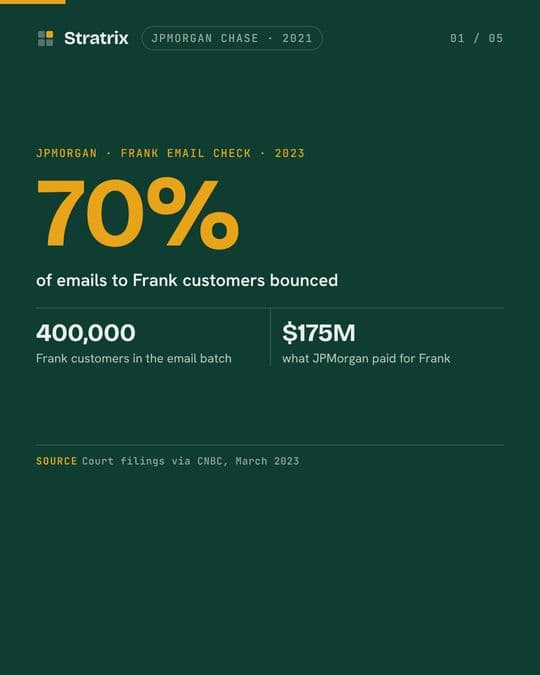
The free guide to this decision
How companies ran this decision, case by case, and the method the pack is built on. Read the guide →
Questions about the Adjacency Expansion Strategy Pack
- What is the difference between adjacency and diversification?
- An adjacency claims leverage — that an asset you already own makes the new business cheaper or better for you than for an entrant. Diversification claims none. The pack tests the leverage claim; if there is no leverage, it says so, and the decision should then be judged as an ordinary investment.
- Does the pack work for a build as well as an acquisition?
- Yes. The transfer question is the same whether you are buying the position or building it, and the model prices both routes. The capability gap is usually larger on a build and arrives more slowly, which is why it is easier to miss.
- Are the worked examples real companies?
- The case studies are real, sourced, and dated, and each one states what its evidence does not establish. The worked model, wizard, and worksheet use an explicitly fictional business, labeled as such on every file that contains one, with numbers tuned to teach rather than to flatter.
- How long does it take to run?
- A leadership team can work through the deck and the wizard in one session. The model takes a working day to populate honestly, and the entrant's number is the input that takes the longest, because it is the one no one has looked up before.
- Is this a subscription?
- No. It is a one-time purchase of a single-organization license, with no seat limit inside your organization and nothing to cancel.
- What is the Adjacency Expansion Strategy Pack?
- The Adjacency Expansion Strategy Pack is a decision-support kit for one question: When does the business next door belong to you? It contains 16 files — foundations, concept deck, decision wizard, adjacency model, strategies and tactics, case studies, fit worksheet, roadmap template, practitioner manual, field checklist, about the package — built around a single organizing test: what transfers, and what only looks like it transfers. It is what a leadership team uses to run the decision and leave a record of what they assumed, rather than a report about the topic.
- Who is the Adjacency Expansion Strategy Pack for?
- Anyone who has to make this call and answer for it: an operator or owner facing the decision, the executive team running it, the board or investor testing the reasoning, or an adviser who would otherwise build the framework from a blank page. It is worth buying when a real decision is in front of you. It is not worth buying to read.
- What is in the Adjacency Expansion Strategy Pack?
- 16 files in Word, PDF, PowerPoint and Excel: Foundations (Word + PDF) — The framework: the four lendable assets, the two questions that place the move, the leverage premium, and the exit price. Concept deck (PowerPoint + PDF) — Twenty-two slides for a leadership session, with the sourced cases and what they do not establish. Decision wizard (Excel) — Eight scored questions returning the position, the band, and the conditions that halt it outright. Adjacency model (Excel, blank and worked) — Ten periods, a stress case and a floor case, resolving to the leverage premium. Strategies and tactics (Word) — The moves available in each position, their entry conditions, and the cost of each one. Case studies (Word) — Nine sourced decisions read through the framework, including those that failed. Fit worksheet (Word, blank and worked) — The single page of record: the claim, the mechanism, the score, and what would reverse it. Roadmap template (Word) — Phases, gates, owners, the assumptions register, and the exit triggers. Practitioner manual (Word + PDF) — Sequencing, the control layer, five failure modes and their leading indicators. Field checklist (PDF) — The one-pager that survives outside the binder. About the package (PDF) — What each file does and the order to run them.
- What number does the Adjacency Expansion Strategy Pack produce?
- Leverage premium — what the owned asset is actually worth in the new business. The model ships blank and worked, and every input is a named cell rather than a figure buried inside a formula, so the number you take into a room arrives with its assumptions attached and can be argued with rather than merely believed.
- How is the Adjacency Expansion Strategy Pack delivered?
- As a single download of all 16 files, immediately after payment, with the same link sent by email. It can be downloaded 3 times and the link is valid for 30 days. There is nothing to install and no account to keep.