Licensed to an organization: checkout asks for the company the purchase is for, its website, and an email address to deliver the files to. A work address is best for the license record; a personal one is accepted. Digital download. All sales are final: no refunds or returns. Each format can be downloaded 3 times, and the links stay valid for 30 days. If you need more, reply to your confirmation email and we will sort it out.
A loss leader is discussed as a price and behaves as a loan. You lend the difference between what the cheap thing costs you and what you charge for it, at the point of sale, to every customer who walks out with one — including every customer who will never buy anything else. It is repaid out of a second sale that has not happened yet, and the revenue figure in the paper is almost always measured on the customers who came back and then credited to every unit sold. Two numbers, both true, with different denominators. This pack sizes the loan, counts the repayment, and returns the share of units that must come back for it to clear — beside the share that does. Below that line the program loses money on every unit it sells, which means volume makes it worse rather than better. It stops on two conditions: nobody has counted what the cheap thing costs all in, and nobody has counted the units that never came back.
What is the Loss Leader Strategy Pack
The Loss Leader Strategy Pack is a complete decision-support kit for one question: what share of the units you sell cheap has to come back for the subsidy to be repaid? It is built around one organizing claim: a loss leader is a loan, not a price. Sixteen files carry it: the foundations, a concept deck, a scored decision wizard, a second sale model blank and worked, the moves at each position, nine sourced programs, a fit worksheet, a roadmap template, a practitioner manual, a field checklist, and an orientation page.
The test that runs through every file
What the cheap thing costs you all in, and what share of it ever makes a second purchase. It is the argument in the deck, it becomes the wizard’s axes, it drives the model’s inputs, and it reappears as lines on the checklist. That is what makes 16 files a product rather than 16 documents.
The model resolves to one number you can negotiate with: The break-even attach — the share of units that must come back for the subsidy to clear. It ships blank and worked, and every input is a named cell rather than a figure buried inside a formula, so the number arrives with its assumptions attached rather than on its own authority.
Why the attach rate is a denominator problem
You lend the difference between what the cheap thing costs you and what you charge for it, at the point of sale, to every customer including the ones who will never buy anything else. Almost every paper of this kind reports second-sale revenue measured on the customers who came back, and sets it against a subsidy paid on every unit sold. Both numbers are true and they have different denominators.
This pack produces the number that follows: the break-even attach, the share of units that must come back for the subsidy to clear, set beside the share that actually does. Where the first is higher, the program loses money on every unit it sells — which means volume makes it worse rather than better, and every good month is a larger loss than the month before it.
What is in the Loss Leader Strategy Pack
- Foundations. The framework: the loan, the denominator, the break-even attach, the three ways the second sale fails, and the two halts.
- Concept deck. Twenty-two slides for the board or commercial session, with the sourced programs and what each does not establish.
- Decision wizard. Eight scored questions returning the band, the weakest answer, and either of the two halt conditions.
- Second sale model. The subsidy, the break-even attach across eleven levels, profit per unit sold across the whole base, and the lowest price that clears.
- Strategies and tactics. The moves below the break-even attach, above it, when no attach rate saves it, and when there is no loan — plus four ways to raise what a unit repays.
- Case studies. Nine sourced programs read through what the cheap thing cost and what came back — four are not sold below cost at all.
- Fit worksheet. The single page of record: the all-in unit cost, the attach share, the break-even, and what else the cheap thing buys.
- Roadmap template. Five phases with gates and owners, the assumptions register, a trigger and a quarterly reporting line.
- Practitioner manual. Costing a unit all in, dividing the base by cohort, the board paper, six failure modes and their indicators.
- Field checklist. The one-pager that survives outside the binder.
- About the package. What each file does and the order in which to run them.
Who the Loss Leader Strategy Pack is for
An executive team pricing hardware, a device, or a free tier against a consumable, a service, or a platform behind it; a head of product who suspects most units never come back and cannot get the number; a chief financial officer being asked to approve a subsidy that appears in no report; a board member reading a growing second-sale revenue line with no denominator beside it; a service or operations leader who has been saying for two years that most units never reorder; and the adviser who would otherwise start from a blank page. It is worth buying when a real decision is in front of you. It is not worth buying to read.
An honest note on fit
This is a kit for running a decision, not a research report and not a course. Worked examples use an explicitly fictional company with numbers tuned to teach rather than to flatter. In the worked case the instrument costs $14,200 all in and sells for $9,600; the break-even attach is 77.5% and 41% of units come back; the program loses $2,166 a unit and $7.4m a year, while the paper it replaces shows a gain of $3,230 a unit without a single dishonest number in it.
Two limits are stated on the page rather than worked around. The pack does not value what the cheap thing buys you other than the second sale, whether a shelf, a membership, a data set, or a reference site, which in one of the nine cases is the entire return. And it does not forecast what happens on the day somebody else can sell the second thing, which is how the most complete razor-and-blades machine ever built ended in Chapter 11.
This decision, in two minutes
Short videos on companies that faced it, built from the casebooks this pack draws on.
Questions about the Loss Leader Strategy Pack
- Does this only apply to hardware and consumables?
- No. The framework is the same wherever something cheap is sold to fund something else: a device against a platform, a free tier against a paid one, a commission at zero against the assets behind it, a cheap fare against ancillary revenue, an instrument against a reagent. The nine sourced cases deliberately span all of those, and two of them are not hardware at all.
- What number does the model produce?
- The break-even attach — what you lend each customer over what one returning customer repays across its whole life, discounted. It sits beside the share that actually comes back. The Model tab runs eleven attach levels across its columns so the point where the net line crosses zero is visible, and the Verdict tab returns profit per unit sold across the whole base, the program a year, the years to repay one unit's subsidy, and the lowest price that clears at today's attach. In the worked example the paper said plus $3,230 a unit and the position is minus $2,166.
- We have been running this program for years. Is it too late?
- No, and this is the common position. Everything in the first three phases can be done on a running program in about three weeks: cost one unit through to its first year of support, divide the base by cohort and count what came back, and take the second sale's margin and length from evidence rather than habit. The subsidy on units already sold was spent, which is exactly why the count is worth doing now rather than next year.
- Are the case studies real companies?
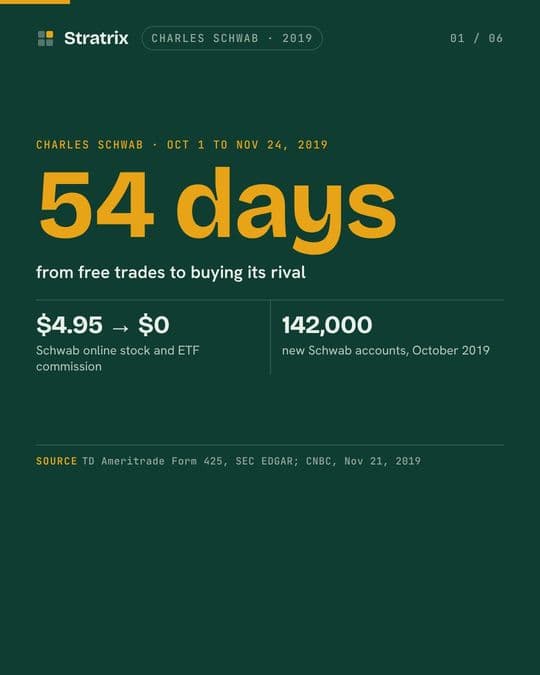
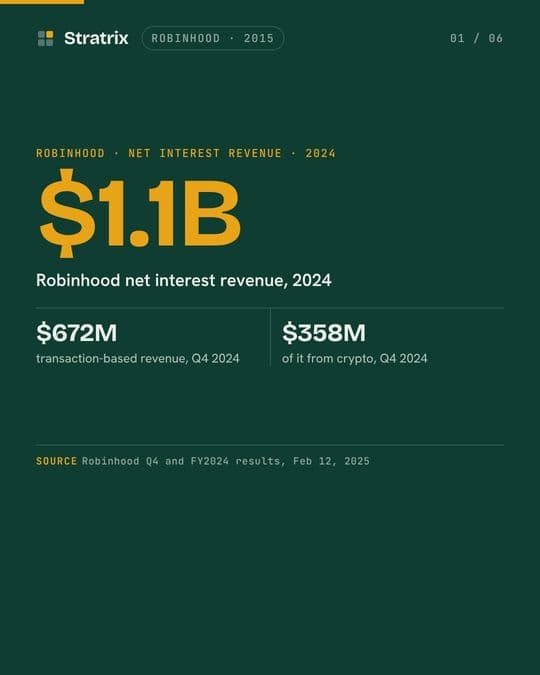
- Yes. Nine sourced programs: HP's printers, Roku's boxes, Amazon's Echo, Polaroid, Intuitive Surgical, Costco's hot dog, Ryanair's fare, the Kindle, and zero-commission trading at Robinhood and Schwab. Each is dated, read through what the cheap thing cost and what came back, and each states what its evidence does not establish. Four of the nine cheap things are not sold below cost at all. The worked model, wizard, and worksheet use an explicitly fictional company, labeled as such on every file.
- What if no one has counted the units that never came back?
- Then the pack stops, and that is deliberate. It is the second of two halt conditions, and both the wizard and the model refuse to produce a headline number without it — because a model in which every unit returns is not an attach rate, it is what one looks like before the base has been divided. The manual sets out how to do the count in a week against the serial-number list, and what you will find when you try.
- Is this a subscription?
- No. It is a one-time purchase of a single-organization license, with no seat limit inside your organization and nothing to cancel.
- What is the Loss Leader Strategy Pack?
- The Loss Leader Strategy Pack is a decision-support kit for one question: What share of the units you sell cheap has to come back for the subsidy to be repaid? It contains 16 files — foundations, concept deck, decision wizard, second sale model, strategies and tactics, case studies, fit worksheet, roadmap template, practitioner manual, field checklist, about the package — built around a single organizing test: what the cheap thing costs you all in, and what share of it ever makes a second purchase. It is what a leadership team uses to run the decision and leave a record of what they assumed, rather than a report about the topic.
- Who is the Loss Leader Strategy Pack for?
- Anyone who has to make this call and answer for it: an operator or owner facing the decision, the executive team running it, the board or investor testing the reasoning, or an adviser who would otherwise build the framework from a blank page. It is worth buying when a real decision is in front of you. It is not worth buying to read.
- What is in the Loss Leader Strategy Pack?
- 16 files in Word, PDF, PowerPoint and Excel: Foundations (Word + PDF) — The framework: the loan, the denominator, the break-even attach, the three ways the second sale fails, and the two halts. Concept deck (PowerPoint + PDF) — Twenty-two slides for the board or commercial session, with the sourced programs and what each does not establish. Decision wizard (Excel) — Eight scored questions returning the band, the weakest answer, and either of the two halt conditions. Second sale model (Excel, blank and worked) — The subsidy, the break-even attach across eleven levels, profit per unit sold across the whole base, and the lowest price that clears. Strategies and tactics (Word) — The moves below the break-even attach, above it, when no attach rate saves it, and when there is no loan — plus four ways to raise what a unit repays. Case studies (Word) — Nine sourced programs read through what the cheap thing cost and what came back — four are not sold below cost at all. Fit worksheet (Word, blank and worked) — The single page of record: the all-in unit cost, the attach share, the break-even, and what else the cheap thing buys. Roadmap template (Word) — Five phases with gates and owners, the assumptions register, a trigger and a quarterly reporting line. Practitioner manual (Word + PDF) — Costing a unit all in, dividing the base by cohort, the board paper, six failure modes and their indicators. Field checklist (PDF) — The one-pager that survives outside the binder. About the package (PDF) — What each file does and the order in which to run them.
- How is the Loss Leader Strategy Pack delivered?
- As a single download of all 16 files, immediately after payment, with the same link sent by email. It can be downloaded 3 times and the link is valid for 30 days. There is nothing to install and no account to keep.