

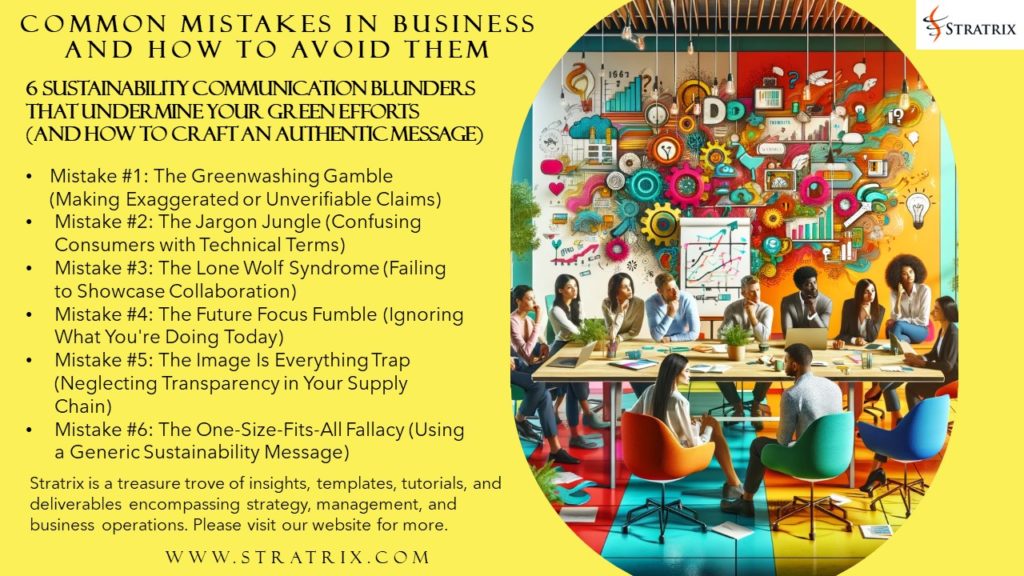
6 Sustainability Communication Blunders That Undermine Your Green Efforts (and How to Craft an Authentic Message)
Sustainability – it’s the buzzword of the decade, and for good reason. But with so many businesses jumping on the green bandwagon, simply saying you’re sustainable isn’t enough. Falling into communication pitfalls can undermine your efforts and leave consumers feeling skeptical. Here are six sustainability communication mistakes to avoid, along with strategies for crafting an authentic and impactful message:
- Mistake #1: The Greenwashing Gamble (Making Exaggerated or Unverifiable Claims)
Exaggerating your sustainability efforts or making misleading claims is like putting on a costume for Halloween – it might fool some people for a while, but the truth eventually comes out. This is greenwashing, and it can seriously damage your brand reputation.
Fix: Embrace transparency. Be upfront about your sustainability journey, highlighting both your achievements and areas for improvement. Support your claims with data and certifications from reputable organizations.
- Mistake #2: The Jargon Jungle (Confusing Consumers with Technical Terms)
Bombarding your audience with technical jargon and industry acronyms is a surefire way to lose their attention. Sustainability communication should be clear, concise, and easy for everyone to understand.
Fix: Speak the language of your audience. Use plain language and relatable examples to communicate your sustainability efforts. Focus on the benefits for the environment and how your practices contribute to a better future.
- Mistake #3: The Lone Wolf Syndrome (Failing to Showcase Collaboration)
Sustainability is a collective effort. Neglecting to acknowledge partnerships with NGOs, industry leaders, or local communities paints an incomplete picture of your commitment.
Fix: Highlight collaboration. Showcase the partnerships and initiatives you’re involved in to demonstrate your broader commitment to sustainability. This builds trust and shows a genuine desire to create positive change.
- Mistake #4: The Future Focus Fumble (Ignoring What You’re Doing Today)
Sustainability is an ongoing journey, not a destination. Focusing solely on future goals can leave consumers wondering what you’re doing right now to make a difference.
Fix: Showcase your current efforts. Highlight the sustainable practices you’ve already implemented, no matter how big or small. Share success stories and metrics that demonstrate tangible progress towards your goals.
- Mistake #5: The Image Is Everything Trap (Neglecting Transparency in Your Supply Chain)
Consumers are increasingly interested in the entire lifecycle of a product. Ignoring sustainability issues within your supply chain undermines your efforts and raises red flags.
Fix: Promote supply chain transparency. Be open about your sourcing practices and collaborate with suppliers who share your commitment to sustainability. Proactive measures like ethical sourcing certifications can build trust with eco-conscious consumers.
- Mistake #6: The One-Size-Fits-All Fallacy (Using a Generic Sustainability Message)
A generic message about “saving the planet” might sound good, but it lacks impact. Tailoring your communication to resonate with your specific audience and industry is crucial.
Fix: Personalize your message. Identify the sustainability issues that matter most to your target audience and tailor your communication accordingly. Highlight how your sustainability efforts address these specific concerns and connect with their values.
By avoiding these pitfalls and implementing these strategies, you can move beyond greenwashing and craft a communication approach that fosters trust, transparency, and a genuine connection with your audience. Remember, authentic sustainability communication is about more than just words; it’s about actions, partnerships, and a shared vision for a greener future. So, ditch the greenwashing tactics, embrace transparency, and watch your sustainability efforts resonate with your audience and contribute to a positive impact on the planet.