

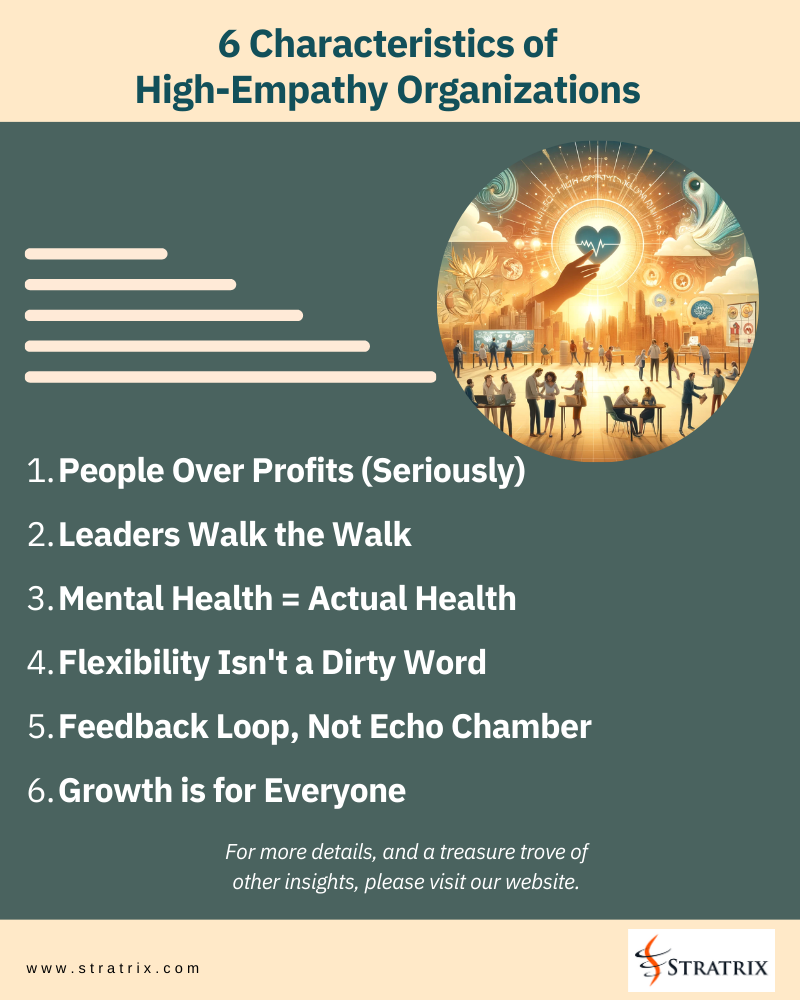
In the vast ocean of corporate life, where profit often trumps all, there exists an archipelago of rare and thriving ecosystems: high-empathy organizations. These are not mythical lands, but real, breathing workplaces where empathy drives culture, decision-making, and ultimately, success. Far from being soft or a luxury, empathy in these organizations is as strategic as a well-played chess move. Let’s explore the six characteristics that distinguish these bastions of understanding and compassion, sprinkling a bit of humor along the way because, well, empathy includes a good laugh too.
- People Over Profits (Seriously)
In high-empathy organizations, people are the priority—yes, even over that tantalizing bottom line. It’s a place where short-term gains never justify the sacrifice of human dignity. Decisions are made with a simple mantra: “Will this make our team’s life better?” If the answer is no, it’s back to the drawing board, even if that board is a sustainable, hand-crafted piece of art that symbolizes their commitment to the planet and their people.
- Leaders Walk the Walk
Here, leaders don’t just talk the talk; they walk the walk, and not just in designer shoes. You’ll find them in the trenches, living out the empathy they preach. They know that to genuinely understand their team, they need to see the world from their perspective—whether that’s by taking on frontline tasks or ensuring their office door (if they even believe in doors) is always open. It’s leadership by example, with a touch of humility and a dash of reality.
- Mental Health = Actual Health
In these organizations, mental health isn’t a taboo topic whispered about in hushed tones but a core component of overall well-being. Support systems are robust, resources are readily available, and the stigma surrounding mental health issues is combated with education and openness. It’s a place where “How are you?” means more than a casual greeting; it’s an invitation to share, knowing there’s genuine support behind the question.
- Flexibility Isn’t a Dirty Word
Rigid schedules? Draconian attendance policies? Not in high-empathy organizations. Here, flexibility is celebrated as the glue that keeps the team sane and productive. Life’s unpredictable moments are met with understanding and adaptability. Whether it’s working from home to care for a sick pet or adjusting hours to pursue a passion project, flexibility is the norm, not the exception.
- Feedback Loop, Not Echo Chamber
Listening is a superpower in these organizations. Feedback loops are integral, ensuring that everyone, from the intern to the CEO, has a voice that’s not just heard but valued. It’s a culture where constructive criticism is the breakfast of champions, and suggestions are met with open minds instead of eye rolls. This open dialogue ensures continuous improvement and fosters a sense of belonging and value among all employees.
- Growth is for Everyone
Investing in people isn’t just a line in the annual report; it’s an actioned priority. Professional development, learning opportunities, and pathways for growth are available to all, not just the upper echelons. It’s an understanding that when individuals flourish, so does the organization. This commitment to growth ensures that the team doesn’t just work for the company; they grow with it, both personally and professionally.
High-empathy organizations prove that empathy and success are not mutually exclusive but are, in fact, intricately linked. It’s a refreshing reminder that workplaces with a heart do exist, and they’re not just surviving; they’re thriving.
For all things Strategy, Management Theories, and Business Frameworks, please visit https://www.stratrix.com